The air in the corridors of Wang Fuk Court doesn't move the way it used to. It feels heavy, thick with the kind of silence that only grows when people who live inches apart stop speaking and start litigating. In Tai Po, a residential complex that should be a sanctuary of domestic routine has instead become a case study in how quickly a community can fracture when a physical barrier becomes a legal one.
Consider a resident we might call Mr. Lam. For twenty years, he has walked the same path from the elevator to his front door. It is a walk he could do blindfolded, guided by the familiar scent of a neighbor’s dinner or the muffled sound of a distant television. But lately, that walk has been interrupted. A row of locked gates, a dispute over common areas, and a sudden, jarring lack of access have turned his floor into a maze of hostility. The simple act of going home now requires a mental map of who is speaking to whom and which doors remain barred.
This isn’t just a spat over a noisy air conditioner or a leaky pipe. It is a fundamental breakdown of the social contract that governs high-density living. When the government recently vowed to step in, they weren't just addressing a logistical bottleneck; they were attempting to perform surgery on a neighborhood’s dying sense of trust.
The Architecture of Friction
Hong Kong’s housing landscape is a miracle of efficiency, a vertical marvel that houses millions in a footprint that shouldn't be possible. But that efficiency relies on a delicate balance. Every square inch of a corridor is a shared asset. Every fire exit is a communal lifeline. At Wang Fuk Court, that balance tipped over.
The dispute centers on access. Specifically, how private interests within a residential block can inadvertently—or intentionally—strangle the movement of others. Reports of blocked access points and landlord-tenant rows have escalated beyond the point of mediation. When a tenant finds themselves unable to reach certain facilities or even their own door without navigating a gauntlet of disputes, the "home" ceases to be a place of rest. It becomes a theater of war.
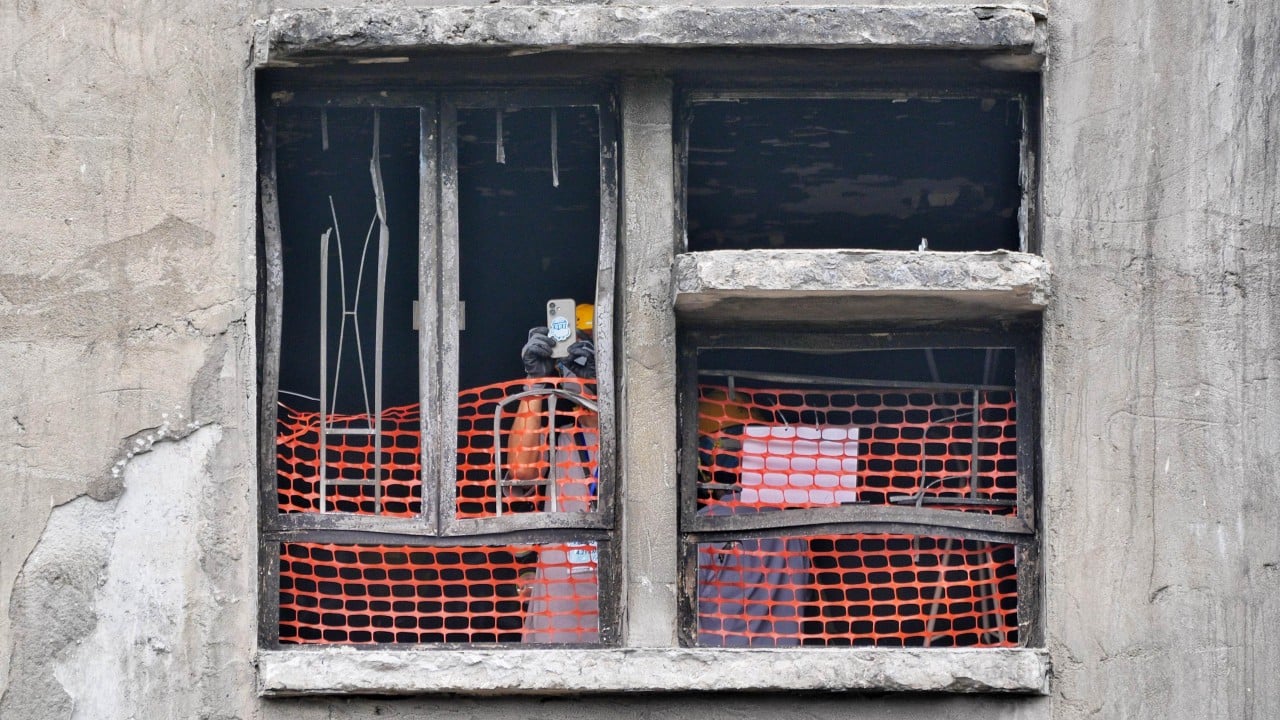
The physical reality is stark. Piles of debris, locked grilles, and handwritten "keep out" signs serve as the trenches of this conflict. To the casual observer, it looks like a mess. To the person living there, it is an eviction from their own peace of mind. The government’s vow to take action isn't just a bureaucratic update; it’s an admission that the existing framework for managing these disputes has failed the people it was meant to protect.
When Policy Meets Pavement
Bureaucracy usually moves with the speed of a glacier. It waits for committees, for filings, and for the slow turning of legal gears. But glaciers don't work when a fire hazard is brewing or when an elderly resident can't get to the lift. The authorities are now looking at the Building Management Ordinance with fresh eyes, realizing that "management" is a hollow word if it doesn't include the power to ensure basic passage.
The problem with many of these residential rows is the ambiguity of ownership. Who owns the air in a hallway? Who is responsible for the six feet of tile in front of a doorway? While the deeds might provide a technical answer, the lived experience is much more blurred. In the heat of a row, a landlord might feel they are simply exercising their rights over their property. They don't see the woman with the stroller who now has to take a ten-minute detour because a gate is padlocked. They don't see the emergency services worker who might lose precious seconds trying to find an alternate route.
We often talk about the "housing crisis" in terms of supply and demand, of numbers and interest rates. We rarely talk about the "proximity crisis." This is the friction generated when humans are packed tightly together without a clear, enforceable set of rules for how to share the spaces in between their private lives.
The Invisible Toll of the Locked Gate
Tension has a way of leaking through walls. You can hear it in the way a door is slammed or the silence that falls when two neighbors meet at the mailboxes. At Wang Fuk Court, the psychological weight of this standoff is palpable.
Imagine coming home after a ten-hour shift, your back aching and your mind frayed, only to find that the shortest path to your apartment has been blocked by a neighbor’s grievance. It isn't just an inconvenience. It is a message. It says: You don't belong here as much as I do. It says: My rights are a wall, and you are on the wrong side of it.
The government's intervention focuses on the legalities—fire safety codes, building regulations, and tenancy laws. These are necessary. They are the only tools the state has. But they cannot mend the social fabric. Even if the gates are removed tomorrow, the memory of them will remain. The suspicion that your neighbor would gladly block your path to settle a score is a hard thing to forget.
Reclaiming the Common Ground
The solution being floated involves more than just cutting locks. It involves a systemic shift in how residential disputes are adjudicated. The goal is to move these issues out of the stagnant pond of "private civil matters" and into the realm of public safety and communal rights.
If a row between a landlord and a tenant compromises the integrity of a building's access, it can no longer be treated as a private affair. It is a breach of the peace. By vowing action, the authorities are signaling that the "common" in "common areas" is a non-negotiable term.
But consider the alternative if this action fails. If Wang Fuk Court becomes a blueprint for how to use physical access as a weapon in a dispute, the very nature of Hong Kong life changes. We become a city of micro-fiefdoms, where every hallway is a potential checkpoint and every neighbor a potential border guard. That is a future no one can afford, regardless of the property value on their deed.
The true test of the government's vow won't be found in a press release. It will be found in the corridors of Wang Fuk Court on a Tuesday afternoon. It will be measured by whether Mr. Lam can walk to his door without hesitation. It will be seen in the absence of padlocks and the presence of open air.
There is a specific kind of light that hits the tiles of these older estates in the late afternoon. It is a soft, golden glow that usually signals the end of the day and the beginning of a quiet evening. For the residents of Wang Fuk, that light has been filtered through the bars of unnecessary gates for too long. The government has promised to bring the bolt cutters. For the sake of everyone who calls this place home, they had better be sharp.
A building is more than a stack of units. It is a collective agreement to live together. When that agreement breaks, the concrete and steel feel a lot colder. The walls at Wang Fuk Court aren't just made of brick; they are made of resentment, and it will take more than a court order to truly tear them down.