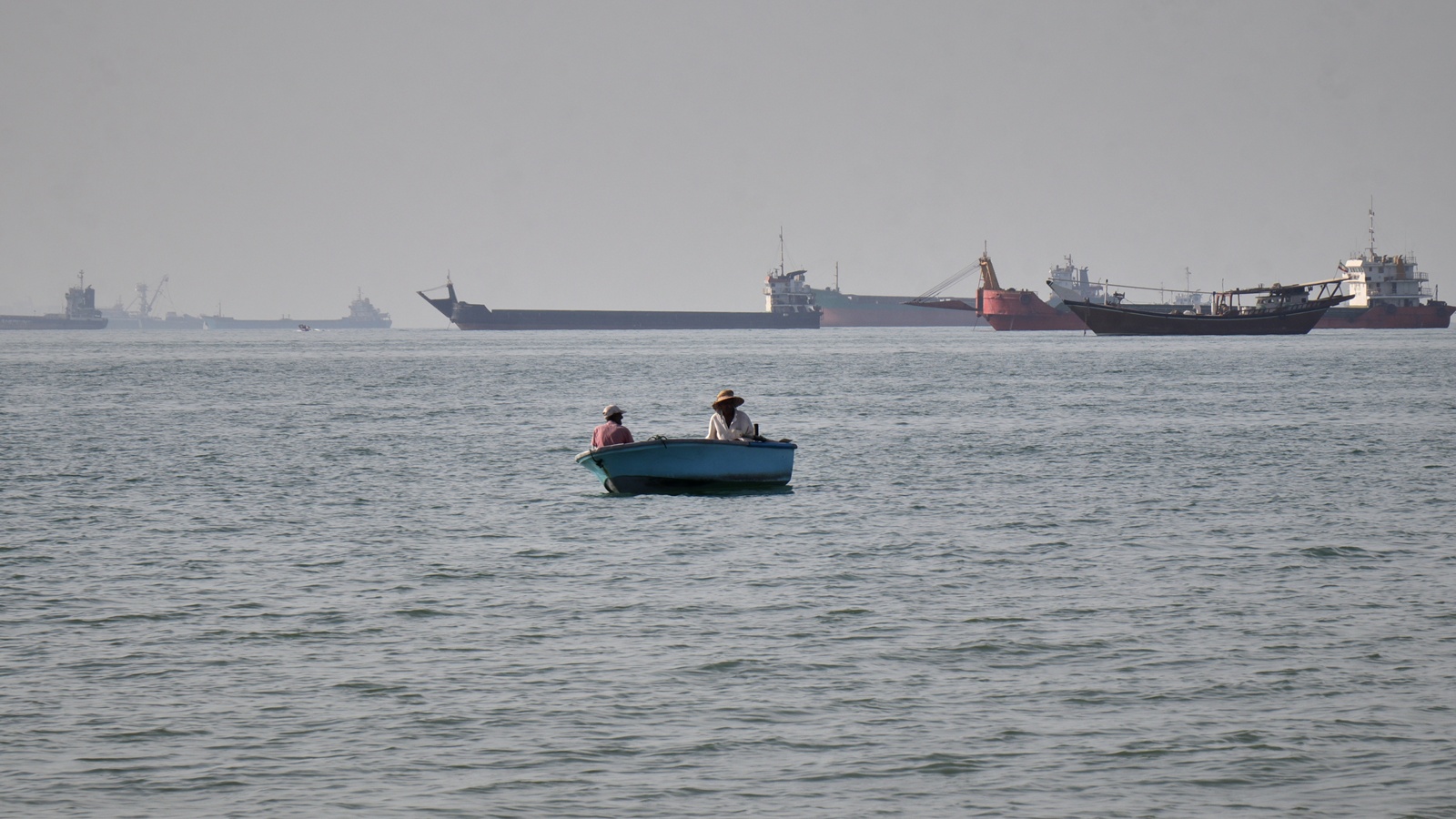
The recent incident involving the evacuation of 22 Indian nationals from a Panama-flagged tanker targeted by a drone strike off the coast of Sharjah exposes the systemic fragilities inherent in maritime energy transit logistics. When asymmetric airborne threats intercept commercial shipping in confined geopolitical waters, the disruption extends far beyond localized hull damage or crew displacement; it triggers an immediate recalibration of risk premiums across regional supply chains. Understanding this event requires shifting the analytical lens away from sensationalist reporting and toward structural mechanics: supply chain vulnerability, insurance rate elasticity, and the operational constraints of maritime security in contested corridors.
The Cost Function of Maritime Energy Transit
Commercial shipping operations rely on an implicit assumption of operational security within international waters. When asymmetric actors introduce low-cost aerial munitions into these zones, the economic equilibrium shifts drastically. The primary variables affected are vessel turnaround times, crew hazard compensation, and hull-and-machinery insurance costs.
Total Route Cost = Base Operating Expenditure + (Risk Probability × Impact Severity) + Insurance Premium Escalation
When a vessel flying a flag of convenience, such as Panama, is targeted in the Persian Gulf or adjacent waters, the market response is immediate. Underwriters re-evaluate the War Risk Area classifications managed by the Joint War Committee. A single confirmed kinetic strike against a commercial tanker forces a cascading adjustment in premiums for all vessels operating within a defined radius, regardless of their specific registry or cargo profile. This introduces a structural friction cost that energy importers absorb incrementally through delivered commodity pricing.
Operational Anatomy of Asymmetric Interdiction
The employment of uncrewed aerial systems against commercial shipping represents a high asymmetric yield strategy. The capital expenditure required to manufacture or deploy a loitering munition or reconnaissance drone is orders of magnitude lower than the cost of the asset it targets or disrupts.
Asymmetry Ratio = Target Replacement Value / Weapon Deployment Cost
In the context of the Sharjah incident, the strategic utility for the attacking entity does not depend on total destruction of the hull or cargo loss. The objective is operational deterrence and the elevation of perceived risk. Commercial tankers are optimized for carrying capacity and fuel efficiency, not kinetic survivability. They lack active point-defense systems, dedicated electronic warfare countermeasures, or hardened command-and-control compartments. Consequently, even a rudimentary surface-to-surface or air-to-surface vector creates an unacceptable operational hazard, forcing emergency evacuation protocols, engine shutdowns, and extensive structural integrity assessments.
Supply Chain Propagation and Crew Logistics
The human element remains the most critical point of failure in kinetic maritime disruptions. Crew availability and willingness to sail into high-risk zones follow strict regulatory and contractual thresholds, notably those established by the International Transport Workers Federation and local maritime authorities.
When an evacuation of 22 personnel is executed—as occurred with the Indian crew members off Sharjah—the secondary impact is immediate labor friction. Manning agencies face heightened resistance from maritime professionals assigned to transit high-risk corridors. This dynamic introduces schedule delays, as replacement crews demand higher hazardous duty pay or refuse transit altogether, leading to vessel demurrage and port congestion.
Furthermore, flag state obligations require rigorous accident investigation and safety audits before a damaged or attacked vessel can resume commercial service. The regulatory compliance queue compounds the direct physical damage, extending the asset downtime from days to weeks.
Geopolitical Contagion and Rerouting Mechanics
Maritime security incidents do not occur in a vacuum; they accelerate the fragmentation of global shipping routes. When the risk profile of narrow passages like the Strait of Hormuz or the approaches to the United Arab Emirates deteriorates, shipping operators model the financial feasibility of alternative routing.
However, for ultra-large crude carriers and product tankers servicing specific regional refineries, geographic workarounds are frequently nonexistent or economically prohibitive. Unlike container shipping, which can absorb extended transit times around alternative capes for high-value goods, crude and refined product logistics operate on strict inventory buffers and refinery feed requirements.
Strategic Risk Mitigation and Future Execution
Mitigating the vulnerabilities exposed by maritime drone interdiction requires a shift from reactive defense to systematic risk engineering. Commercial operators and flag administrations must address three operational imperatives to maintain continuity:
- Passive Defense Integration: Retrofitting commercial fleets with rudimentary acoustic, optical, and radar-based early warning systems to detect low-altitude inbound vectors early enough to sound general alarms and muster crews to citadel spaces.
- Dynamic Risk Pricing Models: Moving away from static war-risk surcharges toward real-time telemetry-driven insurance mechanisms that reward vessels utilizing active counter-measure protocols or hardened transit formations.
- Contingency Labor Protocols: Establishing pre-vetted, rotation-based hazard pay frameworks and rapid repatriation pipelines to mitigate the downstream bottlenecks caused by crew trauma and refusal-to-sail provisions.
The systemic exposure highlighted by the Sharjah tanker strike demonstrates that modern maritime logistics must account for kinetic disruption as a persistent operational variable rather than a statistical anomaly. Securing these trade lanes demands alignment between commercial shipowners, naval coalition escorts, and flag state regulators to compress the reaction window against low-cost asymmetric threats.