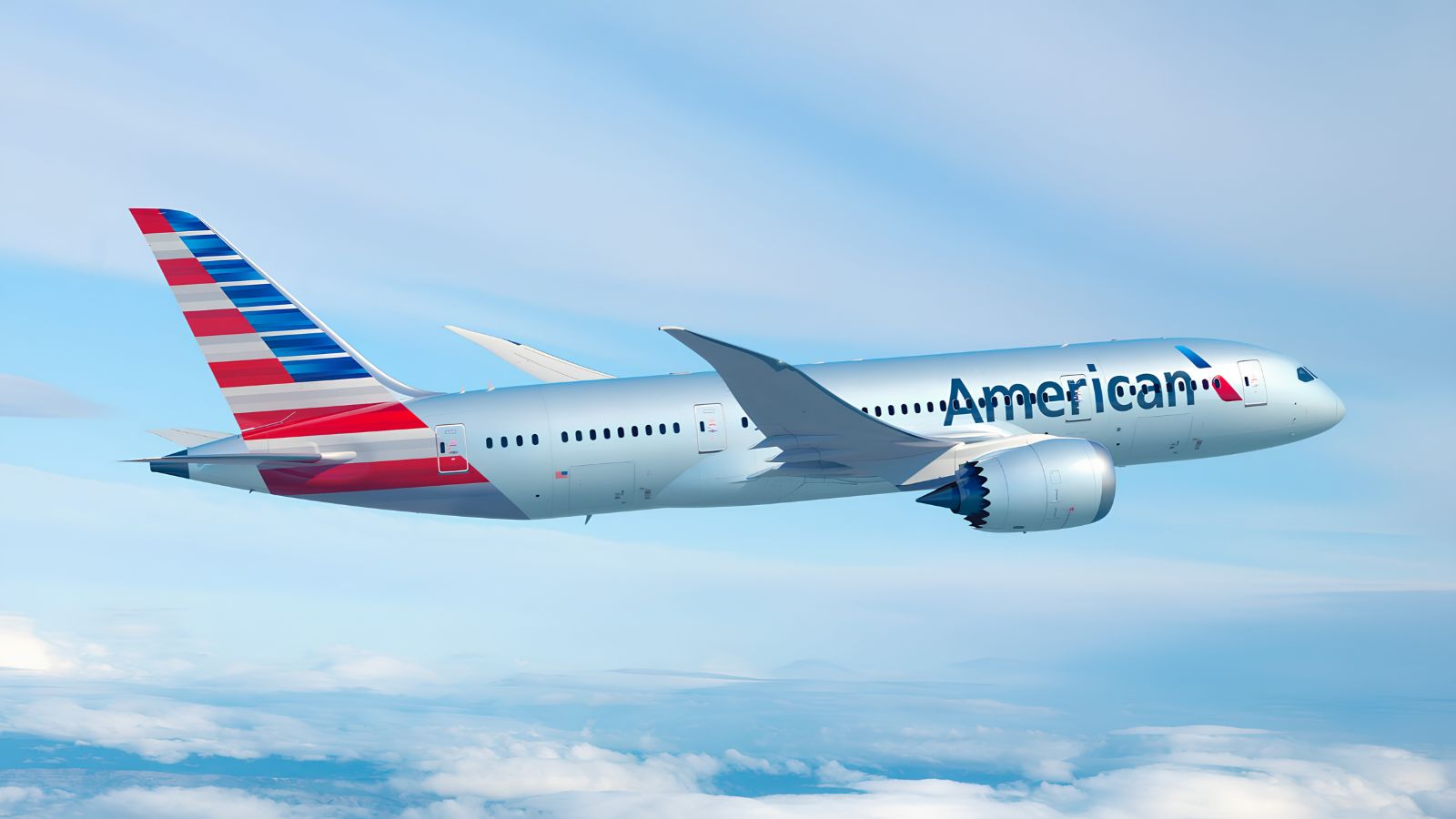
When an American Airlines pilot declares a Mayday after spotting flames coming from an engine, the flight crew is executing a rehearsed, high-priority emergency return—not presiding over an uncontrollable catastrophe. Despite the visceral terror of watching fire streak past a cabin window, modern commercial jet engines are engineered to contain internal fires, shut down cleanly, and allow a twin-engine airliner to fly and land safely on a single remaining powerplant.
The disconnect between what passengers see through an oval acrylic window and what pilots manage on the flight deck defines almost every high-profile engine emergency in modern aviation. Headlines thrive on the word "Mayday" and the image of fire at thirty thousand feet. Aviation investigators, mechanics, and veteran captains look at the exact same event and see a textbook sequence of mechanical containment and human procedural discipline.
What Actually Happens When an Engine Spits Fire
Fire inside a jet engine is normal. In fact, continuous, controlled combustion is the entire point of a gas turbine. Air enters the front fan, gets squeezed through multiple stages of spinning compressor blades until it is intensely hot and pressurized, mixes with atomized Jet-A fuel in the combustor, and ignites to spin the turbine blades at the back.
Trouble begins when that carefully balanced airflow is disrupted.
When a flight crew or passenger sees flames shooting out of the exhaust nozzle—or occasionally pulsing out of the front intake—they are almost always witnessing a compressor stall or a compressor surge, rather than an uncontrolled structural fire burning through the wing.
A compressor stall occurs when the aerodynamic angle of the air hitting the internal compressor blades becomes too steep, causing the airflow to separate from the blade surfaces just like an airplane wing stalls at too high an angle of attack. Because the high-pressure air behind the compressor suddenly loses its forward momentum, it violently reverses direction. Unburned fuel and superheated gases get pushed backward or blasted out the exhaust in loud, rhythmic bangs accompanied by bright orange streaks of flame.
Common triggers include:
- Bird strikes or foreign object debris (FOD) that bend or chip the leading edges of titanium fan blades, ruining the aerodynamics inside the core.
- Abrupt throttle changes during turbulent air or wind shear, momentarily starving or choking the compressor stages.
- Internal mechanical wear, such as a cracked turbine blade, a degraded bleed valve failing to release excess pressure, or an oil seal failure that allows lubricating oil to vaporize in the hot section.
In rarer cases, an actual engine fire occurs outside the combustion chamber—typically when a fuel line cracks or a hydraulic fitting leaks onto a scorching engine casing. Even then, the fire is trapped inside the nacelle, the aerodynamic housing wrapped around the engine. Nacelles are lined with fireproof titanium and stainless-steel firewalls specifically rated to withstand direct flame impingement for at least fifteen minutes—more than enough time for a crew to run their checklist and discharge fire-extinguishing agents.
Decoding the Mayday Call on the Flight Deck
To the general public, "Mayday" sounds like a final distress cry before impact. In air traffic control (ATC) phraseology, it is simply a classification tool that clears bureaucratic airspace in seconds.
Aviation radio communications divide urgent situations into two strict tiers:
- Pan-Pan indicates an urgent situation requiring priority handling, where there is no immediate danger to life or the aircraft (for example, a medical issue or a minor hydraulic fault).
- Mayday indicates a condition of grave and imminent danger requiring immediate assistance.
An engine fire warning or confirmed visual flames automatically triggers a Mayday call under standard operating procedures at major carriers like American Airlines. The pilot flying focuses exclusively on flying the airplane—maintaining airspeed, arresting any climb, and turning toward the nearest suitable airport. Meanwhile, the pilot monitoring keys the microphone and broadcasts the Mayday.
That single word instantly alters the airspace around the jet. Air traffic controllers halt departures on the destination runway, vector surrounding airliners out of the way, clear the stricken aircraft directly to the final approach course without standard altitude restrictions, and scramble Aircraft Rescue and Firefighting (ARFF) trucks to line the taxiways before the wheels even touch asphalt.
The Memory Items Checklist
Before a pilot even pulls out a paper Quick Reference Handbook (QRH) or reads an electronic checklist on the cockpit display, an engine fire or severe damage event demands memory items—actions so critical that pilots must execute them from muscle memory within seconds:
- Autothrottle: Disengage.
- Thrust Lever (affected engine): Confirm and retard to idle.
- Engine Start Lever (affected engine): Confirm and move to Cutoff (this immediately severs fuel flow to the engine).
- Engine Fire Switch (affected engine): Pull (this isolates electrical power, hydraulic fluid, and pneumatic bleed air from the burning engine so it cannot feed a fire or contaminate cabin air).
- Fire Bottle Discharge: Rotate the fire switch to discharge halon extinguishing agent from pressurized bottles into the engine nacelle.
Notice the word "Confirm" at every step. One of the deadliest mistakes in aviation history is shutting down the wrong engine during a high-stress emergency. Both pilots must visually verify and verbally agree on which throttle and which fire handle belong to the malfunctioning engine before pulling anything.
The Engineering Margin Built Into Twin-Engine Jets
Every modern commercial airliner operated by American Airlines—whether a narrowbody Boeing 737 or Airbus A321, or a widebody Boeing 777 or 787—is certified to fly, climb, and land safely with only one functioning engine.
This is not an optimistic assumption. It is a rigid mathematical requirement enforced by the Federal Aviation Administration (FAA) and international regulators before an aircraft design can carry a single paying passenger.
During takeoff, the most critical phase of flight, pilots calculate a speed known as V1—the takeoff decision speed. If an engine fails or catches fire before V1, the pilots abort the takeoff and stop on the remaining runway. If an engine explodes into flames one knot after V1, the pilots are trained and legally required to continue the takeoff on the remaining engine, climb out over obstacles, enter a holding pattern or downwind leg, run the checklists, and land.
For long-haul flights over oceans or remote terrain, twin-engine jets operate under ETOPS (Extended-range Twin-engine Operational Performance Standards). Depending on the specific airframe and maintenance pedigree, an ETOPS-certified twinjet is approved to fly up to 180, 240, or even 330 minutes away from a diversion airport on a single engine.
Flying for five and a half hours over open water on one engine requires massive redundancy. Modern turbofans like the CFM LEAP or the General Electric GEnx are built with thick containment rings made of Kevlar or reinforced alloy wrapped around the fan case. If a fan blade snaps at full rotational speed, the containment ring is engineered to absorb the kinetic energy and prevent shrapnel from piercing the fuselage or puncturing wing fuel tanks.
Why Engine Incidents Feel More Common Than They Are
If jet engines are marvels of metallurgy and redundancy, why does it feel like engine fires and emergency landings dominate aviation news cycles?
The answer lies in three converging realities: ubiquitous cameras, hyper-connected reporting, and the brutal math of fleet utilization.
Twenty years ago, a compressor surge on a regional departure resulted in a routine turnback, a quiet gate swap, and a brief entry in an FAA database that nobody outside the industry ever read. Today, every passenger holds a high-definition, low-light-capable video camera in their hand, paired with in-flight Wi-Fi that allows them to upload footage of sparks streaming off a wing before the aircraft has even finished taxiing to the gate.
At the same time, major U.S. carriers operate thousands of flights every single day. American Airlines alone operates roughly 6,000 daily flights across its mainline and regional network. Statistically, mechanical anomalies—bird strikes, sensor faults, bleed-air leaks, and compressor stalls—happen every week across global aviation. None of them indicate a systemic collapse in safety. In fact, commercial aviation in the United States has gone well over a decade without a major mainline passenger carrier fatal crash, a safety record unmatched by any other mode of mass transit.
The Hidden Strain of Supply Chains and Aging Fleets
There is, however, an industry nuance that press releases gloss over. While overall safety margins remain intact, global aviation maintenance is navigating significant supply chain bottlenecks.
Delays in new aircraft deliveries from both Boeing and Airbus have forced airlines to keep older aircraft in active service longer than originally scheduled. Meanwhile, specialized engine overhaul shops have faced shortages of skilled machinists and raw materials—particularly titanium and nickel-based superalloys—creating backlogs for routine engine shop visits.
Keep an older engine flying longer between major teardowns, and you do not compromise core safety limits—regulators enforce strict cycle limits on life-limited parts—but you do increase the statistical likelihood of operational disruptions: cracked seals, worn actuators, sensor glitches, and occasional compressor stalls that force a precautionary Mayday return.
What Passengers Need to Understand About Survival
When an engine fails or catches fire, the greatest threat to passengers is rarely the mechanical failure itself. It is human behavior during an evacuation.
If an aircraft lands with a confirmed engine fire or smoke in the cabin, the flight crew may command an emergency evacuation on the runway or taxiway. Modern airliners are certified to evacuate every single passenger through half of the available exits in 90 seconds or less.
That 90-second margin collapses the moment passengers stand up and reach for overhead bins.
In multiple real-world runway evacuations over the past decade, video footage from outside the aircraft has shown passengers sliding down inflatable chutes clutching roller bags, backpacks, and duty-free shopping bags. Every second spent wrestling a suitcase out of an overhead compartment blocks the aisle behind you, slows the flow rate at the exit doors, and risks tearing an inflatable evacuation slide with sharp bag corners.
If you are ever on a flight where the crew declares an emergency and prepares the cabin for a rapid exit:
- Leave everything behind. Your laptop, passport, and luggage are replaceable; the thirty seconds you spend grabbing them could cost someone ten rows back their life.
- Count the seat rows to the nearest exit before takeoff, both in front of and behind you, because thick smoke can instantly drop cabin visibility to zero.
- Follow flight attendant commands immediately. Cabin crew are not hospitality workers; they are safety professionals trained to assess outside fire conditions through door viewports and block exits that open onto burning fuel or spinning engines.
Where the Investigation Goes Next
Once an American Airlines flight lands safely after a Mayday declaration, the real investigative work begins away from the airport cameras.
Federal investigators from the National Transportation Safety Board (NTSB) and the FAA—alongside engine manufacturer representatives and airline safety engineers—immediately pull two critical recorders from the tail of the jet: the Flight Data Recorder (FDR), which logs thousands of engine parameters per second (exhaust gas temperature, N1 and N2 rotor speeds, fuel flow, oil pressure, and vibration levels), and the Cockpit Voice Recorder (CVR), which captures the crew's internal coordination and checklist execution.
Maintenance crews borescope the engine core using fiber-optic cameras to inspect compressor and turbine blades without dismantling the nacelle. If a part failed prematurely, manufacturers issue service bulletins or the FAA mandates Airworthiness Directives across every airline flying that engine variant worldwide.
A Mayday call over an engine fire is dramatic, loud, and deeply unsettling for everyone strapped into the cabin. Yet when the aircraft touches down intact, taxies clear of the runway, and parks safely while fire crews verify the nacelle is cool, the system did not fail—it worked exactly as designed.