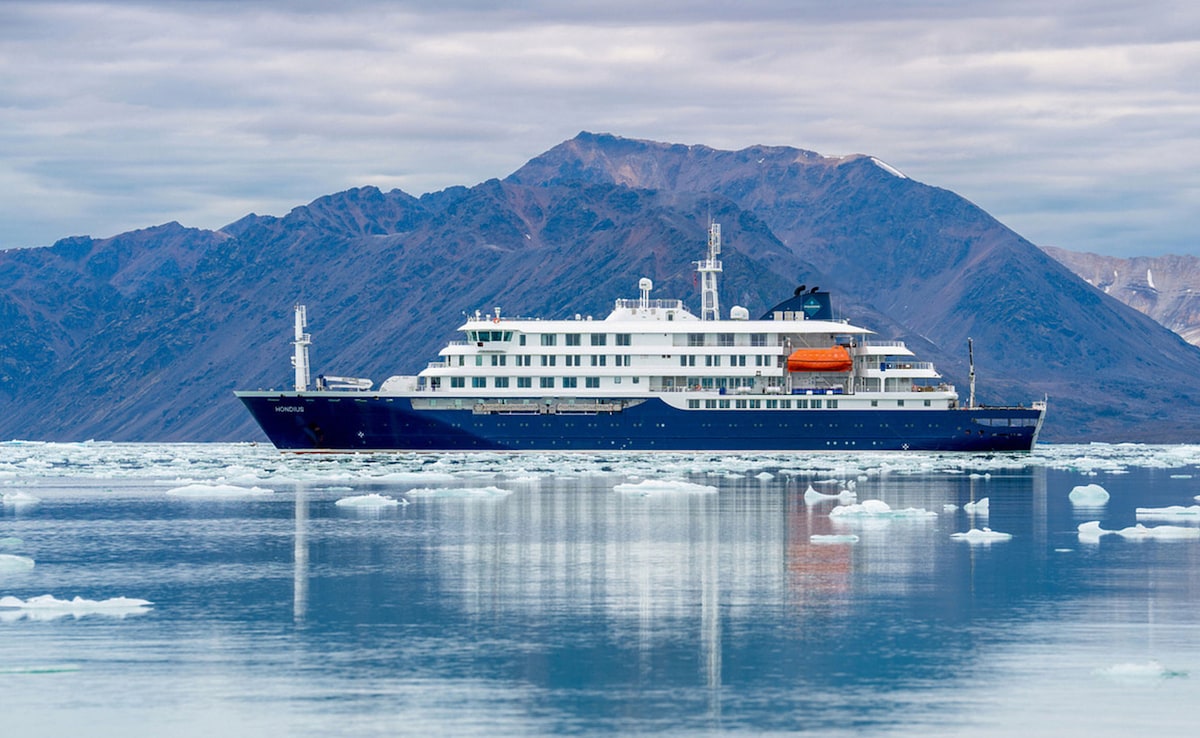
The arrival of a vessel carrying confirmed Hantavirus cases at a high-density transit hub like Tenerife represents a complex intersection of epidemiological risk and maritime law. Unlike respiratory viruses that rely on aerosolized droplets for rapid person-to-person transmission, Hantavirus Pulmonary Syndrome (HPS) and Hemorrhagic Fever with Renal Syndrome (HFRS) are governed by specific zoonotic vectors. The World Health Organization (WHO) update regarding this incident serves as a blueprint for biological containment in closed-loop environments. To understand the risk profile, one must deconstruct the situation into three distinct vectors: the Environmental Reservoir, the Transmission Bottleneck, and the Institutional Response Matrix.
The Environmental Reservoir: Rodent-Vessel Symbiosis
The presence of Hantavirus on a ship is rarely a matter of human-to-human introduction; it is a symptom of a breached ecological barrier. Hantaviruses are primarily carried by rodents—specifically rats and mice in the maritime context. These rodents shed the virus through saliva, urine, and feces.
On a ship, the internal architecture creates an ideal incubation chamber. The Vertical Transmission Risk within a vessel is amplified by:
- HVAC Integration: While Hantavirus is typically not transmitted between humans via air, the aerosolization of dried rodent excrement within confined ventilation ducts allows the virus to bypass localized containment.
- Structural Interconnectivity: Ships possess "rat runs"—cable conduits and piping voids—that allow vectors to move between decks without entering crew or passenger spaces, making traditional visual inspections ineffective.
- Humidity and Survival: Environmental stability impacts viral longevity. Hantaviruses are enveloped viruses, meaning they are susceptible to desiccation. However, the high-humidity environments of engine rooms and bilge areas can extend the viability of the virus outside a host for several days.
The Transmission Bottleneck: Quantifying Human Risk
The public anxiety surrounding the Tenerife docking often stems from a misunderstanding of how Hantavirus propagates. In the vast majority of strains, humans are "dead-end hosts." The virus lacks the molecular machinery to efficiently shed from one human respiratory tract to another. The primary risk to the population of Tenerife is not the infected crew members themselves, but the potential for the Zoonotic Spillover to local rodent populations during the docking and unloading process.
The "Transmission Bottleneck" is defined by two variables:
- The Inhalation Threshold: The concentration of aerosolized viral particles required to trigger an infection. In a maritime setting, this is highest during "disturbing events" like sweeping or cleaning storage lockers where rodent activity was present.
- The Vector Escape Probability: The likelihood of infected rodents leaving the ship and entering the port infrastructure. If the ship's physical barriers—such as rat guards on mooring lines—fail, the virus can shift from a contained maritime issue to a localized endemic threat.
The Institutional Response Matrix
The WHO’s updated guidance for Tenerife focuses on a tiered containment strategy designed to decouple the medical treatment of the infected from the biological clearance of the vessel. This is categorized into three operational pillars.
Pillar I: Clinical Decoupling
The first objective is the extraction of infected individuals without compromising the sterile field of the port. This requires Biocontainment Level 3 (BSL-3) transport protocols. The clinical challenge of Hantavirus is its long incubation period—often 1 to 8 weeks. This creates a "lag-time distortion" where asymptomatic crew members may currently be incubating the virus, necessitating a mandatory 21-day observation period for the entire manifest regardless of current health status.
Pillar II: Vector Eradication and Forensic Sanitization
Once the human element is addressed, the ship becomes a biological site. Standard cleaning is insufficient. The WHO protocol mandates:
- Wet-Down Neutralization: Using 10% bleach solutions or equivalent virucidals to saturate any potential excrement sites before physical removal. This prevents the very aerosolization that leads to human infection.
- Fumigation Saturation: The use of rodenticides combined with professional-grade disinfectants throughout the HVAC system.
- Thermal Treatment: Where applicable, raising the temperature of specific compartments to levels that denature the viral envelope.
Pillar III: Port-Side Surveillance
The final pillar involves the creation of a "Buffer Zone" around the Santa Cruz de Tenerife docks. This involves intensified trapping and testing of local rodents to ensure that no "pathogen jump" has occurred. This is a data-driven process where the Viral Genomic Signature from the ship's rodents is compared against any positive cases found in the port to track the path of transmission.
Mathematical Modeling of the Outbreak Potential
To calculate the true risk to Tenerife, analysts use a basic reproductive number $R_0$ that differs from typical infectious diseases. In a human-to-human context, the $R_0$ for Hantavirus is effectively $< 1.0$ (with the notable exception of the Andes virus strain found in South America).
$$R_{eff} = R_h + (V_e \times S_l)$$
Where:
- $R_{eff}$ is the Effective Reproduction Rate.
- $R_h$ is the human-to-human transmission rate (assumed near zero).
- $V_e$ is the Vector Escape rate (rodents leaving the ship).
- $S_l$ is the Spillover Likelihood to local rodent populations.
If $V_e$ is controlled through strict mooring protocols and hull inspections, the risk to the general public remains statistically negligible. The primary threat remains occupational for the dockworkers and specialized cleaning crews tasked with boarding the vessel.
Economic and Strategic Implications for Maritime Hubs
Tenerife’s status as a logistical linchpin in the Atlantic makes the management of this ship a high-stakes demonstration of "Health Security as Infrastructure." A failure in containment—or even the perception of a failure—can lead to:
- Route Diversion: Shipping lines may bypass ports perceived as having weak biological protocols to avoid their own vessels being quarantined at subsequent stops.
- Insurance Premium Spikes: Maritime insurance often includes "Pandemic and Infection" clauses that trigger higher rates if a port is flagged by the WHO as an active vector zone.
- Tourism Impact: For an economy reliant on cruise ship traffic, the psychological "stigma of infection" can be more damaging than the biological reality of the virus.
Operational Requirements for Port Authorities
The WHO update serves as a directive for local authorities to move beyond passive monitoring and into active intervention. The following tactical steps are non-negotiable for the safe resolution of the Tenerife incident:
- Zero-Contact Unloading: All supplies and medical extraction must be handled by teams in full Personal Protective Equipment (PPE) with independent oxygen supplies to mitigate inhalation risks.
- Effluent Management: No bilge water or waste can be discharged into the harbor. The virus can survive in contaminated water, potentially infecting marine life or coastal rodents.
- Long-Term Serological Tracking: Any port worker involved in the operation must be entered into a longitudinal health database to monitor for delayed-onset symptoms.
The situation in Tenerife is a test of the Global Health Regulations (IHR 2005). It demands a shift from viewing "health" as a social service to viewing "biosafety" as a core component of maritime logistics. The containment of Hantavirus is not a medical mystery; it is an engineering and procedural challenge. Success is measured by the total absence of viral markers in the local ecosystem 60 days post-departure.
Strategic focus must now pivot to the "Post-Extraction Sanitization" phase. The vessel must be treated as a dormant biological threat until a full 72-hour "hot-soak" disinfection protocol is completed and verified by independent laboratory analysis of internal surfaces. Only after these metrics are met should the port resume standard operations.