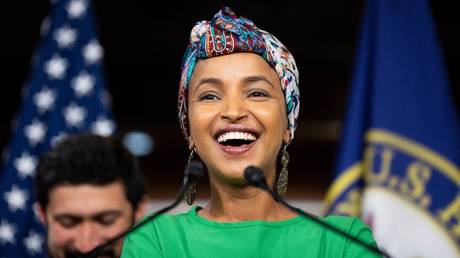
A federal judge handed down a prison sentence to a man convicted of assaulting a pro-Palestinian United States politician with vinegar, a striking incident that underscores the growing physical risks facing elected representatives amidst intense geopolitical polarization. The attack, which unfolded in a public setting and was captured on video, highlights a dangerous shift from heated rhetorical disagreement to physical aggression directed at lawmakers over foreign policy stances.
Security protocols for local, state, and federal politicians have undergone a radical transformation over the past decade. What used to be routine constituent outreach events or open-air public appearances now resemble high-threat security operations. Elected officials, particularly those who take vocal positions on contentious international conflicts, find themselves evaluating risk assessments before stepping out of their offices. The weaponization of everyday substances—ranging from chemical irritants and bodily fluids to caustic liquids like vinegar—presents a persistent challenge for security details tasked with maintaining public accessibility while ensuring personal safety. In other updates, take a look at: Why Dictators Are Actually Terrified of What You Think.
The Mechanics of Public Vulnerability
Politicians operate on a foundational premise of accessibility. Democratic governance requires public figures to meet constituents face-to-face, listen to grievances, and participate in community forums. This openness creates an inherent vulnerability.
When an individual approaches a public figure with the intent to harm, the window for intervention is measured in fractions of a second. Standard executive protection used for heads of state involves armored transport, advance teams, and strict perimeter controls. Local and regional politicians rarely possess these resources. City council members, state representatives, and members of Congress often attend public markets, rallies, and town halls with minimal staffing. TIME has provided coverage on this important topic in great detail.
Attackers exploit this low-threshold security environment. Using unconventional items such as household liquids allows perpetrators to bypass metal detectors or weapon-screening checkpoints that are typically calibrated for firearms and edged weapons. Vinegar, while non-lethal, acts as a debilitating irritant when splashed into the eyes or face, causing immediate disorientation and severe discomfort. The psychological impact often outweighs the physical injury, sending a chilling message to other public servants who take controversial stances on global or domestic issues.
Rhetorical Escalation and the Radicalization Pipeline
Physical assaults do not occur in a vacuum. They are almost invariably preceded by a sustained escalation in hostile rhetoric, both online and in media ecosystems. When political disagreements are framed in apocalyptic terms—where opponents are depicted not merely as wrong on the issues, but as existential threats to society—the psychological barrier to committing acts of violence begins to erode.
In the case of Middle East policy, polarization in the United States has reached a fever pitch. Lawmakers who voice support for Palestinian rights, as well as those who offer staunch backing for Israeli military actions, regularly face intense backlash from opposing activist blocs. Online harassment campaigns, doxxing, and threatening phone calls form the baseline of this hostility. For a small fraction of individuals already prone to volatile behavior, this digital outrage serves as a catalyst.
Investigators tracking political violence note a distinct behavioral pipeline. It starts with grievance consumption on social media algorithms designed to amplify outrage. It progresses to parasocial obsession with a specific political target. Finally, it manifests in real-world harassment or assault, often documented on video by the perpetrator or bystanders for digital clout. The recording and subsequent posting of these attacks function as a twisted form of validation within extremist echo chambers, incentivizing copycat behavior.
The Legal and Judicial Response
The judicial system faces a complex balancing act when prosecuting attacks against politicians. On one hand, courts must punish criminal conduct and deter future assaults through meaningful incarceration terms. On the other hand, prosecutors must navigate constitutional protections regarding free speech and political expression.
When an assault involves chemical substances or targeted harassment based on political views, federal and state statutes often provide pathways for hate crime enhancements or special sentencing considerations for crimes against public officials. However, securing convictions requires proving intent beyond a reasonable doubt, distinguishing between disorderly conduct, simple assault, and politically motivated terrorism.
The sentencing in this specific vinegar assault case sends a clear signal that courts will not dismiss low-tech attacks as mere pranks or minor nuisances. Spraying a caustic liquid into the face of an elected official is a calculated act of violence designed to intimidate and silence. Treating it with legal severity is necessary to preserve the rule of law, yet legal penalties alone cannot reverse the broader societal decay driving these incidents.
Protecting Democracy Without Gated Governance
The ultimate dilemma facing modern democracies is how to protect officials without retreating behind permanent walls of concrete and armed guards. If politicians become entirely inaccessible to the public, the representative model breaks down. Citizens lose the ability to look their leaders in the eye, ask hard questions, and hold them accountable in unscripted environments.
Law enforcement agencies and legislative bodies are currently grappling with this reality. Solutions being implemented include enhanced intelligence-sharing between local police and federal threat assessment centers, increased funding for residential security upgrades for vulnerable lawmakers, and stricter penalties for stalking and harassing public servants. Yet, technology and security details can only do so much against a determined adversary.
The preservation of open political discourse ultimately depends on cultural norms that reject violence and intimidation as legitimate tools of persuasion. Until political factions on all sides actively police their own extremes and de-escalate inflammatory rhetoric, elected officials will continue to walk a precarious line between public service and personal peril. The prison sentence handed down in this case closes one legal chapter, but the underlying vulnerability of those who step forward to govern remains an open wound in the American political landscape.


