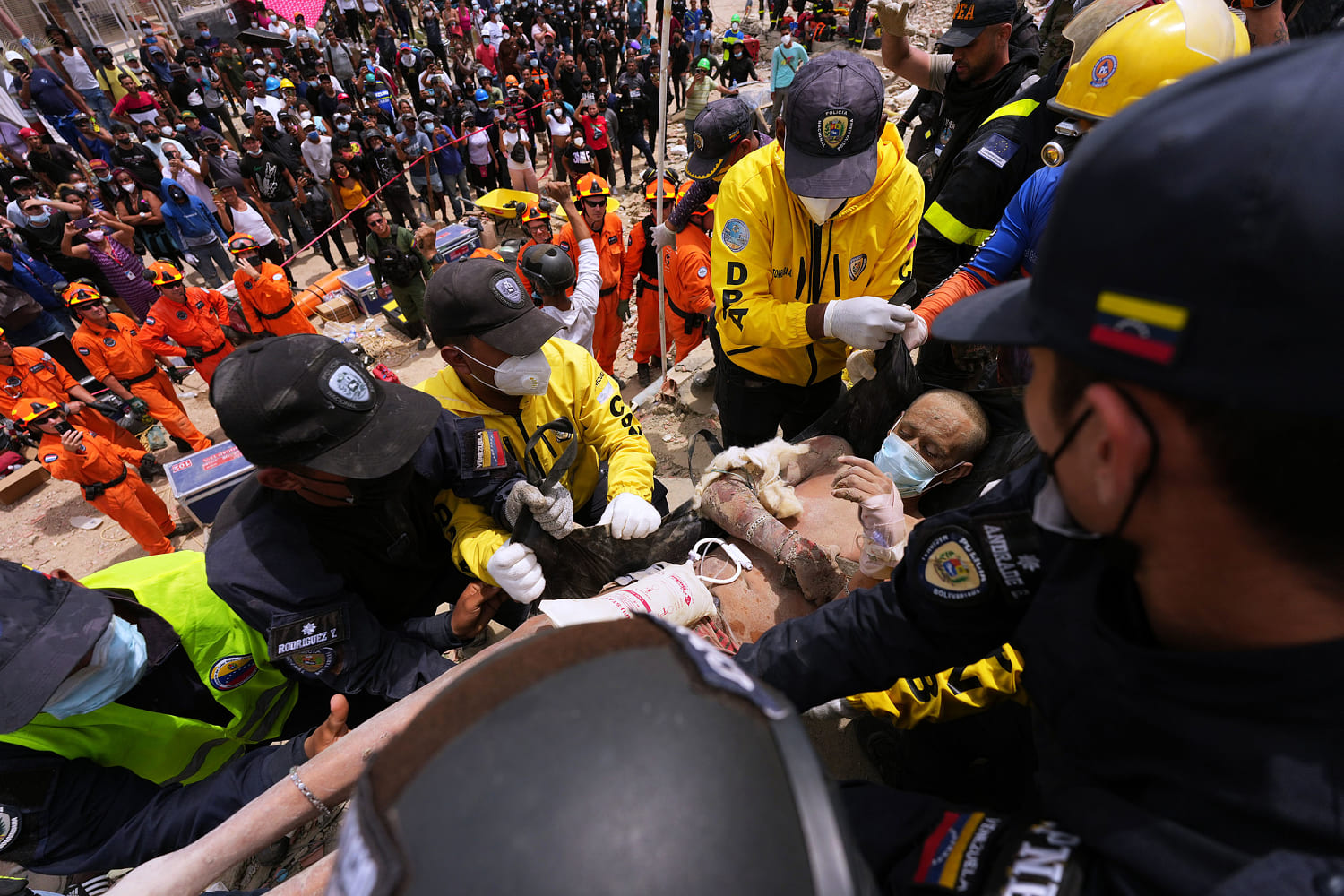
Northern Venezuela is buried under rubble. On Wednesday evening, two massive earthquakes struck the coast within less than sixty seconds of each other. The magnitude 7.2 and 7.5 tremors did not just shake the ground; they flattened entire apartment complexes, crushed vital infrastructure, and left a nation in total shock.
The numbers coming out of the country are staggering. Official reports confirm that at least 1,430 people are dead. But the real tragedy lies in what we do not see. Somewhere between 47,000 and 69,000 people are still missing. Let that sink in for a second. It is an entire stadium full of people, vanished under concrete and twisted metal. For a closer look into this area, we suggest: this related article.
If you are trying to understand why this disaster feels so chaotic, you have to look beyond the natural event itself. This is what experts call a complex humanitarian emergency. A disaster of this scale would challenge any wealthy nation. In Venezuela, it is hitting a country already stripped to the bone by a decade of economic ruin and political upheaval.
The Brutal Reality of a Tectonic Doublet
Geologists refer to back-to-back tremors like this as an earthquake doublet. They are rare. They are also incredibly destructive. The first 7.2 magnitude quake weakened structural foundations across northern coastal towns, particularly in La Guaira state. Before anyone could process what was happening or flee to safety, the second 7.5 magnitude shock hit. To get more information on the matter, in-depth coverage is available on The Washington Post.
Buildings that might have survived a single tremor collapsed instantly. Multistory residential blocks folded like accordions. The coastal zone near Caracas took the brunt of the force. One residential complex in La Guaira, which housed hundreds of families across four tall buildings, was reduced to a pile of dust. Rescue workers arriving at the scene described the destruction as total.
The physical geographic reality complicates everything. Venezuela sits on the boundary between the Caribbean and South American tectonic plates. While the region is seismically active, it has not seen a major tremor since 1997. The last time a quake of this specific magnitude hit was all the way back in 1900. People simply were not prepared. The buildings were not engineered to withstand a double blow of this force.
Digging With Bare Hands in La Guaira
Walk through the streets of Caraballeda or Catia La Mar right now, and you will see a harrowing sight. You will see grandmothers, teenagers, and fathers clawing at massive concrete slabs with their bare hands. They are not waiting for official rescue teams. They cannot afford to wait.
The shortage of heavy machinery is a massive bottleneck. Locals are using crowbars, car jacks, and plastic buckets to move tons of debris. Every hour matters. The survival window for individuals trapped under collapsed structures shrinks rapidly after seventy-two hours. While thirty-three survivors were pulled from the rubble over the weekend, including several young children, the pace of rescues is agonizingly slow.
The emotional toll is devastating. Families are caught in a limbo of hope and despair. Some residents report hearing faint tapping sounds from deep within pulverized buildings, but without cranes and excavators, they are powerless to lift the heavy columns pinning their loved ones down.
The Missing People Numbers Explained
You might wonder how a single disaster can leave over 50,000 people unaccounted for so quickly. The answer lies in the total breakdown of local communication and data collection. When the quakes hit, power grids collapsed across the entire northern region. Cell towers went dark. Water systems stopped pumping.
In the immediate aftermath, families inside and outside Venezuela had no way to verify if their relatives were alive. Independent online registries quickly filled the void. One digital registry documented over 51,000 missing individuals within forty-eight hours, while the official government estimate pushed closer to 69,000.
The search for information has moved to social media. Relatives from Madrid, Miami, and Bogota are flooding platforms like WhatsApp, Facebook, and X with digital flyers. They post photos, names, and last known locations, hoping against hope that their loved ones are merely stuck without cellular signal.
The digital search faced immediate roadblocks due to preexisting political censorship. Platforms like X and the encrypted messaging app Signal had been blocked inside Venezuela since August 2024. Following urgent pleas from the United Nations human rights mission, which argued that open communication channels save lives during disasters, the government temporarily restored access to X. This allowed locals to coordinate search efforts and share survival data in real-time.
A Broken Infrastructure Meets a Natural Disaster
To understand why the response is so slow, you have to understand the fragile state of Venezuela before the ground ever shook. The oil-rich nation has spent more than a decade enduring severe economic collapse. This long-term crisis effectively hollowed out public services long before this week.
Hospitals across the country operate with chronic shortages of basic medicine, bandages, clean water, and reliable electrical power. Emergency response units lack functioning vehicles, fuel, and specialized search tools. When the quakes struck, the existing medical system was immediately overwhelmed. Over 3,200 injured citizens flooded into clinics that barely had enough supplies for a normal week.
The political environment is equally delicate. Venezuela is currently in the middle of a highly unstable political transition. It has been just six months since the United States captured and removed leader Nicolas Maduro from power. Delcy Rodriguez is currently serving as the interim president, leading a fragile administration that is still trying to establish control over state institutions. Managing a historic natural disaster during a regime change is a logistical nightmare.
The International Relief Surge
Faced with a catastrophe of this magnitude, international aid organizations and foreign governments are moving resources into the country. United Nations humanitarian chief Tom Fletcher described the situation as an incredibly complex emergency response. The UN has mobilized search and rescue teams from at least seventeen different countries.
The geopolitical response has seen surprising shifts. The United States suspended several economic sanctions that could have blocked or slowed down the arrival of humanitarian aid. Washington deployed a disaster response team featuring more than 250 personnel, alongside specialized search units utilizing trained rescue dogs. Two US warships, transport planes, and helicopters are assisting with logistics, backed by 150 million dollars in direct humanitarian funding.
Other global players are moving fast. India launched Operation Amistad, sending two massive C-17 Globemaster military transport aircraft filled with relief supplies and a forty-one member specialized rescue team. The European Union announced an initial five million euros in emergency funds and activated its Copernicus satellite mapping system to help rescuers identify the hardest-hit zones from orbit.
What Needs to Happen Right Now
The next forty-eight hours will decide the fate of thousands of people trapped beneath the concrete. International rescue crews must get heavy lifting equipment directly into the coastal zones of La Guaira. Hand tools and goodwill are no longer enough to pierce the deepest layers of collapsed high-rises.
Field hospitals must be set up immediately outside the disaster zones to stabilize survivors before they are transported to Caracas. The influx of foreign medical personnel will help ease the burden on local doctors who have been working without sleep for days.
Clean drinking water and temporary shelter are the next massive challenges. With over 3,100 people confirmed homeless and municipal water systems destroyed, the threat of waterborne disease outbreaks is real. UNICEF estimates that roughly 3.9 million children live in the earthquake-affected areas, making the rapid distribution of food, clean water, and hygiene kits a top priority.
The window for miracles is closing fast. Coordinated international logistics, heavy machinery deployment, and unrestricted communication lines are the only tools left to prevent the massive list of missing persons from becoming a permanent list of casualties. To help or track missing relatives, check the verified digital registries managed by independent humanitarian networks and ensure your local contacts are utilizing the newly restored network access to update their status.