Municipal evolution is rarely accidental. The conversion of a coastal settlement into an international node of commercialized leisure requires specific structural catalysts, sustained capital inflows, and an institutional framework capable of scaling service delivery. The trajectory of Pattaya from an agrarian fishing outpost to a high-density entertainment economy is frequently attributed to cultural shifts or passive tourism trends. That perspective ignores the underlying economic mechanics. The foundational shock that triggered this transformation was institutionalized military logistics during the mid-twentieth century, specifically the introduction of structured Rest and Recreation programs by the United States Armed Forces during the Vietnam War.
The strategic geography of the eastern seaboard of Thailand provided an optimal testing ground for rapid urban scaling. To understand how foreign military deployment engineered an enduring commercial ecosystem, one must deconstruct the financial flows, zoning anomalies, and labor migrations that replaced traditional maritime trades with service-sector economies.
The Logistics of Demand Injection
During the escalation of regional conflicts in Southeast Asia, the United States military faced a critical personnel management variable: combat fatigue mitigation. Maintaining operational readiness among deployed units required scheduled decompression intervals. While regional alternatives existed, Thailand's alignment with Western security frameworks through the Southeast Asia Treaty Organization created a stable geopolitical corridor for institutionalized leave cycles.
The initial arrivals in the late 1950s and early 1960s operated on a localized, low-density model. Small increments of service members rotated through the coastline, generating immediate, localized purchasing power. This created an instantaneous shift in the local opportunity cost of labor. Traditional fishing and agrarian pursuits yielded incremental, weather-dependent returns. Providing lodging, food, and hospitality to foreign personnel yielded high-margin, immediate cash returns in foreign currency.
Foreign Military Demand -> Local Cash Injection -> Labor Shift from Agrarian to Service -> Capital Reinvestment -> Real Estate Density Scaling
This demand injection altered the local price elasticity of goods and services. Capital began to flow outward from regional hubs into the coastal strip. Early entrepreneurs constructed basic bungalows, eateries, and service stalls. As rotation volumes scaled into tens of thousands of personnel annually by the late Vietnam War era, informal market structures proved insufficient. The demand curve shifted from basic subsistence provisioning to high-throughput entertainment and hospitality logistics.
Institutional Infrastructure and Capital Accumulation
An economy cannot transition from subsistence to commercial scale without capital accumulation and property rights formalization. The rapid influx of United States military dollars acted as primary seed capital. Unlike domestic investments constrained by national liquidity shortages, military expenditure introduced external liquidity directly into the micro-economy.
External developers and domestic investors recognized the arbitrage opportunity presented by the coastal geography. Land values along the beachfront experienced steep appreciation gradients. The construction shifted from temporary wooden structures to multi-story concrete hotels, hospitality complexes, and formalized entertainment venues.
This real estate transformation was accompanied by specialized municipal zoning adjustments. The spatial layout of the town adapted to maximize commercial frontage and pedestrian throughput for transient consumers. When geopolitical shifts concluded the direct military presence in the mid-1970s, the structural infrastructure did not collapse. Instead, a substitution effect occurred. The physical assets, supply chains, and specialized labor pools engineered for military personnel were immediately repurposed to service civilian international tourists, primarily originating from Western Europe, and subsequently expanding into broader global demographics.
Path Dependency and Economic Lock-In
Economic systems governed by path dependency rarely revert to their initial states once a critical mass of specialized capital has been deployed. The concentration of entertainment infrastructure in Pattaya created a high barrier to exit for local capital holders.
The service-oriented labor market drew internal migration from resource-constrained rural provinces across Thailand. Workers migrated to capture higher nominal wages available in the hospitality sector compared to agrarian alternatives. This constant supply of elastic labor kept operational costs manageable for business operators while fueling high-density urban expansion.
By November 1978, the central government formalized this structural reality by enacting the Pattaya City Administration Act, establishing a specialized municipal management model distinct from standard provincial administration. This administrative autonomy allowed the municipality to streamline infrastructure development, waste management, and utility scaling tailored explicitly to a high-turnover tourist economy rather than a permanent residential community.
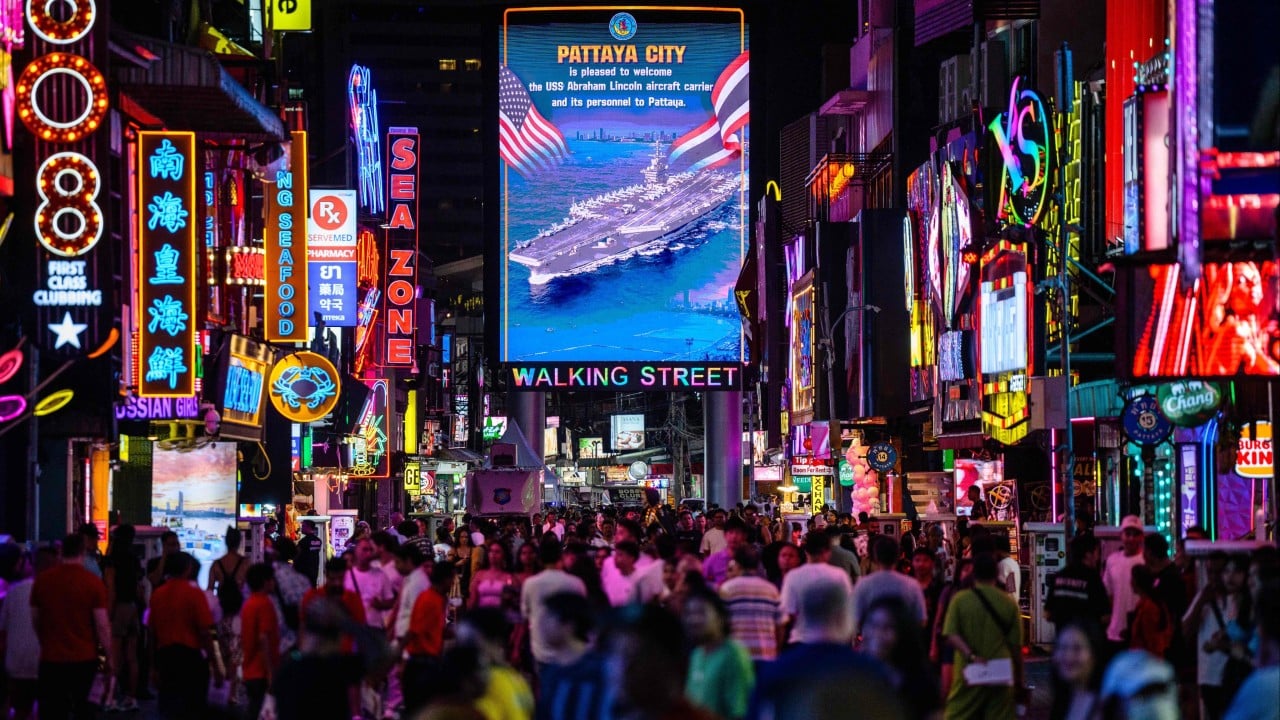
The ongoing presence of naval port calls, exemplified by contemporary carrier visits such as the USS Abraham Lincoln, demonstrates the persistence of these legacy supply chains. While the volume and demographics of the consumer base have diversified to include multi-national tourism cohorts, the foundational economic architecture remains anchored to the high-density service delivery models established during the mid-century military deployment era.
To project the trajectory of such specialized urban centers, regional planners must analyze asset depreciation rates, infrastructure capacity limits, and the transition costs associated with diversifying away from mono-economy entertainment models toward broader commercial ecosystems.
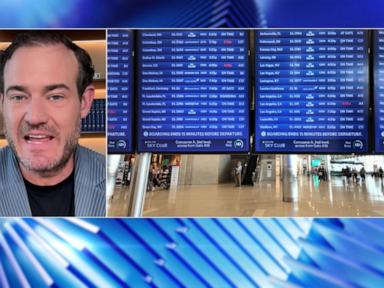
USS Abraham Lincoln arrives in Thailand
The selected video provides contextual coverage regarding the historical ties between United States naval port calls and the contemporary economic activity in Pattaya.