Borders are rarely just lines drawn on parchment or inked onto passports. They are psychological thresholds. They represent an unspoken covenant between the land that offers refuge and the individual stepping onto its soil. When an immigrant packs a single suitcase, leaves behind the familiar scent of woodsmoke and damp earth, and boards a trans-continental flight, they carry an invisible currency: trust.
Then comes the fall. If you liked this piece, you might want to read: this related article.
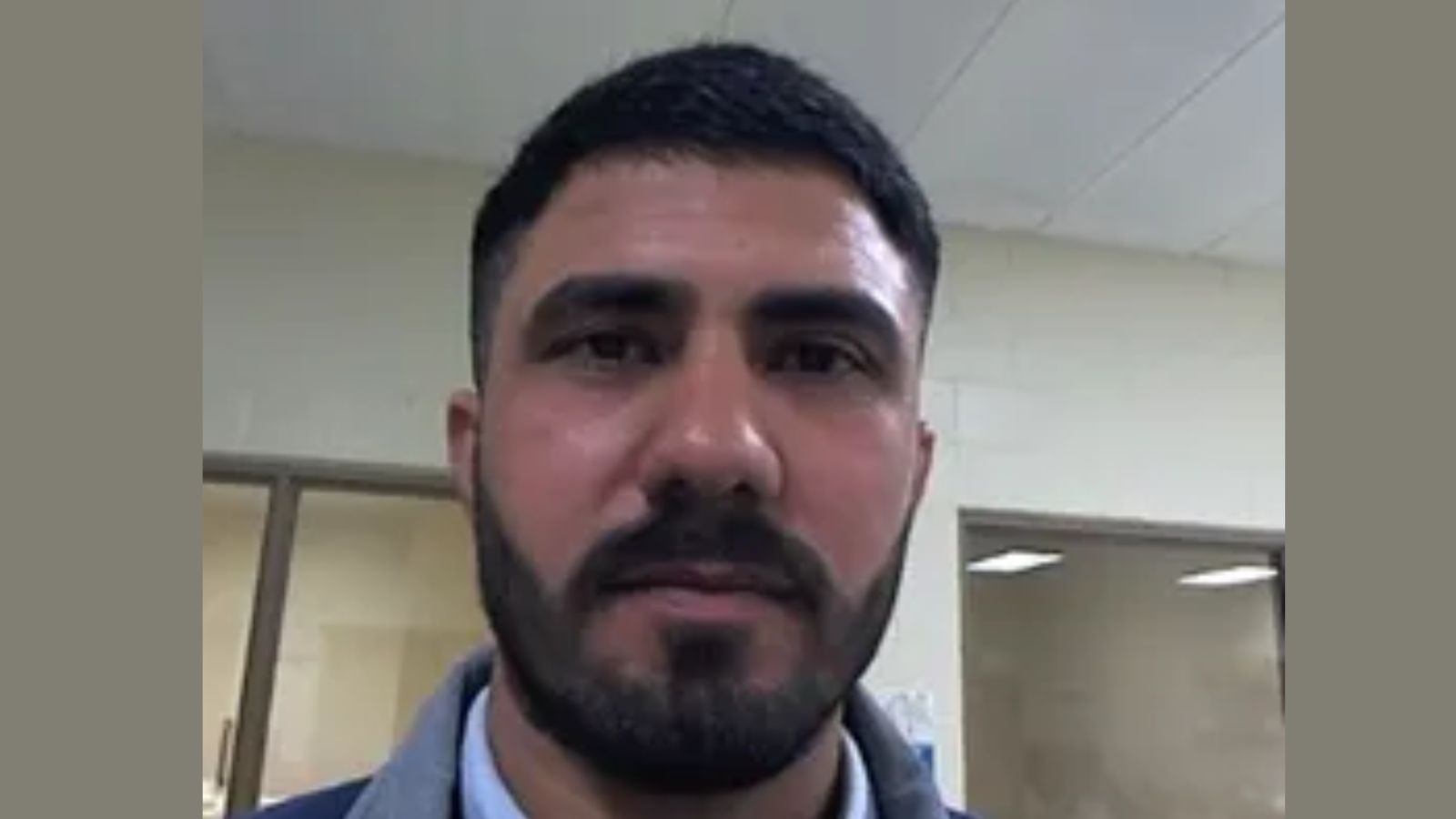
Consider the case of Jashandeep Singh, an Indian national whose journey to the United States ended not with the quiet dignity of a green card or the suburban hum of an American dream realized, but with a deportation flight back to the very place he thought he had outrun. The headlines are clinical. They speak of federal custody, immigration enforcement, and a conviction for sexually motivated coercion.
Yet underneath the dry legal briefs lies a darker, more unsettling human question. How does a person cross oceans, survive the grueling labyrinth of immigration, and ultimately self-destruct into a headline? For another look on this development, refer to the latest coverage from TIME.
The Anatomy of Displacement
To understand what happened, we have to look past the courtroom transcripts. Imagine a young man stepping off a plane in a bustling American port of entry years ago. Let us call this hypothetical early chapter the arrival. The air smells different. The neon signs hum in an unfamiliar alphabet. There is the overwhelming pressure of expectation—family back home relying on remittances, the crushing weight of having staked everything on a single, expensive gamble.
Displacement is a quiet fracture. When you uproot your entire existence, the familiar social guardrails that kept your impulses in check back home suddenly vanish. The community elders, the watchful eyes of extended family, the cultural taboos etched into childhood—they do not cross customs.
In the vacuum left behind, isolation breeds distortion.
Behavioral psychologists have long studied what happens when individuals are thrust into high-stress immigrant enclaves without adequate mental health support or social integration. The transition from being a respected member of a tight-knit village or town in Punjab to an invisible laborer in a sprawling, indifferent foreign economy can warp a person's sense of agency. Powerlessness is a dangerous intoxicant. When men feel entirely stripped of control over their external circumstances—their legal status, their financial stability, their social standing—some tragically seek control in the most destructive, illicit ways imaginable.
This is not an excuse. It is an explanation. And the law cares little for explanations when the line of consent is crossed.
The Crime and the Fall
The legal reality surrounding Jashandeep Singh is stark. His conviction for sexually motivated coercion represents a profound betrayal of the social contract. In the United States, the legal system draws an unyielding line around personal autonomy and bodily integrity. When that line is breached, the consequences are swift, absolute, and indifferent to where you were born.
Federal authorities did not view Singh merely as a non-citizen who committed a crime; they viewed him as a direct threat to public safety. The Department of Homeland Security, through Immigration and Customs Enforcement, operates with a singular mandate once a criminal conviction enters a migrant's record: removal.
For the victims, the trauma is permanent. No deportation flight, no administrative decree, and no overseas prison sentence can fully restore the sense of safety that was shattered. That is the true gravity of the crime. It echoes outward, leaving collateral damage that ripples through families, workplaces, and communities.
When the judge handed down the sentence, and subsequent immigration rulings cleared the path for removal, the machinery of the state moved with mechanical precision. Detention centers. Transfer orders. A final, heavily guarded flight back to India.
The Mirror We Avoid Looking Into
We read these stories with a comforting sense of detachment. We want to believe that monsters are manufactured in distant laboratories, that bad actors wear obvious labels, that a criminal is someone entirely distinct from the quiet neighbor, the grocery clerk, or the face passing us on the sidewalk.
That is an illusion.
The uncomfortable truth is that migration exposes the raw nerve of human nature. It strips away the varnish of civilization and leaves individuals standing bare against their own internal demons. When a man like Jashandeep Singh commits a violent, coercive act, it forces a reckoning not just within legal frameworks, but within immigrant communities who often find themselves bearing the collective stigma of an individual's monstrous choice.
Every time a headline breaks about a deportee with a violent record, the walls tighten for everyone else. The honest mechanics, the hardworking students, the parents working double shifts to put their children through college—they all inherit the shadow. They become subject to heightened suspicion, political weaponization, and generalized fear.
The Journey Home
Imagine the return.
Let us picture the tarmac at a bustling Indian international airport. The lights are blinding. The humidity hits like a physical blow. For Jashandeep Singh, the American chapter is over, erased by a stamp in a passport and a federal escort.
What awaits a deported offender in their homeland? Often, it is a mixture of profound shame, familial estrangement, and local notoriety. The village or neighborhood that once celebrated their departure with pride now looks upon them with a cold, unforgiving stare. The debt collectors may still be circling. The dreams of foreign wealth have mutated into a nightmare of disgrace.
There is no redemption arc guaranteed in the real world. Some stories do not end with a lesson learned or a hero reborn. Some stories simply collapse under the weight of their own destructive choices, leaving behind a cautionary tale etched in ruined lives and broken trust.
As the engines whine and the bureaucratic gears grind to a halt on another closed case, the fundamental lesson remains etched in the air. Borders can be crossed, laws can be enforced, and planes can fly in both directions. But character—once fractured by acts of violation and coercion—can rarely be repaired by distance alone.