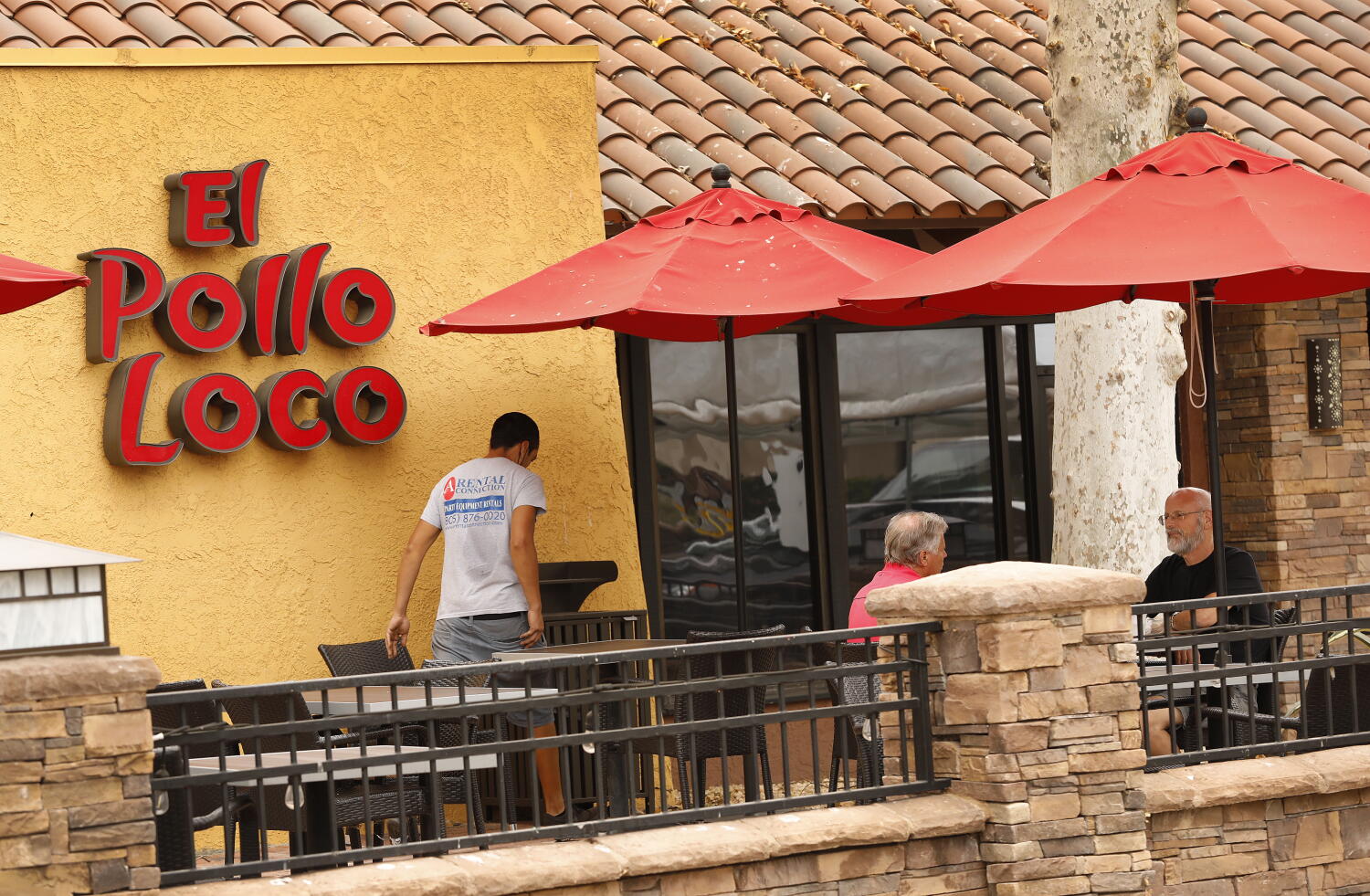
El Pollo Loco’s strategic positioning in California relies on capturing consumer trade-down behavior from traditional casual dining while defending its price floor against traditional quick-service restaurants (QSR). When inflation erodes discretionary income, restaurant operators face a binary choice: absorb commodity and labor inflation to preserve traffic, or raise menu prices to protect gross margins at the expense of transaction volume. El Pollo Loco’s "sweet spot" is an operational execution of cross-price elasticity optimization—positioning fire-grilled chicken as a high-protein, perceived-health alternative that undercuts sit-down dining checks while outperforming standard burger-and-fry QSRs on nutritional value per dollar.
The Macroeconomic Squeeze on California Foodservice
To understand why El Pollo Loco’s positioning functions as a defensive moat, one must examine the structural cost pressures unique to the California restaurant market. Operators in this geography contend with statutory wage floors—specifically the $20-per-hour minimum wage mandate for fast-food workers under AB 1228—alongside elevated commercial real estate costs, utility rates, and localized supply chain logistics. For a closer look into this area, we suggest: this related article.
In a standard QSR model, labor typically accounts for 25% to 30% of gross revenue, while Cost of Goods Sold (COGS) occupies another 25% to 30%. When statutory wage mandates force labor costs upward by 15% to 20% overnight, an operator's four-wall EBITDA margin compresses immediately unless offset by price increases, throughput gains, or labor-hour reductions.
Most national QSR chains responded to these pressures between 2022 and 2024 by aggressively raising menu prices. This strategy triggered demand destruction among low-income cohorts, whose real wages failed to keep pace with food-away-from-home inflation. Conversely, full-service casual dining chains (such as Applebee’s, Chili’s, or localized sit-down concepts) experienced severe traffic declines because the total out-of-pocket cost—comprising inflated menu prices, sales tax, and a 15% to 20% gratuity—pushed the average check past the psychological threshold of routine family dining. For additional details on this development, comprehensive analysis is available on Financial Times.
El Pollo Loco occupies the structural vacuum created by this divergence. By operating a limited-service, counter-order, and drive-thru model, the brand eliminates the gratuity burden of casual dining while offering a center-of-plate protein (bone-in, citrus-marinated, fire-grilled chicken) that consumers mentally categorize as a "real meal" rather than fast food.
The Architecture of Perceived Value
Consumer perception of value in foodservice is rarely a strict calculation of calories per dollar. During inflationary cycles, price-sensitive consumers evaluate purchases through a multi-variable utility function:
- Satiety and Protein Density: Refined carbohydrates and seed oils (the foundation of traditional QSR value menus) deliver high caloric density at low ingredient cost, yet they suffer from low satiety indices. Whole-muscle poultry provides superior protein density, which aligns with modern consumer preferences for functional nutrition and high-protein diets.
- Preparation Complexity: Consumers calculate the "make-versus-buy" ratio based on the labor required to replicate a meal at home. Marinating, fire-grilling, and preparing scratch-made salsas and sides (such as pinto beans and handmade tortillas) require substantial time and cleanup. Consumers willingly pay a premium over raw grocery costs to outsource this specific preparation friction, whereas assembling a basic burger or frying frozen potatoes offers minimal labor-arbitrage value.
- Shareability and Check Splitting: Family meal bundles—specifically 8-piece, 12-piece, and 16-piece chicken meals with bulk sides—alter the unit economics of the transaction. While an individual combo meal might retail for $11 to $14, a family bundle priced between $25 and $40 lowers the per-person cost to $6 to $8. This pricing architecture directly competes with home-cooked meals and grocery deli counters.
The Three Pillars of El Pollo Loco’s Margin Defense
Maintaining a value-oriented price point in a high-cost labor state requires strict operational discipline. El Pollo Loco’s ability to sustain its market position rests on three interconnected operational mechanisms.
1. Menu Architecture and Price-Tier Stratification
A successful value strategy does not mean lowering prices across the entire board; it requires engineering a barbell menu. At one end of the barbell sits the entry-level traffic driver—items priced under $5 or $10 (such as chicken tacos, burritos, or tostada salads) designed to capture solo diners and lunch-hour commuters who would otherwise defect to burger chains or convenience stores.
At the opposite end sit high-ticket family bundles and limited-time offers (LTOs) featuring premium ingredients like avocado, queso, or specialty sauces. The entry-level items protect transaction counts and maximize kitchen throughput during off-peak hours, while the upper-tier items drive average check size and expand gross margin dollars. By anchoring the consumer's attention on the accessible entry price, the brand mitigates sticker shock while relying on natural upsell mechanics at the point of sale.
2. Kitchen Throughput and Equipment Standardization
Fire-grilling bone-in chicken is inherently slower and more labor-intensive than dropping frozen protein into a deep fryer or clamping a beef patty on a flat-top grill. Bone-in poultry requires strict adherence to internal temperature thresholds (165°F minimum) and precise cook times (often exceeding 20 to 30 minutes depending on the cut) to prevent drying out the meat.
To prevent this cooking bottleneck from destroying drive-thru speed-of-service metrics, El Pollo Loco relies on predictive batch-cooking algorithms. Kitchen managers forecast demand in 15-minute increments based on historical point-of-sale data, weather patterns, and local events. Chicken is grilled continuously in staggered batches so that finished product lands in the holding cabinets precisely as peak demand arrives.
When executed correctly, this system decouples cooking time from order fulfillment time. A drive-thru order for a 12-piece family meal can be assembled and handed out the window in under 90 seconds, matching the speed of a standard burger QSR despite the complex preparation method.
3. Digital Ecosystem and Data-Driven Promotional Elasticity
Broad, untargeted discounting (such as coupon mailers or universal price cuts) erodes margins by subsidizing customers who would have paid full price. Modern fast-casual operators counter this by shifting promotional spend into proprietary loyalty apps and digital ordering channels.
Through digital segmentation, El Pollo Loco can deploy targeted price incentives based on individual purchase frequency and basket composition. A lapsed customer who has not visited in 45 days receives an aggressive discount (e.g., a free entrée with purchase) to reactivate the habit loop. A high-frequency loyalist receives rewards structured around add-ons or side upgrades, which carry high gross margins (often exceeding 75% to 80%) and increase total check size without discounting the core protein.
Structural Vulnerabilities and Operational Risks
While positioning between QSR and casual dining provides a temporary buffer against macroeconomic headwinds, this middle-market territory carries distinct structural vulnerabilities.
- Commodity Volatility in Poultry: Unlike diversified chains that can shift promotional focus between beef, pork, chicken, and plant-based proteins depending on spot market prices, El Pollo Loco is structurally exposed to poultry commodity cycles. Avian influenza outbreaks, feed grain price spikes, or processing plant bottlenecks directly compress COGS. Because the brand’s entire identity is anchored to fire-grilled chicken, it cannot easily substitute away from its primary input when wholesale breast or leg-quarter prices surge.
- Geographic Concentration Risk: With the vast majority of its store footprint concentrated in California and the American Southwest, the company lacks geographic diversification. Regulatory shifts, localized economic downturns, or regional minimum wage hikes impact the entire enterprise simultaneously rather than affecting a small fraction of a national portfolio. Expansion into non-core markets (such as the Pacific Northwest or Midwest) historically requires heavy marketing spend to educate consumers on the concept, often resulting in lower initial average unit volumes (AUVs) and slower store-level payback periods.
- The "Stuck in the Middle" Trap: In competitive strategy, occupying the middle ground between low-cost leadership and high-end differentiation requires constant calibration. If traditional QSR competitors (such as McDonald’s, Taco Bell, or Wendy’s) launch aggressive $5 meal deals, they pull price-sensitive solo diners away from fast-casual concepts. Simultaneously, if casual dining chains (such as Chili’s with its "3 For Me" value platform) aggressively discount sit-down meals to match fast-casual price points, they siphon away family dinner occasions. El Pollo Loco must continuously defend both flanks of its customer base without eroding its own margin structure.
Capital Allocation and Unit-Level Optimization
To sustain its competitive advantage as consumer discretionary spending remains constrained, El Pollo Loco’s leadership must prioritize operational efficiency and unit-level economics over aggressive, low-return geographic expansion.
- Automate Back-of-House Prep: High California labor rates demand that human capital be reallocated from repetitive preparation tasks to customer-facing throughput and quality control. Investing in automated vegetable dicers, pre-portioned marinade systems, and smart holding ovens that monitor moisture levels will reduce prep hours per store without degrading food quality.
- Optimize Footprint for Off-Premise Consumption: Traditional dining rooms represent dead capital when 70% to 80% of transactions occur via drive-thru, digital pickup, or third-party delivery. New store prototypes and remodels should shrink dining room square footage by 30% to 40%, reallocating that space to dual drive-thru lanes, dedicated mobile-order pickup shelves, and expanded kitchen prep lines. Lowering build-out costs per square foot directly improves cash-on-cash returns for both corporate stores and franchisees.
- Engineer High-Margin Beverage and Side Attach Rates: Protein costs will remain structurally elevated. Margin expansion must come from attaching high-margin non-protein items to every ticket. Introducing proprietary specialty beverages (such as aguas frescas, horchata variations, or functional iced teas) alongside craveable, low-COGS sides creates incremental gross profit dollars that insulate the bottom line against poultry inflation.
El Pollo Loco’s current momentum is a direct result of macroeconomic dislocation favoring its specific value proposition. However, consumer trade-down tailwinds are cyclical. Converting temporary traffic gains into permanent market share requires locking in back-of-house labor efficiencies and downsizing physical real estate footprints before competitor discounting compresses the pricing umbrella.