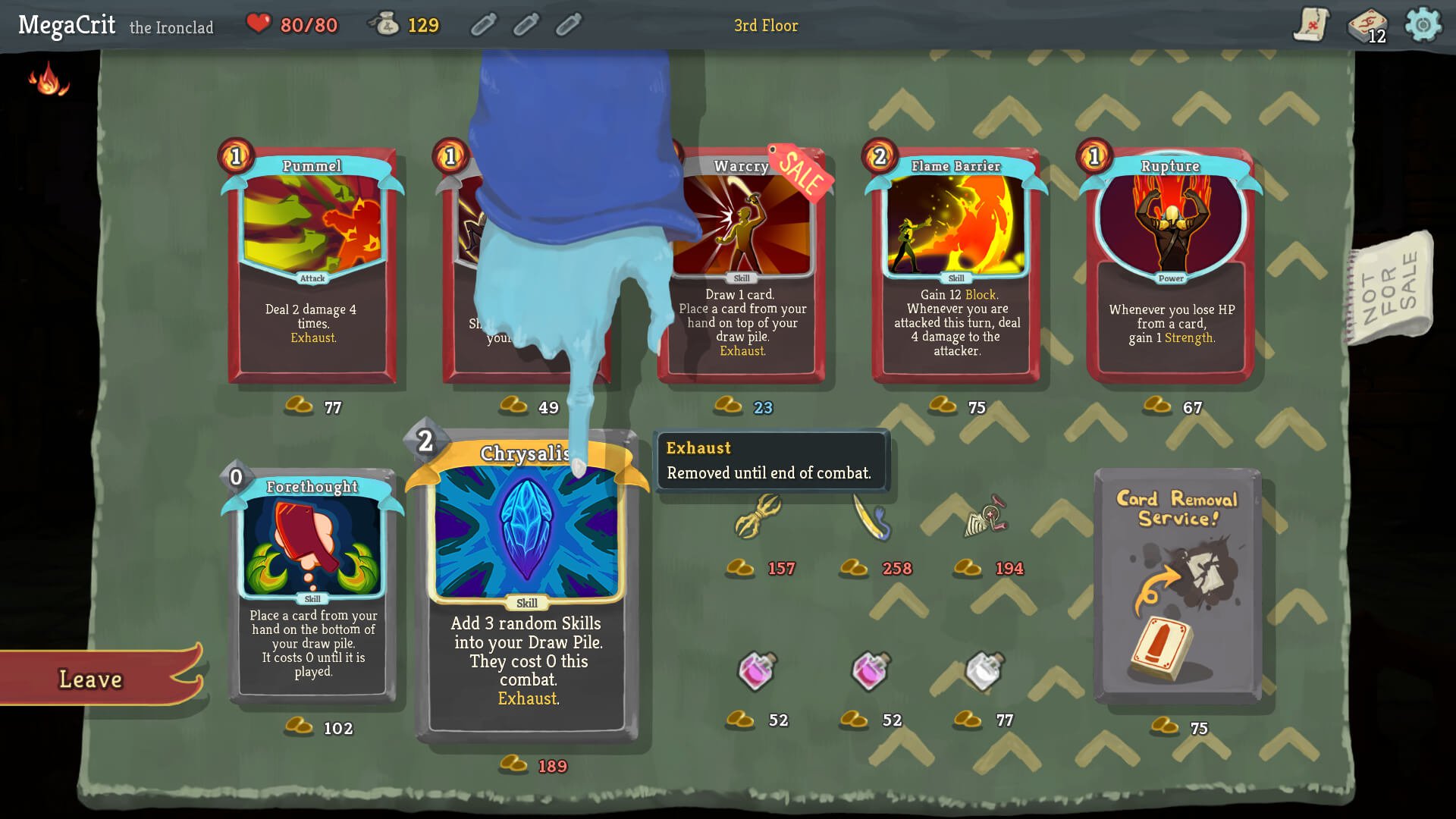
You're at the end of Act 1. Slime Boss is winding up for a massive 35-damage slam, and you’re sitting there with exactly 36 HP. Most new players panic. They dump every energy point into Defend cards, desperate to keep that little green line from dipping. But veterans? They might just eat the hit. In Slay the Spire, the slay the spire health bar isn't a scoreboard; it’s a currency you spend to buy a stronger deck. If you finish a floor with 70/70 HP, you probably played too safely and missed out on a high-value Elite fight or a risky Event.
The Psychology of the Slay the Spire Health Bar
It’s weirdly stressful watching that red number tick down. MegaCrit designed the UI to be incredibly readable, which is great, but it also triggers a primal "don't die" instinct that can actually ruin your run. Think about it. Your health is the only thing standing between you and the "Game Over" screen, but it’s also the only thing you can trade for permanent power.
Ironclad players know this better than anyone. With Burning Blood, you’re healing 6 HP (or 12 with Black Blood) after every combat. That’s not just "safety." That’s a license to be aggressive. If you take 5 damage in a fight but end it three turns earlier, you’ve actually come out ahead. You traded a temporary dip in your slay the spire health bar for the long-term health of your deck's momentum.
Max HP vs. Current HP
There is a massive distinction here that people often overlook. Increasing your Max HP—via Feed, Singing Bowl, or the Pear relic—is basically increasing the size of your "wallet." Having 100 Max HP doesn't make you harder to hit, but it makes the "take damage to gain a relic" events way more palatable.
On the flip side, some players get obsessed with staying at full health. They'll choose "Rest" at every campfire even when they have 50/70 HP. That is almost always a mistake. Unless you’re facing a boss you absolutely cannot survive without those 20 points, you should be "Smithing." Upgrading a key card like Whirlwind or Defragment will prevent far more than 20 damage over the course of the next five floors.
Hidden Mechanics and Visual Cues
Have you ever noticed how the slay the spire health bar shakes when you're about to take a heavy hit? Or how it previews the damage? This is one of the most player-friendly aspects of the game’s design. It removes the need for mental math, letting you focus on strategy.
- The Intent System: Those icons above the enemy’s head tell you exactly what’s coming. If an enemy is attacking for 10x3, your health bar will show a striped "impending damage" section.
- Block as a Temporary Buffer: Your block isn't part of your health bar, but it sits on top of it like a shield. The real trick to mastering the game is knowing when to let the block fail.
- Fractional Health: Don't forget about the "Redline" effects. Some cards, particularly for the Ironclad or the Watcher, get better when your health is low. Rupture or Bloodletting thrive on you damaging yourself.
How the Pros Manage Their HP
If you watch high-level players like Lifecoach or Jorbs, they don't look at the slay the spire health bar and feel fear. They see it as a clock. Every floor takes a little bit of time (health) off that clock. The goal is to reach the Heart with exactly 1 HP remaining—anything more than that was a "wasted" resource you could have used to get stronger.
Consider the "Face Trader" event or the "Ssserpent" event. You're offered gold or relics in exchange for damage or a curse. If your health bar is healthy, you take those deals 100% of the time. You are essentially "buying" a win condition using your life points as the medium of exchange.
The Ascension Factor
Once you hit Ascension 15 and above, the game stops being nice. Enemies hit harder, and heals are less effective. At Ascension 20, you face two bosses at the end of Act 3. If you haven't mastered the art of "tactical tanking"—the act of intentionally taking damage now to avoid taking more damage later—you will hit a wall.
A common scenario: You're fighting Gremlin Nob. If you play a Skill to block 5 damage, he gains Strength and will hit you for 8 more on the next turn. It is statistically better to play a Strike, take the 5 damage now, and end the fight a turn sooner. Your slay the spire health bar takes a hit, but you prevent a total catastrophe.
Healing Is More Common Than You Think
Don't live in a state of scarcity. Beyond the campfires, there are dozens of ways to patch up that health bar:
- Relics: Meat on the Bone is arguably the best "save my run" relic in the game. If you're below 50% health, you heal 12 HP after combat. This allows you to play incredibly risky.
- Potions: A Blood Potion or a Regeneration Potion can swing a losing fight back into your favor.
- Cards: Reaper is the gold standard here. An Ironclad deck with high Strength and a Reaper can go from 1 HP back to full in a single turn.
Actionable Steps for Better Health Management
Stop looking at your HP as a measure of how well you're doing. Instead, try these shifts in your next run:
- The 50% Rule: If you are above 50% health and heading into a campfire, always look at your upgrades first. Only rest if you are certain the next Elite will kill you without that extra HP.
- Path for Elites: Use your health bar to hunt Elites in Act 1. This is where you get the relics that actually win runs. If you finish Act 1 with full health and no relics, you’ve likely lost the run already; you just don't know it yet.
- Identify "Safe" Damage: Learn which enemies have scaling damage (like Cultists) and which have static damage. Against a scaling enemy, your health bar is on a timer. You must kill them fast, even if it means not blocking.
- Check the Map: Before you spend health in an event, look at how many "Hallway Fights" are between you and the next fire. If there’s a shop or a treasure chest, you can afford to be more reckless.
Mastering the slay the spire health bar is about overcoming the "fear of the red." Once you start treating your HP like gold—something to be spent wisely rather than hoarded fearfully—you'll find your win rate climbing across all characters.
.png/1440px-Illumination_Studios_Paris_(in-credit).png)