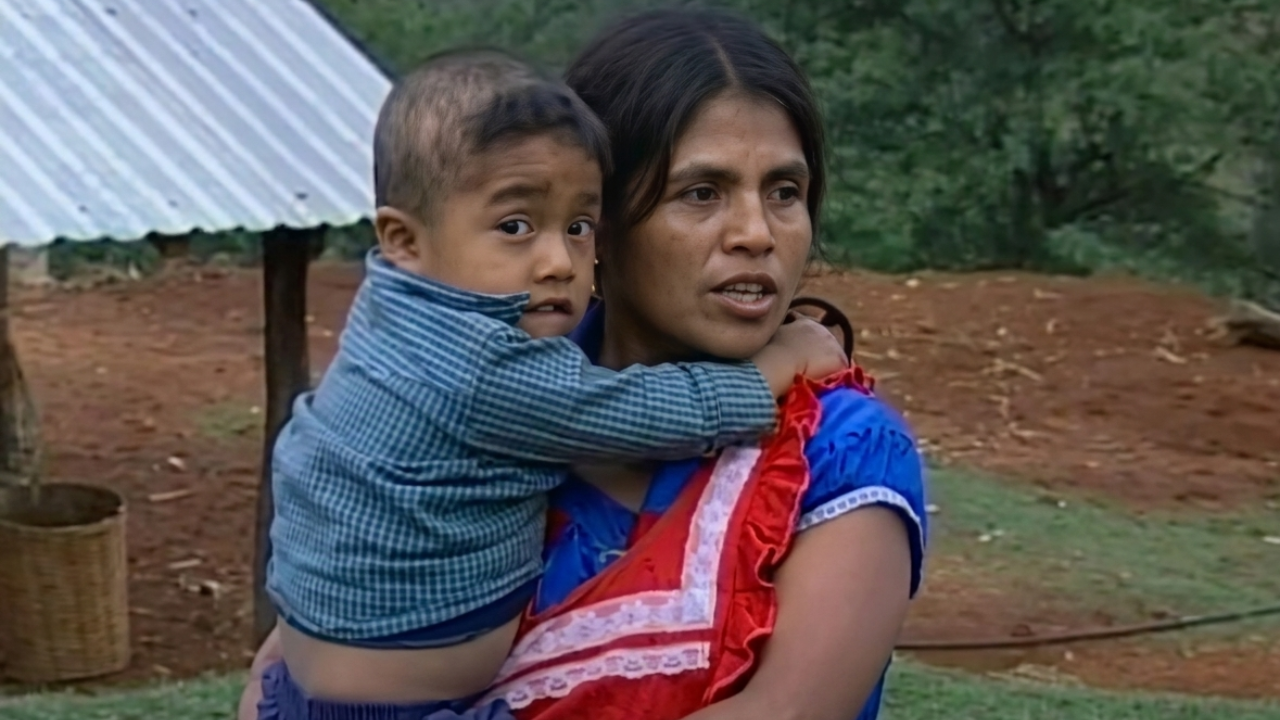
The waiting room smelled of stale coffee and industrial bleach, a scent meant to reassure but one that usually only terrifies. It was a Tuesday evening in a South London hospital. Across from me sat a woman holding a toddler whose skin was mapped with a furious, mottled rash. The child wasn't crying. That was the frightening part. He was too exhausted to cry, his chest heaving under a thin cotton shirt, fighting for a pocket of air that his congested lungs refused to give him.
Every parent knows the soundtrack of a sick child. The wet cough. The shallow wheeze. But unless you have stood over a hospital cot watching a monitor screen dip into the red, you do not know the specific, icy panic that comes when a preventable disease decides to claim a modern space.
We used to think of certain illnesses as relics. They belonged in black-and-white photographs, in Victorian cemeteries, or tucked away in the history books alongside rickets and scurvy. We grew comfortable. Wealthy societies possess a unique kind of amnesia; we forget the terror of the past precisely because our ancestors fought so hard to escape it.
That amnesia has a cost. The price tag just arrived in England.
The raw data from public health briefings is cold, sterile, and deliberately scrubbed of emotion. It tells us that one hundred new infections have been recorded across the country in a single week. It tells us that the numbers are climbing, a steady, rhythmic drumbeat of data points on a government graph. Then comes the sentence that should stop the nation in its tracks: two children are dead.
Two.
They are not statistics. They were human beings who had favorite toys, who fell asleep watching cartoons, who left behind shoes that their parents cannot bring themselves to move from the front door.
The Illusion of the Mild Illness
To understand how we arrived at this hospital waiting room, we have to dismantle a dangerous myth. For decades, a narrative has circulated through school gates and internet forums that measles is simply a rite of passage. It is viewed as a week of fever, some spots, a few days off school, and a return to normal.
This is a lie.
Measles is an apex predator of the viral world. It does not merely cause a rash; it launches a scorched-earth campaign against the human immune system. Think of your body’s defense system as a highly trained security force. It remembers every enemy it has ever fought, building a library of antibodies so that if those threats return, they are neutralized instantly.
Measles wipes the hard drive.
Through a phenomenon known as immune amnesia, the virus systematically destroys the memory cells that protect us from everything else—flu, strep, pneumonia. A child who survives measles is left immunologically defenseless, thrown back to infancy in terms of their body's ability to fight off the common cold. The virus clears the path for other killers.
But the immediate danger is worse. When the virus invades the lungs, it causes a severe, suffocating pneumonia. When it migrates to the brain, it triggers encephalitis—an swelling that can cause permanent brain damage, blindness, or death. There is no cure. There is no antiviral pill that can undo the damage once the infection takes hold. There is only supportive care: oxygen, fluids, and hope.
Consider what happens next when that vulnerability spreads through a community.
The Architecture of the Shield
We survive because we are bound together, whether we like it or not. The concept of herd immunity is often discussed in academic tones, but its reality is deeply physical. It is a human shield.
Imagine a crowded room where people are holding umbrellas to protect a few individuals made of sugar who will dissolve if they get wet. If ninety-five percent of the people open their umbrellas, the sugar people stay dry. The rain cannot find a gap wide enough to penetrate. But if that number drops to ninety percent, or eighty-five percent, the gaps widen. The water pours through. The vulnerable melt.
The magic number for measles is ninety-five percent. Because the virus is so incredibly contagious—one infected person can easily pass it to eighteen others in an unvaccinated room—anything less than a ninety-five percent vaccination rate means the shield crumbles.
In many pockets of England, that shield is now full of holes.
We are living through the consequences of a slow-motion collapse in trust. It did not happen overnight. It began decades ago with a fraudulent medical paper that linked the MMR vaccine to autism—a claim that was thoroughly debunked, retracted, and exposed as a deliberate deception. Yet, the ghost of that lie still haunts the corners of the internet. It whispers to anxious parents in moments of vulnerability, offering false doubt disguised as caution.
It is easy to blame the parents who choose not to vaccinate, to label them as irresponsible or ignorant. But anger is a lazy response. The truth is more complicated, and far more tragic. Most parents who hesitate do so out of a fierce, desperate desire to protect their children. They are bombarded with conflicting information, algorithmically targeted panic, and a profound isolation from traditional medical authority. They are trying to make the right choice in an environment where truth has been commodified and weaponized.
The real failure belongs to the systems that allowed the truth to become so fragile.
The Invisible Stakes at the School Gate
When a hundred new cases appear in a week, the ripples extend far beyond the families directly infected. The anxiety spreads through communities like an invisible fog.
Think of the mother of an eight-month-old baby. Her child is too young to receive the MMR vaccine, which is typically given at twelve months. Every trip to the supermarket, every playgroup, every ride on a bus becomes a game of roulette. She has to trust that the strangers around her have maintained the shield.
Think of the teenager undergoing chemotherapy for leukemia. His immune system has been intentionally suppressed to save his life from cancer. He relies entirely on the immunity of his classmates to survive the school day. When vaccination rates drop, the school gate transforms from a place of community into a zone of existential threat.
This is the hidden cost of our modern obsession with individual autonomy at the expense of collective responsibility. We have come to view health as a purely personal choice, an individual transaction between a consumer and a healthcare provider. But infectious disease does not respect individualism. It is a reminders that our bodies are interconnected. My health depends on your choices; your child’s life depends on my compliance.
The Quiet Rooms
The public will read the headline about the one hundred new infections, perhaps shake their heads, and move on to the next news cycle. The data will be logged in a spreadsheet in a government office in Whitehall. The policy documents will be updated.
But in two homes in England, the world has ended.
There are rooms that are now completely silent. The toys are still on the floor. The half-colored drawing is still on the kitchen table. There is an unbearable weight to that silence, a suffocating gravity that alters the lives of those left behind forever.
The tragedy of a preventable death is that it contains an element of choice. It did not have to be this way. The medicine exists. The science is settled. The infrastructure is there. The only thing missing was the collective will to keep the shield intact.
As I watched the little boy in the London waiting room finally catch his breath, his mother smoothing the damp hair from his forehead with a trembling hand, the reality of our situation became painfully clear. We are running out of time to remember what our ancestors knew so well. The wolves are always at the door, waiting for us to forget why we built the walls in the first place.