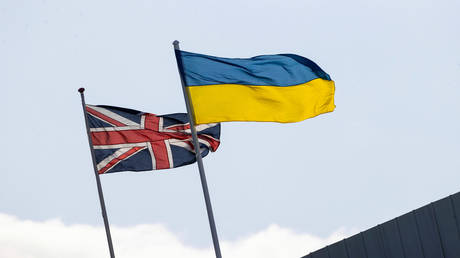
Why would a small piece of blue and yellow fabric outside a local council office in Essex or Norfolk matter to a leader currently fighting a brutal war of survival? It sounds like petty local bureaucracy. Honestly, it isn't. When Reform UK councils started pulling down Ukrainian flags from civic buildings across England, they probably thought they were just tidying up local government assets and restoring a sense of traditional British neutrality.
They were wrong. Symbols aren't neutral during wartime.
Ukrainian President Volodymyr Zelensky took a direct swipe at this policy during his recent visit to London. After sitting down with Prime Minister Sir Keir Starmer, French President Emmanuel Macron, and Germany's Friedrich Merz to hammer out high-stakes military strategies, Zelensky took time to address Nigel Farage’s party machine. He called the removal of the flags a "small mistake that can break a big friendship."
It's a blunt warning. The UK has spent over £20 billion supporting Ukraine since the 2022 invasion. Pulling down the flag now sends a terrible message, intentional or not.
Small Mistakes and Big Breakups
The tension started building right after local elections, when newly elected Reform UK administrations in places like Essex, Norfolk, and Suffolk decided to overhaul their flag-flying guidelines. The new directive was simple. Only official national, county, and local flags are allowed on civic structures. Down came the Ukrainian flags. Down went the Progress Pride flags.
Reform UK politicians, including Essex council leader Peter Harris, defended the moves as proud moments of prioritizing domestic identity. They argue that public buildings shouldn't become venues for symbolic foreign policy statements.
Zelensky doesn't buy that logic. Speaking to journalists in London, he made it clear that the current geopolitical climate is far too sensitive for these kinds of culture war games. He urged Reform leaders to rethink their stance, step back to the negotiation table, and put the flags back up.
"Sometimes little, small mistakes can break big friendship or huge contacts," Zelensky warned. "I think people have to not make mistakes, not to do anything which can break a friendship."
It's a masterclass in diplomatic pressure. Zelensky framed the flag removals not as a malicious act, but as an error in judgment that can still be corrected. He basically told Farage's party that they are playing with fire.
Why the Flag Feud Extends Far Beyond Local Councils
This isn't just about English town halls. This same argument recently tore through the Welsh Parliament. Reform UK Wales leader Dan Thomas and colleague Cai Parry-Jones tried to force the removal of the Ukrainian flag from outside the Senedd in Cardiff, branding the display as mere "virtue signalling."
The backlash in Wales was swift and total. Politicians from every single major party—Labour, Plaid Cymru, the Conservatives, and the Liberal Democrats—united to reject the Reform proposal. They chose to keep the flag flying. Why? Because thousands of Ukrainian refugees have settled in Wales through programs like the Nation of Sanctuary scheme. For them, that flag isn't a political statement. It’s a message that they are safe.
Look at the response from Reform UK’s headquarters following Zelensky’s comments. They didn't back down. A party spokesperson quickly clarified that while Reform proudly supports Ukraine's fight against Russian aggression, the flag ban stays. Their official position remains that only the British national flag belongs on British civic buildings.
This creates a massive disconnect. You can't claim you back a country completely while simultaneously stripping their symbol of survival off your walls because it doesn't fit a localized political aesthetic.
The Reality of Western Support in 2026
We need to talk about why this is happening right now. The timing isn't accidental. Western aid fatigue is a real problem, and nationalist parties across Europe are testing the waters to see how much they can distance themselves from the conflict without facing major electoral consequences.
Zelensky’s trip to London wasn't a victory lap. He's under immense pressure. Ukraine is desperately trying to secure advanced antiballistic missiles from the United States, contract professional soldiers, and persuade the UK to tighten its sanctions on Russia's shadow oil fleet.
The UK government recently had to reassure Kyiv that its new sanctions policies didn't inadvertently create loopholes for Russian oil imports through third-party nations. When you combine those backroom economic anxieties with local councils tearing down solidarity flags, it's easy to see why Kyiv is getting nervous about the long-term reliability of British support.
British security is fundamentally tied to European stability. If Russia wins in Ukraine, the threat shifts directly to the rest of the continent. Zelensky reminded his British hosts of this fact, pointing out that the £20 billion-plus UK investment isn't charity. It’s an investment in Britain's own defense.
Where Do We Go From Here
If you want to understand where this dispute leads next, watch the local government responses over the coming weeks. The pressure on Reform UK councillors is going to intensify as mainstream political opponents use Zelensky's critique to paint Farage’s party as weak on international security.
If you live in a district where these flags were removed, keep a close eye on upcoming council forums and public comment sessions. The debate over what flies on our public buildings is no longer just a minor zoning issue. It is a direct reflection of where Britain stands on the global stage.
The next move belongs to the local council leaders. They can choose to double down on nationalist flag restrictions, or they can listen to a wartime leader's appeal and realize that some friendships are simply too big to break over a flagpole.