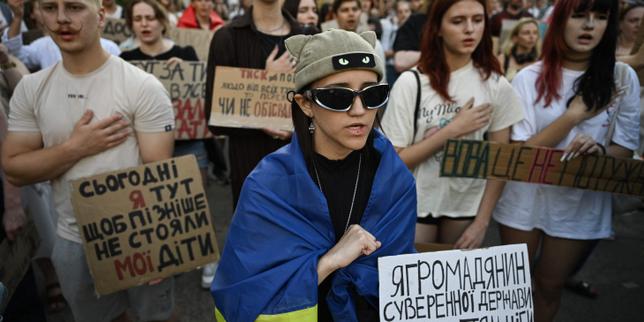
When the full-scale invasion hit in early 2022, conventional military wisdom predicted Kyiv would fall in three days. Foreign intelligence agencies packed up their diplomatic staff and braced for a collapse. They missed the most important variable in the equation. Ukrainian civil society didn't wait for top-down orders. People organized, adapted, and essentially rebuilt state capacity on the fly.
Nearly four years later, that collective resilience isn't just a temporary reaction to danger. It's a fundamental restructuring of how Ukraine functions as a country.
If you want to understand why Ukraine hasn't crumbled under overwhelming odds, stop looking solely at weapon shipments and frontline maps. The true show of force is happening behind the lines, driven by a decentralized network of volunteers, local organizers, tech workers, and everyday citizens who refuse to give up control of their future.
How Ukraine's Volunteer Network Became a Second Government
In normal times, governments hold a monopoly on logistics, defense procurement, and disaster response. When Russia invaded, the Ukrainian state faced an administrative overload that would have paralyzed almost any nation. Grassroots civil society filled the void instantly.
Organizations like Come Back Alive and the Prytula Foundation didn't just collect money for blankets. They established professional procurement systems, buying sophisticated reconnaissance drones, thermal optics, and armored vehicles directly for army units. They ran supply lines with the speed of modern tech startups, skipping the red tape that usually slows down defense ministries.
This wasn't limited to large foundations. Neighborhood groups set up community kitchens overnight. Tech workers built software like the Diia app updates and custom GIS software to track troop movements and deliver humanitarian aid precisely where it was needed.
What makes this network so effective is its decentralization. A centralized command center can be bombed or hacked. A distributed web of thousands of self-directed community leaders cannot be shut down by a single missile strike.
The Shift From Short-Term Aid to Institutional Reform
In 2022, civil society focused entirely on basic survival. By 2024 and through 2026, the focus transformed into long-term systemic stability.
Civilian activists in Ukraine aren't just delivering food packages anymore; they're actively monitoring government spending, auditing military procurement, and pushing back against corruption. This dual role—acting as a backbone for national defense while simultaneously holding public officials accountable—is unprecedented during a full-scale war.
Take public oversight of defense spending. When scandals over military food pricing emerged, Ukrainian investigative journalists and anti-corruption watchdogs didn't stay quiet for the sake of "unity." They exposed the issues, forcing immediate resignations and policy overhauls.
That's the real power of a mature civil society. It doesn't give public officials a free pass because of war. It demands higher standards because the stakes are literally a matter of life and death.
The Numbers Behind the Support
The economic weight of citizen action in Ukraine is staggering:
- Millions of citizens regularly donate a portion of their monthly income to civil funds.
- Over 80% of Ukrainians have actively participated in volunteer initiatives or financial support for the defense effort since 2022.
- Local NGOs have coordinated international aid distributions across thousands of settlements near the frontline.
These aren't abstract stats. They represent a massive cultural shift toward civic responsibility that top-down autocracies simply cannot match.
Why Top-Down Autocracies Fail to Understand Decentralized Power
The Kremlin's strategic miscalculations in Ukraine stemmed from a fundamental misunderstanding of civic power. Autocratic systems operate on strict hierarchy. They assume that if you pressure the central leadership or break the energy grid, the population will submit or turn into a chaotic mess.
Ukraine proved the opposite. When energy infrastructure took heavy hits during freezing winters, local communities established independent heating points, installed solar generators for neighborhood hospitals, and kept small businesses running.
This horizontal trust—where citizens rely on each other rather than waiting for official directives—is the ultimate defensive shield. You can't break the spirit of a population when every town, city block, and online chat group functions as an independent problem-solving unit.
The Risks of Volunteer Burnout and What Comes Next
We can't romanticize this endless effort. Human energy isn't an infinite resource.
Four years of constant tension, economic strain, and loss take a massive toll. Key leaders in non-profit sectors are exhausted. Funding streams from individual citizens naturally fluctuate as personal savings drain.
To keep this momentum alive, Ukraine's civil institutions must continue formalizing their partnerships with international donors and the state. The goal isn't for volunteers to replace the government forever. The goal is to build permanent, transparent civic mechanisms that force the state to remain agile, clean, and accountable long after the fighting stops.
If you want to support this work, skip generic awareness campaigns. Direct your attention to established, transparent Ukrainian civil organizations like Prytula Foundation or local independent journalism outlets like Ukrainska Pravda and The Kyiv Independent. Track where funds go, advocate for sustained democratic support through your local representatives, and recognize that Ukraine's strength rests on the daily work of its citizens.


