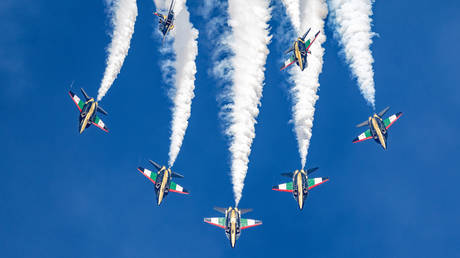
The Wall Street Journal just dropped a report that shifts the entire geopolitical board in the Middle East. For years, the narrative stayed simple. Israel was the primary aggressor against Iranian interests while Gulf nations watched from the sidelines, occasionally nodding in approval. That era is over. The UAE has reportedly moved beyond diplomatic posturing and started taking matters into its own hands with covert strikes against Iran.
This isn't just a minor policy tweak. It’s a massive departure from the UAE’s traditional "de-escalation first" branding. If you’ve been following Abu Dhabi’s moves over the last decade, you know they’ve spent billions trying to become the region’s diplomatic hub. They normalized ties with Israel via the Abraham Accords and even tried to mend fences with Tehran. Now, we're seeing the sharp edge of their foreign policy.
Why the UAE decided to go loud by staying quiet
The WSJ report indicates that these operations weren't random. They were targeted. Specifically, they focused on disrupting Iranian capabilities that directly threaten Emirati security. Why now? Because the regional security umbrella provided by the United States feels more like a sunshade in a hurricane lately.
Abu Dhabi saw the 2019 attacks on tankers off its coast and the 2022 drone strikes on its capital by Iranian-backed Houthis. They waited for a crushing American response. It never came. When you realize your "big brother" ally isn't going to swing back for you, you start training to punch. That’s exactly what the UAE did. They’ve built a sophisticated intelligence apparatus and a special operations capability that allows them to strike without leaving a return address.
The Abraham Accords were never just about trade
Critics of the Abraham Accords often argued the deal was just about tourism and tech startups. They were wrong. The real meat of that agreement was always security and intelligence sharing. By linking up with Israel, the UAE gained access to some of the most advanced surveillance and kinetic strike technologies on the planet.
Don't think for a second that these covert strikes happened in a vacuum. The coordination between Mossad and Emirati intelligence has likely reached a point of near-total integration on the Iran file. Israel provides the blueprint and the battle-hardened experience; the UAE provides the proximity and the local logistical network. It’s a terrifying prospect for Tehran because it means their backyard is no longer safe.
Tehran is caught in a trap of its own making
Iran’s entire strategy relies on "plausible deniability." They use proxies like Hezbollah or the Houthis to do their dirty work so they can avoid direct retaliation. But the UAE is now using that same playbook against them. By conducting covert strikes, Abu Dhabi hits Iran where it hurts—drones, missiles, and IRGC infrastructure—without officially declaring war.
Tehran can't complain to the UN because they’d have to admit they were hit, which makes them look weak. They also can't easily retaliate against the UAE without risking a massive regional escalation that could draw in the US, despite Washington’s current hesitation. It's a strategic checkmate. Iran is finding out that "gray zone" warfare is a two-way street.
Managing the risk of a total regional blowout
Is this dangerous? Absolutely. When you have multiple actors—Israel, the UAE, and potentially others—all running covert ops inside Iran, the chance of a miscalculation skydives. One strike hits the wrong target, or one operative gets captured on film, and the whole "covert" part of the war goes up in flames.
However, from the Emirati perspective, the risk of doing nothing is higher. They see an Iran that is closer to a nuclear weapon than ever. They see a network of "shia crescent" proxies that have effectively encircled the Arabian Peninsula. For MBZ (Mohamed bin Zayed), playing it safe is the riskiest move he could make. He’s betting that controlled, surgical strikes will deter Iran more effectively than any empty diplomatic statement from Brussels or D.C. ever could.
What this means for the global oil market
You can't talk about the UAE and Iran without talking about the Strait of Hormuz. It's the world's most important oil chokepoint. If this covert shadow war spills out into the open, energy prices won't just rise; they'll explode.
But here’s the twist. The UAE knows this. Their strikes are designed to be "sub-threshold." They aren't trying to topple the regime in Tehran; they're trying to degrade specific military assets. It’s a high-stakes game of "operationally quiet" surgery. By keeping the strikes covert, they keep the oil flowing. It's a cynical, brilliant, and incredibly modern way to wage war.
The new rules of Middle Eastern engagement
The old days of relying on a single superpower to keep the peace are dead. We're now in a multipolar regional environment where mid-sized powers like the UAE act as their own protagonists. They aren't waiting for permission from the White House anymore.
Watch the skies over the Persian Gulf. You might not see the explosions, and you definitely won't hear the official announcements, but the balance of power is shifting with every "unexplained" fire at an Iranian drone facility. The UAE has entered the fray, and they aren't looking back.
If you’re tracking regional stability, stop looking at official diplomatic cables. Start looking at satellite imagery of Iranian military industrial sites. The real story is written in the charred remains of those facilities. Keep an eye on shipping insurance rates in the Gulf; they’re often a better barometer of conflict than any news anchor. The shadow war is the only war that matters right now.