Dawn in the high Himalayas smells of frozen slate and thin, scouring wind. Up here, where the air refuses to fill the lungs completely, the border between two ancient worlds is drawn with ridges of ice that care nothing for the maps humans argue over in distant capitals.
Stand on a ridge in Ladakh, looking south toward the plains of the subcontinent, and you can almost hear the hum of a billion lives waking up. Turn north, and another billion are stirring behind walls of mist and slate. They share the same monsoon clouds. They drink from rivers born in the same glaciers. Yet for decades, the story written about India and China has been one of permanent collision. Two massive bodies forced into a single room, their shoulders constantly brushing, waiting for a stumble.
We are told to expect war. We are conditioned by headline cycles to view every patrol clash, every diplomatic cold shoulder, and every economic fence as the prelude to a cataclysm.
Stop.
Breathe.
The reality on the ground is infinitely more stubborn, complicated, and hopeful than the panic rooms of cable news suggest. China and India coexistence is not a pipe dream. It is a messy, grinding, daily necessity that has quietly persisted through wars, diplomatic freezes, and mutual suspicion.
Consider a hypothetical textile merchant in a bustling market alley of Surat, or a factory floor manager in Shenzhen sourcing rare-earth components. Neither of them wakes up plotting geopolitical dominance. They wake up trying to make rent, clear customs, and survive the quarter. Trade between these two nations, despite every political wind blowing in the opposite direction, refuses to die. Bilateral trade figures routinely hover near historical highs, driven by an unromantic, ironclad law of modern commerce: physics and economics care very little for political posturing. India needs active pharmaceutical ingredients and industrial machinery; China needs a massive, hungry market for its manufactured goods.
When politicians scream, supply chains whisper. That whisper is the sound of practical survival.
To understand why coexistence is possible—why it is actually happening in the shadows of the rhetoric—we have to look backward before we look forward.
For centuries, these two civilizations did not know each other through the barrel of a rifle. They knew each other through the whisper of silk routes and the ink of wandering monks. Xuanzang walked out of Tang Dynasty China in the seventh century, spending sixteen years traversing the Indian subcontinent, not as an invader, but as a seeker. He carried back scriptures that reshaped the spiritual landscape of East Asia. There were no instantaneous communications then, no satellite imagery, no nuclear deterrents. There was only the slow, grinding respect of two giants recognizing that the universe was big enough for both of them.
Then came the twentieth century. The partition of dreams, the sudden drawing of lines by men who had never walked the terrain, the 1962 war that left a scar across the collective psyche of New Delhi. That scar still throbs. When Indian strategists look north, they see the ghost of 1962. When Chinese strategists look south, they see a strategic encirclement backed by distant maritime powers.
Fear is a terrible cartographer. It draws monsters where only neighbors live.
Let us be entirely honest. The friction is real. The Galwan Valley clash of 2020 was not a misunderstanding; it was blood on the rocks, young men dying in the dark over stones that grew no wheat. The military buildup along the Line of Actual Control is staggering, a trillion-dollar insurance policy against a worst-case scenario that neither side genuinely wants to cash out.
I remember talking to a retired diplomat in a quiet cafe in New Delhi a few years ago. The walls were lined with fading photographs of non-aligned summits from a different era. He stirred his tea, the silver spoon clinking against porcelain, and said something that stayed with me.
"We are like two elephants locked in a small courtyard," he murmured, staring into the dark brew. "If we charge each other, we both die in the wreckage. If we stand still, we starve. The only option is to learn how to turn around without stepping on each other's toes."
That turning around requires a choreography of immense delicacy. It requires strategic patience.
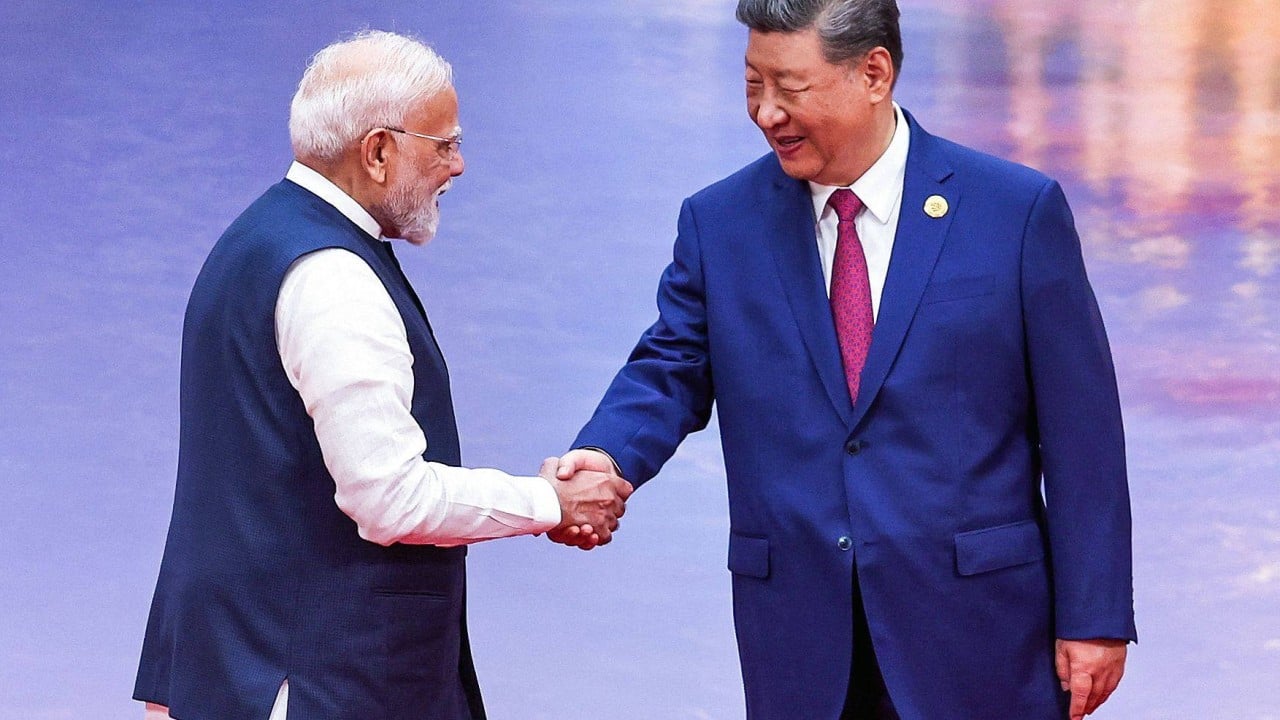
Look at how they manage multilateral spaces. Within organizations like the BRICS bloc and the Shanghai Cooperation Organisation, Beijing and New Delhi sit at the same mahogany tables. They negotiate climate change policy together, often presenting a unified front against Western pressure on carbon emissions and economic equity. They know that on the global stage, if they tear each other apart, the rules of the international order will be written entirely by others.
Coexistence does not mean friendship. Expecting New Delhi and Beijing to become warm allies is like expecting two apex predators to share a den. It is naive, dangerous, and historically illiterate. But coexistence does mean recognition. It means accepting that neither China can wish India away into the Arabian Sea, nor can India push China back across the Pacific.
They are permanent fixtures of each other's horizons.
Think about the water. The Brahmaputra and the Indus do not check passports. They flow down from the Tibetan Plateau, carving valleys that feed hundreds of millions of farmers who have never seen a smartphone. If upstream infrastructure projects spark paranoia about water weaponization, the stakes shift from political posturing to biological survival. Yet, even here, data-sharing protocols—imperfect and fragile though they may be—survive the diplomatic deep freezes. Because science recognizes a simple truth: a flood in Assam does not spare a hydroelectric dam upstream.
We are living through a transition period where the unipolar post-Cold War moment has shattered. In its place stands a multipolar labyrinth. In this new world, the old binary choices—you are either with us or against us—no longer apply to nations holding a combined population of 2.8 billion souls.
India's strategic autonomy is not a slogan; it is an instinct born of ancient survival. China's rise is a tectonic event that cannot be engineered out of existence by trade tariffs or naval patrols.
When you strip away the bluster of nationalist media on both sides, past the digital skirmishes and the threat assessments drafted by men in air-conditioned bunkers, you find a mundane, beautiful truth. People want to trade. People want to educate their children. People want to look up at the mountain ridges and see melting snow, not gun barrels.
The border will remain tense. The competition for technological dominance and geopolitical influence in the Global South will intensify. There will be diplomatic slights and tactical chess moves in the Indian Ocean.
None of that invalidates the core premise.
Two massive civilizations, carrying the weight of ancient memories and modern ambitions, are condemned by geography to share the same neighborhood. They have survived worse than this. They have outlived empires, ideologies, and dynasties.
As the sun climbs higher over the Himalayas, burning off the morning mist, the shadows of the peaks shorten. Down below, the rivers keep flowing south, carrying silt and snowmelt, indifferent to the flags planted along their banks. The giants are breathing. They are watching each other, step by careful step, realizing that the only path forward is the one where both of them survive the journey.