The morning coffee in a London flat and the price of a liter of diesel at a French roadside station are tethered to a jagged stretch of water thousands of miles away. It is called the Strait of Hormuz. At its narrowest point, it is only twenty-one miles wide. To a supertanker, that isn’t a gateway; it’s a needle’s eye.
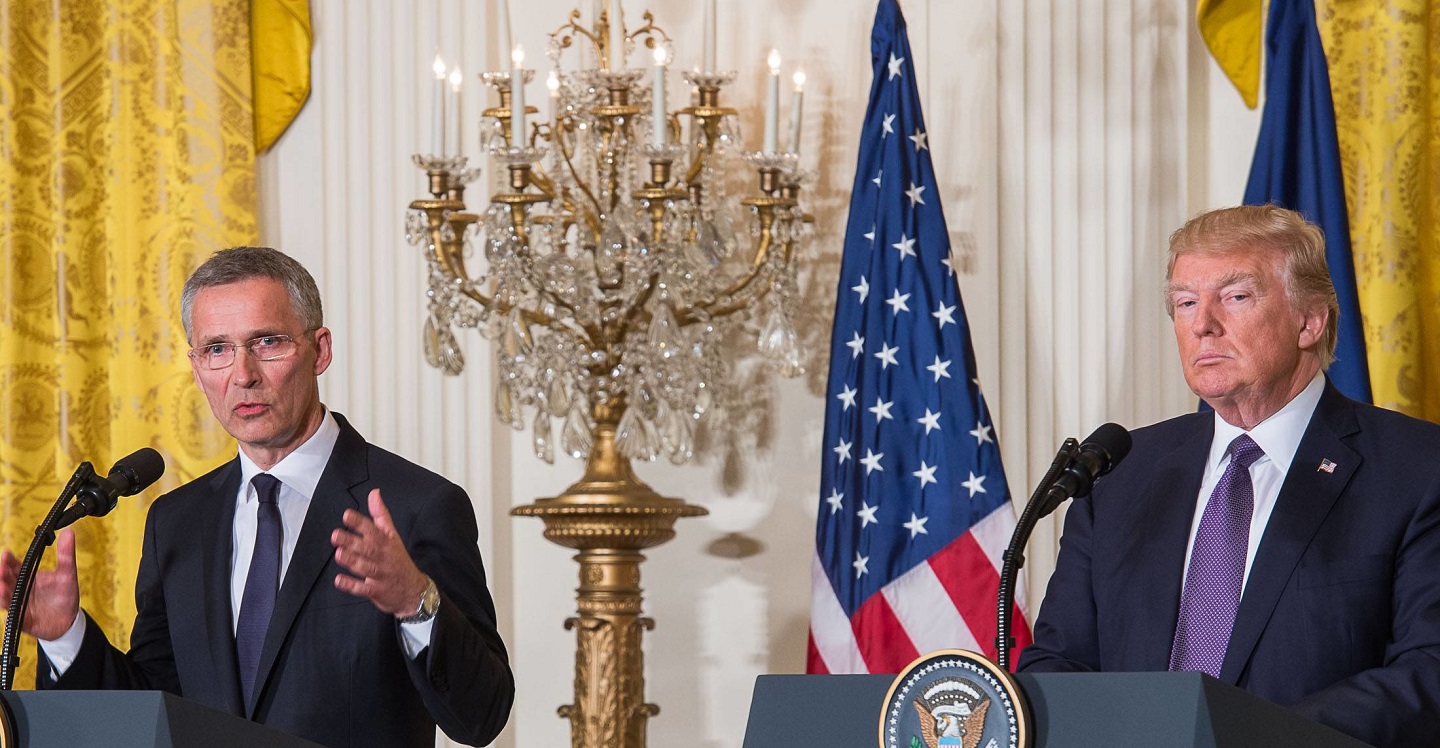
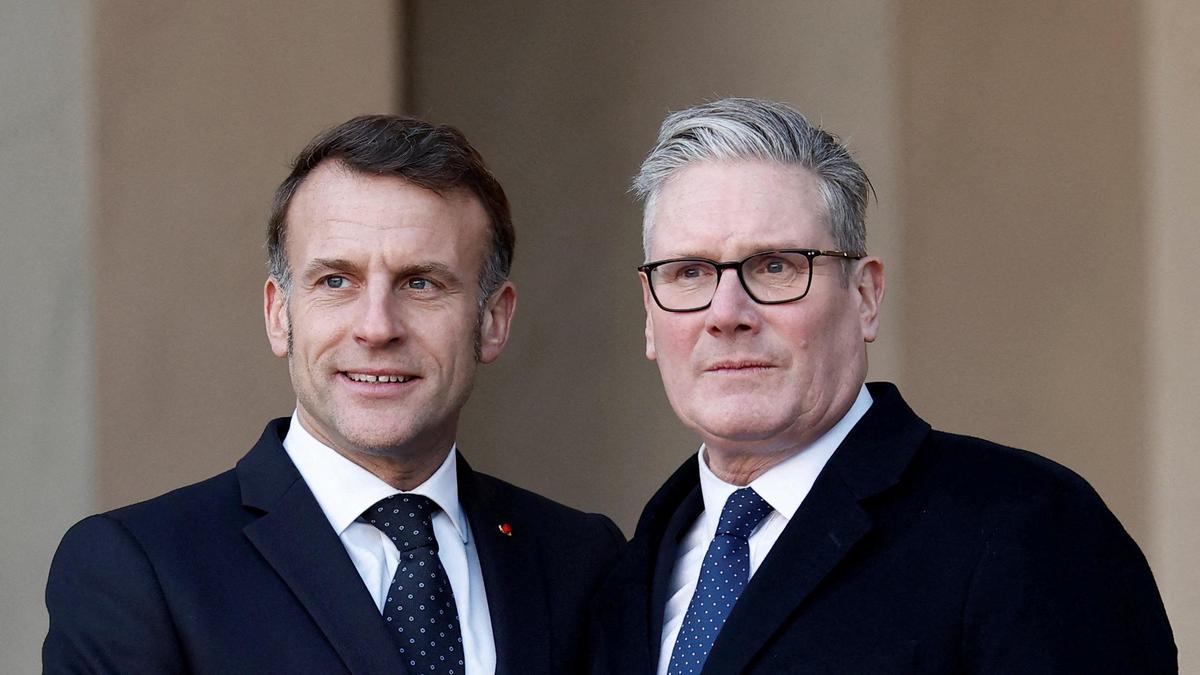
When the lights went up in a gilded room at the Élysée Palace this week, Emmanuel Macron and Keir Starmer weren't just shaking hands for the cameras. They were staring at a map of that needle's eye. The headlines called it an international summit on maritime security. The reality is much more visceral. It is a desperate attempt to keep the world’s pulse from flatlining. Meanwhile, you can explore similar stories here: Why Hungary Is Scrambling Over Vanishing Government Documents.
If the Strait of Hormuz closes, the global economy doesn't just slow down. It breaks.
The Ghost in the Machine
Consider a hypothetical captain named Elias. He is standing on the bridge of a Very Large Crude Carrier (VLCC). Under his feet are two million barrels of oil. To his left and right are the Musandam Peninsula and the Iranian coast. He is navigating a "Traffic Separation Scheme," which is a polite nautical term for a two-mile-wide lane in a high-stakes shooting gallery. To explore the full picture, we recommend the detailed article by NPR.
Elias doesn't think about geopolitics. He thinks about the hum of the engine and the depth of the water. But for the last few months, that hum has been accompanied by a new, jagged anxiety. He watches the radar for "ghost" vessels—fast, small boats that don't broadcast their position. He knows that a single limpet mine or a stray drone could turn his ship into a funeral pyre and his cargo into an environmental catastrophe that would choke the region for a generation.
This is the human cost of a "shipping disruption." It isn't a line on a graph. It is a man in a white uniform wondering if he will see his family because two nations he has never visited are posturing over a piece of ocean.
The Arithmetic of Chaos
Macron and Starmer are dealing with a brutal set of numbers. Approximately one-fifth of the world’s total oil consumption passes through this strait every single day. That is roughly 21 million barrels. More importantly for the shivering homes of Europe, it is the primary exit for the Liquefied Natural Gas (LNG) that has replaced Russian supplies.
If a single tanker is seized or a single mine is sighted, insurance premiums for every ship in the region skyrocket. Within hours, those costs migrate. They move from the shipping firm to the refinery, from the refinery to the distributor, and finally, to the digital readout at a petrol pump in Lyon or a grocery bill in Manchester.
The summit wasn't born out of a sudden love for maritime law. It was born out of the realization that the "cost of living crisis" is a house of cards, and the Strait of Hormuz is the wind.
Starmer knows this better than most. Britain’s economy is fragile, recovering from a decade of shocks. A sustained spike in oil prices—some analysts predict a jump to $120 or $150 a barrel if the Strait is blocked—would trigger an inflationary spiral that no central bank could catch. It would be a cold, dark winter for the British working class.
Diplomacy in the Shadow of Steel
The rhetoric coming out of the summit was predictably "firm." There were mentions of "coordinated patrols" and "international law." But look closer at the body language. There is a profound vulnerability in these leaders. They are realizing that the old tools of 20th-century power—the large carrier strike groups and the grand treaties—are poorly suited for the "grey zone" warfare of the 21st.
How do you stop a swarm of $20,000 drones with a $2 billion destroyer?
How do you protect a shipping lane when the threat isn't a rival navy, but a series of "deniable" accidents?
Macron spoke about "European sovereignty," a favorite theme of his. But sovereignty is a difficult thing to maintain when your industry depends on energy flowing through a choke point you do not control. The summit was an admission that neither France nor Britain can do this alone. They are trying to build a coalition of the willing, dragging a distracted Washington and a cautious Brussels into a defensive shield.
They are calling for the reopening of the Strait to "unimpeded commerce." This is code for: "We are one mistake away from a global depression."
The Invisible Stakes
We often treat energy as a ghost. We flick a switch, and the light comes on. We turn a key, and the engine starts. We have been conditioned to believe that the supply chain is an invisible, unbreakable thread.
It isn't. It is a physical, rusted, salty reality.
The Strait of Hormuz is a place of intense heat and blinding light. It smells of salt and sulfur. It is guarded by young men with machine guns on fast boats who have been told that the tankers passing by are symbols of an oppressive West.
When Macron and Starmer talk about "stability," they are talking about cooling those tempers. They are trying to find a way to de-escalate without looking weak, to protect the ships without starting a war. It is a tightrope walk over a volcano.
The real story isn't the communiqué issued at the end of the day. The real story is the silence that would follow a closure. It would be the silence of factories in Germany shutting down because the gas ran out. It would be the silence of a cargo port in Dover where nothing is arriving. It would be the silence of a parent sitting in a dark kitchen, wondering how the price of bread became a luxury.
But the most haunting image isn't the empty shelves.
It is Elias, the captain, standing on his bridge in the middle of the night. He is looking out over the black water of the Strait. He sees the lights of the Iranian coast to his north and the jagged rocks of Oman to his south. He is carrying the heat for a million homes and the fuel for a thousand flights. He is the most important person in the world, and yet he is completely alone, waiting to see if the twenty-one miles ahead of him will remain open, or if the world is about to go dark.
One spark. That is all it takes. The leaders in Paris know it. The captains in the Gulf know it. And soon, the rest of us might know it too.