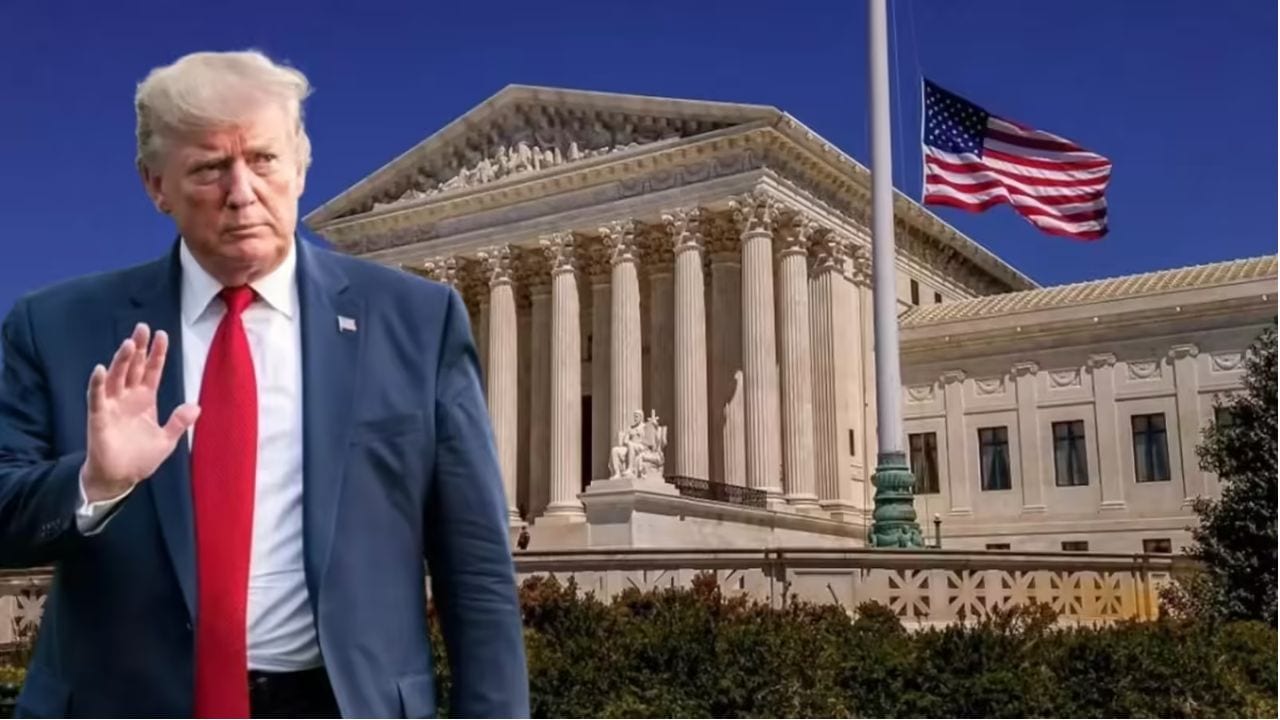
Conventional political coverage frames late-term judicial confirmations as a frantic race against the Senate clock where party loyalty is the only currency that matters. According to political analysts and Senate observers, the narrative surrounding Donald Trump's late-stage judicial push relies on a flawed assumption: that Republican roadblocks represent a breakdown in party discipline or sudden ideological cold feet.
That perspective misses the structural reality of how the United States Senate actually operates. When a president attempts a high-volume judicial blitz at the end of a term, resistance from within his own party is rarely about ideology. It is almost always about institutional self-preservation, individual senator priorities, and the rigid mechanics of Senate procedure.
The Myth of Unconditional Party Loyalty
Mainstream commentary often treats political parties as monolithic machines that simply execute the executive branch's wishes when majorities align. Legal scholars and congressional historians point out that the Senate was specifically designed to frustrate rapid, top-down execution, even when the White House and the upper chamber share a party label.
During a lame-duck session or the final months of a presidency, the political calculus shifts dramatically for individual senators:
- Divergent Electoral Timelines: A president leaving office—or facing the end of a term—has an immediate deadline. Senators on six-year cycles have entirely different political horizons and constituency pressures.
- The Loss of Executive Enforcement: Once an administration enters its final stretch, the White House loses much of its ability to reward compliance or punish defection through legislative favors, campaign support, or executive branch appointments.
- Home-State Prerogatives: Individual senators frequently prioritize specific local judicial vacancies, regional power dynamics, or personal grievances over the administration's aggregate confirmation tally.
When Republican senators slow down or withhold support for specific nominees during a late-term push, they are exercising standard institutional power rather than staging an ideological revolt.
Procedural Reality Beats Executive Urgency
The mechanics of the Senate floor make a true "blitz" nearly impossible without total cooperation from all 100 members. Under Senate rules, confirming a federal judge requires overcoming significant procedural hurdles, including cloture motions and mandatory debate time, unless the minority party grants unanimous consent.
When commentators describe a confirmation push as hitting "roadblocks," they frequently overlook the math of the Senate calendar. According to congressional procedure experts, every single contested nomination consumes days of floor time. If even one or two majority-party senators withhold their support—whether over a nominee's qualifications, a lack of consultation with home-state lawmakers, or a desire to use the vote as leverage for unrelated legislation—the entire queue stalls.
The Blue Slip and Consultation Friction
Even after Senate leadership weakened the traditional "blue slip" veto for circuit court nominees, consultation with home-state senators remains a practical necessity for district court seats.
- District Court Bottlenecks: District judgeships make up the bulk of late-term vacancies, and senators from those states still expect input on who fills seats in their backyard.
- Committee Vetting Bottlenecks: The Senate Judiciary Committee cannot simply rubber-stamp dozens of nominees overnight without risking floor defeats if background issues emerge later.
- Floor Attendance Math: With narrow Senate majorities, a single senator's absence due to illness, travel, or campaign obligations can halt confirmations entirely, giving every individual member an effective veto.
What Critics and Supporters Both Get Wrong
Observers on the left often view a late-term confirmation surge as an unstoppable takeover of the federal judiciary, while supporters of the administration view any delay as a betrayal by hesitant allies. Both viewpoints misunderstand the trade-offs inherent in late-term governance.
From the perspective of judicial conservatives and legal advocacy groups, confirming judges is the most durable achievement of any presidency because Article III appointments carry lifetime tenure. To them, leaving any vacancy unfilled when the party holds the Senate majority is an unforced strategic error.
Conversely, institutionalists and moderate lawmakers argue that rushing unvetted or controversial nominees damages the credibility of the federal courts and invites future retaliation when power changes hands. Furthermore, senators facing competitive elections or prioritizing bipartisan legislative packages often calculate that spending scarce floor time on contentious judicial fights undermines their own legislative goals.
The Real Reason Late-Term Blitzes Stall
If you want to understand why judicial confirmations slow down at the finish line, stop looking at ideological splits and start looking at competing priorities within the majority caucus.
- Competing Legislative Demands: Funding bills, defense authorizations, and must-pass statutory deadlines compete directly with judicial nominees for the exact same hours on the Senate floor.
- Bipartisan Deal-Making: Historically, late-session judicial confirmations often accelerate only when the majority and minority leaders strike a package deal—trading confirmation of certain district judges for the preservation of other vacancies or legislative concessions.
- Vetting Failures: Late-term nominees are frequently selected quickly to beat the clock, which increases the likelihood of discovering disqualifying financial, ethical, or professional issues during committee review.
A late-term confirmation drive does not fail because a party suddenly forgets its judicial goals. It stalls because the Senate is an institution built around individual leverage, and at the end of a presidential term, individual senators hold all the cards.


