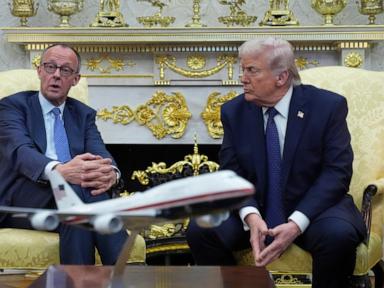
Donald Trump just put Germany on notice again. On Wednesday, the President took to Truth Social to announce he's "studying and reviewing" a reduction of American forces stationed in German territory. If you've followed Trump’s foreign policy over the last decade, this feels like a rerun, but the stakes in 2026 are completely different. This isn't just about unpaid NATO bills anymore. It's a direct consequence of a deepening, messy feud with German Chancellor Friedrich Merz over the war with Iran.
The timing isn't an accident. Trump’s post hit the internet just hours after Merz publicly questioned the U.S. strategy in the Middle East, even suggesting the American leadership is being "humiliated" by Tehran. For a President who prizes strength above all else, that’s a bell that can't be un-rung. You might also find this related article interesting: Geopolitical Transactionalism and the NATO Ukraine Iran Triad.
The Iran friction point
The real catalyst here is the ongoing U.S.-Israel conflict with Iran. Since the war kicked off on February 28, 2026, the relationship between Washington and Berlin has been sliding downhill. Trump expects total alignment from NATO allies. Germany, under Merz, has been anything but aligned.
Merz has been vocal about his doubts. He’s pointed out that Germany is basically footing the bill for the closure of the Strait of Hormuz, which has choked off 20% of the world’s oil supply. When Merz says the U.S. lacks a strategy, he’s speaking for a European continent that’s watching energy prices skyrocket and supply chains crumble. Trump’s response? He claimed Merz is fine with Iran having a nuclear weapon and doesn't know what he's talking about. As highlighted in recent coverage by Reuters, the implications are notable.
This isn't just a war of words. It’s a fundamental split in how to handle a global crisis. Trump wants navies in the Strait to break the blockade; Merz wants a diplomatic exit because Germany’s economy is taking a massive hit.
Why Germany matters to the US military
You might think pulling troops out of Germany is a simple way to save money or punish a "disloyal" ally. It’s not that easy. Germany is the logistical heartbeat of American power in the Eastern Hemisphere. We aren't just talking about a few barracks.
- Ramstein Air Base: This is the hub for almost all U.S. air operations in Europe and Africa. If you’re moving supplies or personnel to the Middle East, you’re likely going through Ramstein.
- Landstuhl Regional Medical Center: This is the largest American military hospital outside the U.S. It’s where soldiers wounded in the Middle East go for life-saving care.
- Command Centers: Both U.S. European Command (EUCOM) and U.S. Africa Command (AFRICOM) are headquartered on German soil.
Moving these facilities would cost billions and take years. Critics like Jeff Rathke from the American-German Institute argue that these troops aren't a "gift" to Germany. They're tools for American global reach. If Trump pulls them, he’s not just sticking it to Merz; he’s potentially hollowing out his own ability to project force in the very Iran conflict he’s prioritizing.
The numbers game
Currently, there are somewhere between 36,000 and 50,000 U.S. personnel in Germany. Trump tried this back in 2020 when he ordered 9,500 troops out, but the Biden administration hit the brakes on that plan in 2021.
Now, Trump is back and he’s leaning on a new metric. While he previously focused on the 2% GDP defense spending target, he’s now lauding those who hit 5%. Germany hasn't reached those heights, and their refusal to join the naval coalition in the Persian Gulf is being treated as the ultimate betrayal.
What happens next
Don't expect a mass exodus tomorrow. These announcements are often used as leverage. Trump is essentially holding the safety net over the edge of a cliff to see if Merz will blink.
If you're tracking the impact on markets or security, keep an eye on these specific indicators:
- Energy Prices: Any further escalation in the Iran feud will keep oil prices volatile, especially if Germany starts looking for even more independent energy deals.
- NATO Stability: If the U.S. actually moves forward with a significant withdrawal, expect Poland or the Baltic states to start bidding for those troops, which would further fracture the "old Europe" alliance.
- The Strait of Hormuz: If Germany continues to stay out of the naval effort, Trump might use the troop withdrawal as a "fee" for the U.S. protecting the trade routes Germany relies on.
The reality is that the U.S.-German relationship hasn't been this strained since the end of the Cold War. Merz claims the personal relationship is "good as ever," but the rhetoric coming out of the White House says something else entirely. If you're a business leader or an investor, you've got to plan for a more fragmented West. The era of assuming the U.S. military will always be the backbone of European security is effectively over. Stay tuned to the social media feeds—that’s where the real policy is being made now.