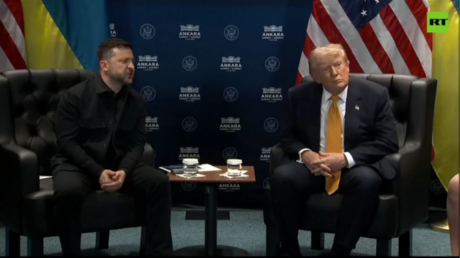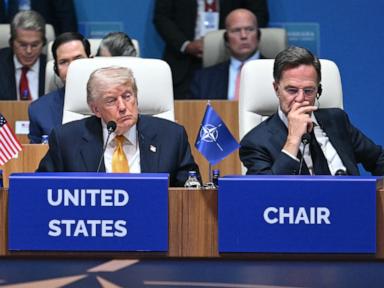
Donald Trump just threw a massive wrench into the NATO summit in Ankara. Standing right next to NATO Secretary General Mark Rutte, the US President openly ordered Treasury Secretary Scott Bessent to halt all trade with Spain. He called the country a "terrible partner" and a "wasted cause," claiming they don't pay their share and don't participate in the alliance.
It sounds like a swift, devastating economic blow. But honestly, it's mostly theater.
If you look past the aggressive headlines, you'll see that a US president cannot simply flip a switch and stop trading with a single European nation. The legal, structural, and global trade realities make this dynamic incredibly messy. Trump is trying to use economic leverage to force Madrid into compliance on defense spending and foreign policy, but the mechanics of global commerce don't work like a real estate negotiation.
The Real Friction Behind the Outburst
This isn't just about a sudden fit of anger. Tensions between Washington and Madrid have been building for months, driven by two major issues: NATO military budgets and the ongoing conflict with Iran.
Trump is furious that Spain refuses to commit to NATO’s aggressive new defense spending target of 5% of GDP by 2035. While Rutte tried to smooth things over by pointing out Spain recently hit the 2% mark, Trump isn't having it. He wants absolute compliance.
The bigger, more immediate sore spot is Iran. Spain's Socialist Prime Minister, Pedro Sánchez, has been highly critical of US military actions in the Middle East. Madrid went so far as to deny US forces the use of its airspace and joint military bases for offensive operations against Iran. For an administration running a hot military campaign, that refusal is a massive logistical headache. Trump wants to punish Spain for playing hardball with American military assets.
Why a Solo Trade Ban Against Spain Is Virtually Impossible
Here is what most people miss about international trade: Spain does not have its own independent trade policy.
As a member of the European Union and its customs union, Spain's trade relations are bound to the entire bloc. The US cannot legally single out Spain for tariffs or trade bans without targeting the European Union as a whole. Under EU law, an attack on one member’s trade is an attack on all. If the US stops buying Spanish goods, Brussels is legally obligated to retaliate on behalf of Madrid, which could trigger a full-blown trade war between the US and Europe.
To bypass this and target Spain individually, Trump would have to take extreme legal measures. According to international economic law experts, the administration would need to declare a formal national emergency. Trump would have to explicitly state—and prove—that Spanish olive oil, auto parts, and wine pose a direct threat to US national security or the American economy.
Even if the White House pushes that through, the economic damage might not land where Trump expects. Spain actually runs a trade deficit with the US, meaning Americans buy less from Spain than Spain buys from the US. Because these economic ties are driven by private companies rather than government contracts, a sudden halt would hurt American businesses relying on Spanish components just as much as it hurts the suppliers in Madrid.
Wall Street Is Ignoring the Political Drama
While politicians are trading barbs, big institutional money is doing the exact opposite. Wall Street firms aren't panicking about Spain; they're investing heavily in it.
Take BlackRock, for example. The investment giant holds over 104 billion euros in Spanish equities, debt, and real assets. They recently labeled Spain as a preferred country for equity investment due to its resilient economic growth compared to the rest of a sluggish Europe.
While net US investment in Spain did drop by 1.9 billion euros in the first quarter of 2026 as these political threats first surfaced, the underlying economic fundamentals remain highly attractive to private capital. The market is looking at Trump's statements as political leverage rather than a literal roadmap for future policy.
What Actually Happens Next
Don't expect Spanish goods to vanish from American shelves tomorrow. This is the second time Trump has issued this exact directive to Secretary Bessent—the first was back in March, and trade continued completely uninterrupted. The Spanish government is publicly treating the outburst as "business as usual."
The real vulnerability isn't trade; it's the future of joint military operations. The US and Spain jointly operate two crucial military bases in southern Spain that are vital for naval and air logistics in the Mediterranean and the Middle East. While investment at these bases is currently growing and Spanish officials claim there is no sign of a US drawdown, the threat of shifting American troops out of Spain remains the one card Trump can actually play without triggering an international legal nightmare.
For now, the best move for businesses navigating this space is to watch the regulatory filings, not the press conferences. Until the White House moves to declare a formal emergency or explicitly drafts targeted tariffs that challenge the broader EU customs union, this standoff remains a high-stakes game of political chicken.