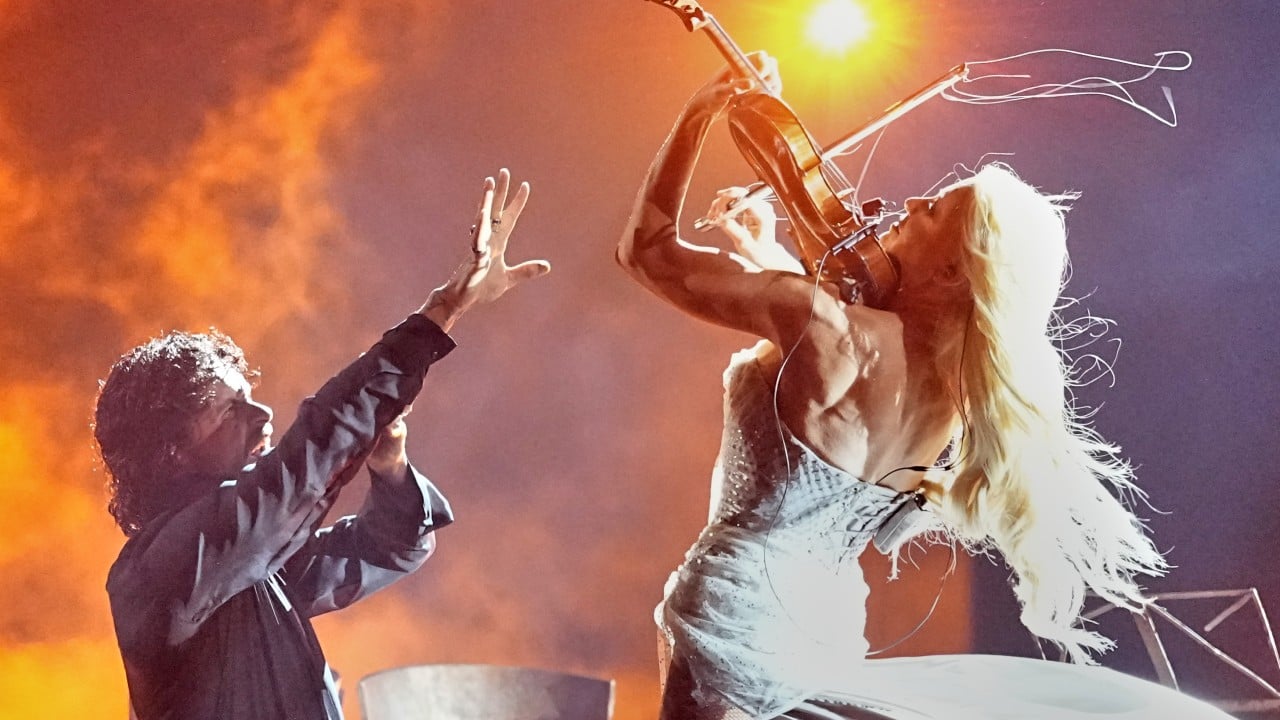
The media elite is currently weeping into its artisanal cocktails over the death of The Late Show with Stephen Colbert. The prevailing narrative is beautifully cinematic: a brave, truth-telling satirist was martyred by a vindictive president and a cowardly network desperate to protect an $8.4 billion corporate merger. On the flip side, Donald Trump is on Truth Social taking a victory lap, screaming into the digital void that a "total jerk" with "no talent" has finally been vanquished.
Both sides are entirely wrong.
This is not a story of authoritarian triumph or a successful corporate hit. It is the final, pathetic whimper of a symbiotic relationship that destroyed political satire and corporate television simultaneously. Trump did not kill Colbert. Colbert did not stop Trump. They created each other, fed off each other for a decade, and have now successfully exhausted the American public to the point of mutual irrelevance.
The Myth of the Corporate Martyr
Let us dismantle the weeping eulogies first. The media academics are out in full force, claiming Colbert’s cancellation is an unprecedented assault on free expression. They point to CBS parent company Paramount paying a $16 million settlement to Trump over a 60 Minutes interview, followed by Colbert calling it a "big fat bribe," followed by the axe falling three days later.
This is lazy correlation disguised as investigative journalism.
I have watched entertainment executives manage balance sheets for decades. They do not cancel the undisputed ratings leader of a time slot over a hurt ego or a political grudge if that show is actually making them rich. The brutal, unvarnished truth is that late-night television is an economic zombie.
Linear television ad revenue is cratering. The cost of producing an hour of daily television in New York City, complete with a celebrity host salary, a massive writing staff, and a full house band, is astronomical. The networks kept these shows alive because they generated viral clips for YouTube. But Guess what? You cannot fund a legacy network apparatus on programmatic YouTube ad-share revenues.
CBS used the Trump feud as a convenient smoke screen to execute a financial mercy killing they had been calculating for three years. They did not fire a revolutionary; they liquidated an underperforming asset before the Skydance Media merger closed.
The Mutual Parasitism of Resistance Comedy
To understand why Colbert’s show deserved to die, we have to look at the mechanics of what "satire" became under his tenure.
True satire punches up, exposes hypocrisy, and introduces discomfort. What Colbert pioneered in 2015—symbolized by his famous first-episode stunt of gorging on Oreos while mocking Trump—was not satire. It was a nightly church service for the politically exhausted.
Instead of writing jokes, late-night writers began reading news transcripts and waiting for the applause cue. The goal was no longer to make the audience laugh; it was to make them feel morally superior. This dynamic created a predictable, algorithmic loop:
- The President does something norm-shattering.
- The Host mimics the voice, wags a finger, and delivers a monologue that confirms the audience's biases.
- The Audience experiences a brief hit of dopamine, convinced that "clapping back" constitutes political resistance.
- The status quo remains entirely unchanged.
This was not a threat to the Trump administration; it was its greatest asset. Every time Colbert delivered a caustic, piercing monologue, he solidified Trump’s narrative that the coastal media apparatus despised the heartland. Trump needed Colbert to point at as the bogeyman. Colbert needed Trump to fill the monologue repository every single afternoon.
It was a highly profitable, co-dependent business model. Until the audience grew tired of the bit.
The Performance of Disregard
Look at the final episode that aired last night. The cultural commentators are praising Colbert for his "sophisticated" final broadcast, noting that he did not mention Trump by name once, opting instead for a CGI wormhole gag and a legacy interview with Paul McCartney. They call it a dignified, non-political exit.
It was actually an admission of defeat.
After eleven seasons of defining his entire creative output in opposition to one man, pretending that man does not exist during your final hour is not high-minded; it is total denial. It proves that the "moral anchor" narrative was a pose. When the chips were down, the show collapsed back into standard, safe, celebrity-worshipping nostalgia.
Meanwhile, Trump’s 2:00 AM digital tirade calling Colbert a "dead person" with "no life" shows an equal level of pathetic stagnation. The man is the President of the United States, yet he is still staying up past midnight to hate-watch the sign-off of a talk show host who didn't even say his name.
The Decentralized Reality
While legacy media figures argue over who won this ten-year turf war, the actual audience has already moved on to an entirely different landscape.
The idea that losing Colbert leaves a "dangerous void" in American political discourse assumes that the average American under the age of 50 is still turning on a television set at 11:35 PM. They are not. They are getting their political commentary from decentralized podcasts, independent creators on YouTube, and raw video feeds where the humor is weirder, faster, and genuinely counter-cultural.
Legacy late-night was built on a monoculture that no longer exists. Johnny Carson could unite a country because there were only three channels. Colbert divided a country because that was the only way to retain a fraction of a fragmented audience.
The cancellation of The Late Show is not a tragedy for democracy, nor is it a triumph for the White House. It is just the inevitable consequence of two outdated institutions realizing that their shared theater of outrage has finally run out of ticket buyers.