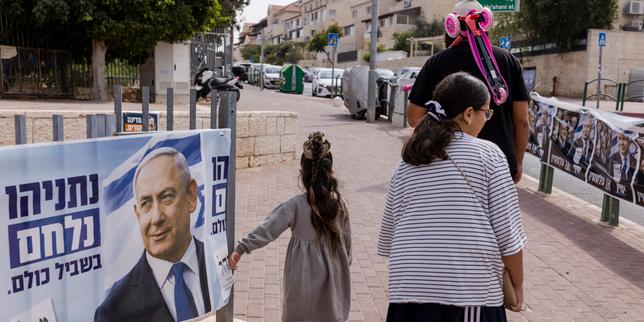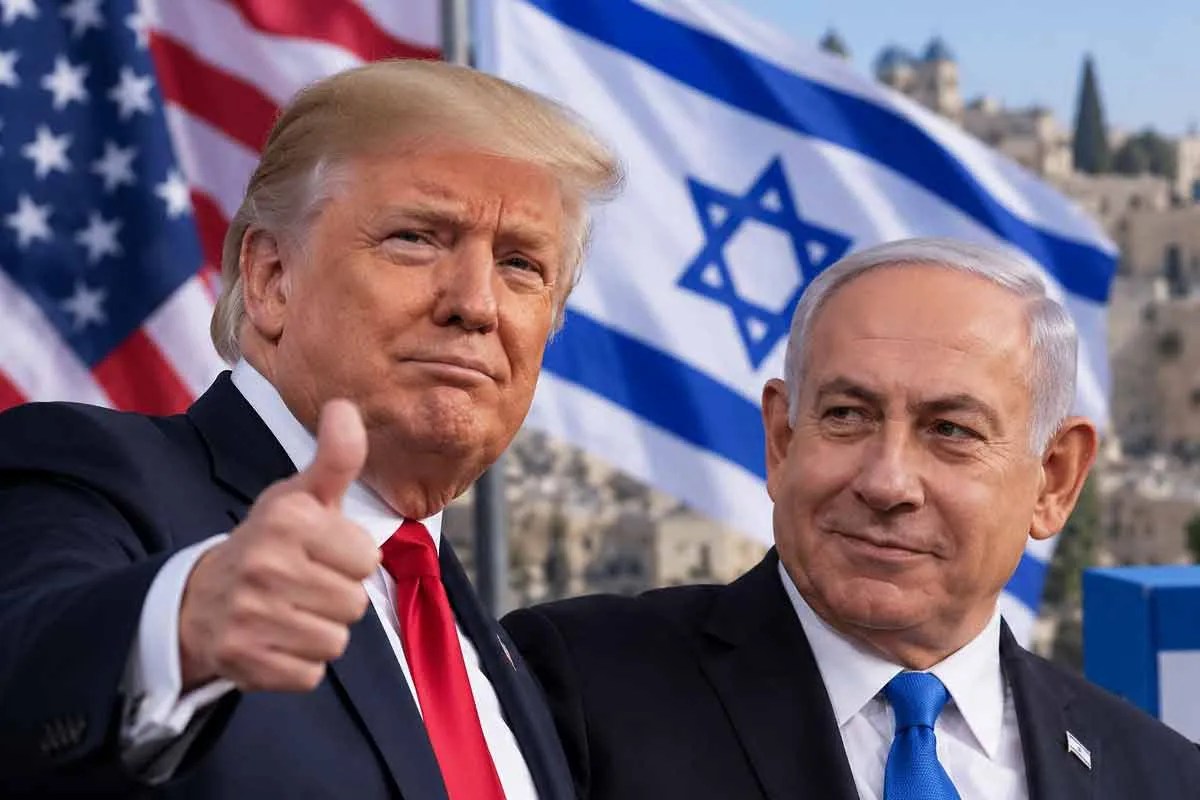
Mainstream coverage of the 2026 Israeli legislative election fell straight into the oldest trap in political journalism. When Donald Trump took to Truth Social days before the October 27 vote to brand Benjamin Netanyahu an "outstanding Warrior Prime Minister" and warn Israelis that electing anyone else would force Washington to rethink its posture toward Iran, cable news and digital outlets treated it like a seismic political earthquake.
They got the story completely backward.
The lazy consensus assumes that an explicit endorsement from a sitting U.S. president acts as a golden ticket in Israeli politics. Pundits dutifully recited Trump's talking points about "winning together" against Tehran, framed the race as a binary referendum on American backing, and called it a day. What they missed is the actual mechanics of Israeli coalition math, voter psychology, and transactional diplomacy. Trump's intervention was neither a savior's lifeline nor a benign show of solidarity. It was a high-stakes bet that exposed the exact structural weaknesses Netanyahu spent an entire campaign trying to hide.
The Myth of the American Kingmaker
Political analysts love simple cause-and-effect narratives. Trump endorses Bibi; Bibi gets a surge; the "Warrior Prime Minister" cruises to victory. Reality refused to cooperate.
Look at the numbers from before and after the ballot drop. A Channel 12 survey conducted right around the endorsement showed that 64% of Israeli respondents said Trump's backing would have zero impact on how they voted. Worse for Likud, 17% stated the endorsement actually made them less likely to support Netanyahu, outnumbering the 12% who said it strengthened their resolve to back him.
When the official results of the October 27 election were certified in early November, the verdict on the "Warrior" pitch was unambiguous. Likud finished as the largest single faction with 27 seats—down from 32 in 2022. Netanyahu's entire right-wing and religious bloc collapsed from 68 seats to 53, well short of the 61-seat threshold required to govern.
Why did the supposed magic of an American presidential endorsement evaporate at the ballot box? Because foreign endorsements in proportional representation systems do not manufacture new voters out of thin air. As RANE Network senior analyst Ryan Bohl pointed out ahead of the vote, an endorsement like Trump's doesn't flip decided minds. At best, it acts as a defensive moat to stop bleeding center-right voters from defecting to rival nationalist parties like Avigdor Liberman's Yisrael Beiteinu.
Even that defensive play failed to offset the domestic grievances driving the electorate. Israelis did not go to the polls in record numbers—77.98% turnout, the highest since 1999—to cast a vote on Donald Trump's Truth Social feed. They voted on:
- Accountability for October 7: Millions of citizens spent three years demanding an independent state commission of inquiry into the intelligence and military failures of 2023.
- The Haredi Conscription Crisis: Secular and national-religious voters alike reached a breaking point over ultra-Orthodox draft exemptions during a multi-front war.
- Cost of Living and Domestic Governance: Inflation, judicial upheaval, and the erosion of public institutions weighed far heavier at kitchen tables than campaign slogans.
Calling a prime minister a "warrior" works when the public believes the war has yielded strategic closure. It backfires when voters feel trapped in perpetual conflict without a political endgame.
What People Actually Ask About Foreign Endorsements in Israel
Whenever a U.S. president steps into an Israeli campaign, search engines light up with variations of the same flawed questions. Let's dismantle the premises behind them.
Did Trump's endorsement violate diplomatic norms?
Yes, but asking whether it broke norms misses why it happened. For decades, American presidents avoided explicit endorsements in Israeli elections to preserve bipartisan leverage regardless of who won the Knesset. Trump operates on personal loyalty, not institutional continuity. He didn't break the norm out of carelessness; he broke it because he views bilateral alliances as personal contracts between strongmen.
Can an American president actually sway an Israeli election?
Only at the margins, and usually in ways the endorser doesn't intend. In a system where parties need just 3.25% of the national vote to enter parliament and coalitions are built seat by seat, a 1% or 2% shift can alter post-election leverage. However, overt foreign pressure triggers a fierce sovereignty reflex among Israeli voters. Nobody likes being told by a foreign capital—even their closest ally—that choosing the "wrong leader" will cost them security backing.
Did Trump's backing save Netanyahu from a worse defeat?
Perhaps by three or four seats, which kept Likud ahead of Gadi Eisenkot's Yashar party (21 seats) in the raw party tally. Yet finishing first in a 120-seat Knesset means nothing if you cannot assemble 61 mandates. Winning the plurality while losing the coalition math is a Pyrrhic victory.
The Transactional Trap Nobody Talked About
I've watched political campaigns across multiple democracies blow millions of dollars chasing high-profile endorsements from foreign leaders and celebrity power brokers, only to discover too late that borrowed authority comes with crushing interest rates.
In politics, as historian Ahron Bregman bluntly noted regarding Trump's backing of Netanyahu, "you don't get a free meal from Trump."
Competitor articles framed Trump's letter as an act of generosity toward an embattled ally. Look closer at the language in Trump's October 18 endorsement letter. Alongside praising Netanyahu as a "Great Warrior Prime Minister," Trump added a telling second label: an "even greater Partner for Peace." He followed it with a barely veiled threat: if Israel elected anyone other than Netanyahu, "America will have to do this work ourselves, and I am not inclined to do so."
Read between the lines. That wasn't a blank check for endless escalation; it was a leash.
By tying his political survival so visibly to Washington's blessing, Netanyahu handed Trump massive leverage over Israel's operational freedom. When a leader campaigns on the premise that only I can manage the American president, that leader cannot afford to publicly defy the White House the morning after the election. Every tactical decision—from strikes on Iranian nuclear infrastructure to troop deployments and regional ceasefires—becomes a bargaining chip in an asymmetric relationship where Washington holds all the cards.
Imagine a scenario where an Israeli prime minister wins reelection explicitly on the promise that a U.S. president guarantees national survival. Two weeks later, the White House demands a freeze on a planned military operation to protect American domestic political interests ahead of U.S. midterm elections. The prime minister has zero room to maneuver. Saying no destroys the exact narrative used to win votes. Saying yes subordinates national security strategy to another country's electoral calendar.
The Real Winner of the 2026 Election Was Coalition Paralysis
While media outlets obsessed over the Trump-Netanyahu bromance, the actual earthquake in the October 27 results happened elsewhere on the ballot.
Arab-majority parties—the Joint List (11 seats) and Mansour Abbas's Ra'am (8 seats)—surged to a combined 19 seats, the highest representation in Israeli parliamentary history. Driven by massive mobilization in Arab towns and cities, their surge shattered the math for both traditional camps.
Look at the Knesset board after the dust settled:
- The Netanyahu Bloc (53 seats): Likud (27), Otzma Yehudit (7), United Torah Judaism (7), Shas (6), and Religious Zionism (6). Down 15 seats from their 2022 peak.
- The Zionist Opposition Bloc (48 seats): Gadi Eisenkot's Yashar (21), Naftali Bennett and Yair Lapid's Together alliance (12), Yair Golan's Democrats (8), and Yisrael Beiteinu (7).
- The Arab Parties (19 seats): Holding the absolute balance of power.
Neither Trump's "Warrior" branding nor Netanyahu's warnings about Tehran could bridge that arithmetic. Together, the parties opposed to Netanyahu command 67 seats—more than enough to unseat him—yet Eisenkot, Bennett, and Liberman campaigned on pledges not to rely on Arab-led factions to form a government. Meanwhile, Netanyahu cannot reach 61 without poaching opposition defectors or fracturing his own ideological base.
How to Actually Read Geopolitical Endorsements Without Getting Played
If you want to understand Middle Eastern power dynamics—or any high-stakes international election—stop reading political endorsements at face value. Whether you are a policy analyst, an investor pricing regional risk, or a news consumer trying to separate signal from noise, apply three rules every time a superpower leader weighs in on a foreign ballot:
- Track the exit clause, not the praise. Superlatives like "warrior" or "historic partner" cost nothing. Look for the conditional threat buried in the statement. When Trump warned that he was "not inclined" to carry the burden if Israelis chose differently, he signaled American fatigue with open-ended regional commitments, not bottomless enthusiasm.
- Measure domestic friction against foreign validation. Foreign backing only amplifies existing domestic momentum; it never replaces it. If an incumbent is bleeding support over conscription, economic strain, and institutional trust, a foreign endorsement highlights their domestic isolation rather than curing it.
- Watch the parliamentary math, not the plurality. In proportional systems, finishing first in seat count is a vanity metric if your coalition ceiling sits at 53 out of 120. Always count the bloc, never just the flagship party.
To be clear, dismissing Trump's influence entirely would be just as naive as overstating it. Inside post-election coalition negotiations, Netanyahu can still weaponize his direct line to the Oval Office to pressure hesitant partners or argue that a unity government needs him at the helm to navigate Washington. Leverage in backroom talks is real.
But backroom leverage is not a popular mandate.
The media sold the public a cartoon: an American president crowning a "Warrior Prime Minister" with a single social media post. Israeli voters handed back a deadlocked Knesset, a diminished ruling bloc, and a coalition crisis that no amount of foreign applause can solve. For further context on the broadcast framing of this dynamic, see the coverage in Netanyahu 'योद्धा प्रधानमंत्री' इजरायल चुनाव में Trump की एंट्री!, which captures how television commentators initially interpreted Trump's intervention in the 2026 race.