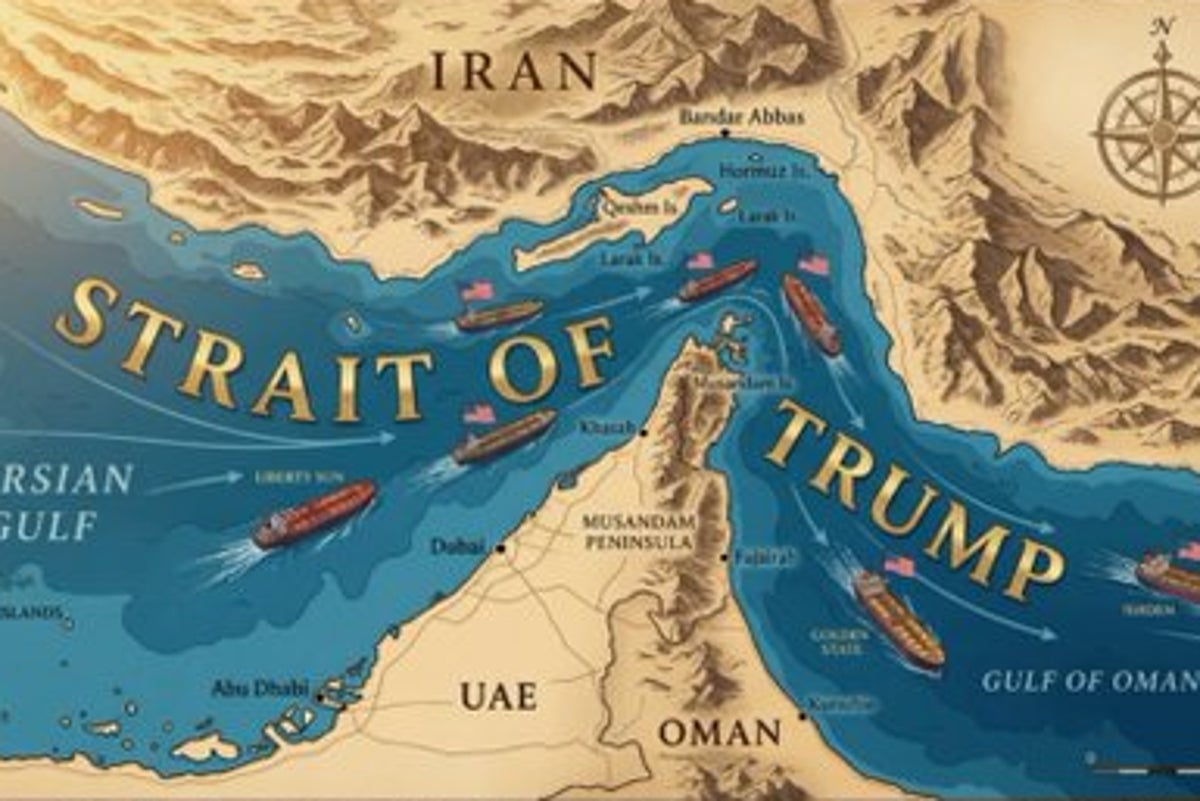
Donald Trump has never been known for subtlety. If there's a skyline, he wants his name on the tallest building. If there's a golf course, he wants his coat of arms on the grass. Now, he’s looking at the map of the Middle East and seeing a giant gap where a "Strait of Trump" should be. This isn't just about branding a hotel or a bottle of water. We're talking about a massive geopolitical engineering project that would reshape global trade routes and the literal geography of the region.
The idea is as ambitious as it is controversial. It involves cutting a new canal through the desert to create an alternative to the Strait of Hormuz. For decades, that narrow strip of water has been a choke point for the world’s oil supply. Iran sits right on the edge of it. They've used that proximity as a weapon for years, threatening to shut it down whenever tensions rise with the West. Trump’s "wishlist" project aims to strip that power away from Tehran while cementing his legacy in the most permanent way possible: by carving it into the earth.
Why the Middle East needs a new trade route
Global energy markets are currently held hostage by geography. Roughly 20% of the world's petroleum flows through the Strait of Hormuz. It's narrow. It's crowded. Most importantly, it's vulnerable. If a conflict breaks out, the global economy hits a wall. Oil prices would skyrocket overnight. You've seen how a single stuck ship in the Suez Canal threw the world into a tailspin back in 2021. Now imagine a deliberate blockade in a war zone.
A "Strait of Trump"—essentially a massive man-made canal—would bypass this risk. By creating a path from the Persian Gulf directly to the Arabian Sea through territory held by allies like Oman or the UAE, the world gains a "Plan B." It's a move that makes sense from a security standpoint. If you're a military strategist, you want options. If you're Donald Trump, you want those options to carry your name in gold letters.
The scale of this is hard to wrap your head around. We're talking about a project that would dwarf the Big Dig or even the expansion of the Panama Canal. It requires moving billions of tons of earth. It needs tens of billions of dollars in investment. But for a man who built his career on "The Art of the Deal," the sheer impossibility of it is probably the biggest draw.
The branding obsession meets high-stakes diplomacy
Trump doesn't just build things. He stamps them. From the Mar-a-Lago carpets to the sides of private jets, the brand is the man. But a strait? That's a different level of ego. Usually, geographic features are named after explorers or long-dead monarchs. Trump wants to jump the queue.
He’s done this before, or at least tried. Remember the Golan Heights? After the U.S. recognized Israeli sovereignty over the territory, a settlement was named "Trump Heights." He loves the idea of his name being part of the permanent record of the world. The Strait of Trump would be the ultimate trophy. It’s a middle finger to his detractors and a permanent monument to his influence in the Middle East.
Critics call it vanity. Supporters call it visionary. Honestly, it’s probably a bit of both. You don't get peace deals like the Abraham Accords by thinking small. That's the logic his camp uses. They argue that by tying his name to a project that brings stability and wealth to the region, he’s incentivizing peace. If everyone is making money off the "Strait of Trump," nobody wants to blow it up.
Money and the logistics of a desert canal
Building a canal isn't just about digging a hole. You have to deal with desalination, environmental impact, and the massive logistical nightmare of housing thousands of workers in the middle of a desert. The cost estimates for a project like this start at $50 billion and only go up from there.
- Financing: Where does the cash come from? Likely a mix of U.S. private equity and Sovereign Wealth Funds from the Gulf.
- Engineering: This isn't just sand. You're cutting through rock and managing sea levels across hundreds of miles.
- Security: A canal is a target. You'd need a permanent military presence to keep the "Strait of Trump" open.
The environmentalists are already losing their minds. Changing the flow of water in the region could wreck local ecosystems. But in the world of high-stakes Middle Eastern development—think of Saudi Arabia's Neom or The Line—environmental concerns often take a backseat to "The Vision." Trump’s wishlist fits right into this trend of "Giga-projects" that define the modern Middle East.
The Iranian reaction and the risk of war
You can't talk about a new strait without talking about Iran. Tehran views the Strait of Hormuz as their primary lever of power. If you take that away, you're backing them into a corner. They won't just sit back and watch the "Strait of Trump" get built.
We've seen how they react to perceived threats. Sabotage, mine-laying, and drone strikes are all in their playbook. Constructing this canal would be seen as an act of economic warfare. It’s a high-risk, high-reward play. If it works, Iran loses its most potent threat. If it fails or triggers a preemptive strike, the whole region goes up in flames.
Trump seems to bet on the idea that Iran is a paper tiger. He thinks if you show enough strength and build enough "big, beautiful" things, they'll eventually fold. It's a gamble that ignores decades of regional history, but Trump has never been one for history books. He's about the future he wants to build.
Legacy building in the sand
Why now? Because legacy is all that matters to a man in his late 70s who has already been President. He wants to be remembered as a builder-statesman. He wants a legacy that people can see from space.
The "Strait of Trump" represents a shift in how he views his role. It's no longer just about winning an election; it's about altering the map of the world. It’s the ultimate "I was here" tag. Whether it ever gets a single drop of water in it is almost secondary to the fact that he's got people talking about it.
The project reflects his broader philosophy: everything is a deal, everything is a brand, and nothing is too big to attempt. If you think it's ridiculous, he’s already won because you're talking about him. If you think it's genius, you're probably already looking for a way to invest.
What happens if this actually moves forward
If this project shifts from a wishlist to a blueprint, expect the most intense lobbying campaign in history. Defense contractors will want in. Construction giants will salivate. Every country in the region will have to pick a side.
Don't look at this as just a crazy idea from a former president. Look at it as a signal of intent. Trump wants back in, and he wants to go bigger than ever before. He’s looking for the next frontier. If that means digging up the Middle East to put his name on a new body of water, he’s clearly ready to pick up the shovel.
Watch the Gulf states closely. Their reaction will tell you if this is a pipe dream or a pending reality. If they start moving money, the "Strait of Trump" might just become the most significant piece of infrastructure of the 21st century. Keep an eye on the Abraham Accords 2.0. That’s where the legal and diplomatic groundwork for a project of this scale will be laid. If those agreements expand, the canal becomes more than just a name on a map—it becomes an inevitability.