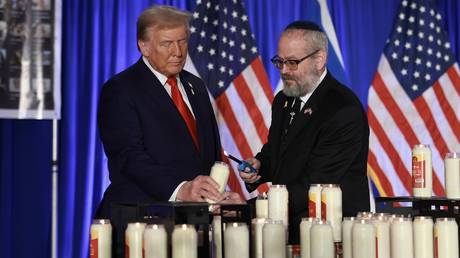
The United States is preparing to issue a diplomatic red card that could leave European politicians stranded at the border during this summer’s 2026 World Cup. Yehuda Kaploun, the ultra-Orthodox rabbi appointed as Donald Trump’s special envoy to monitor and combat anti-Semitism, isn't mincing words. He's made it clear that the administration is ready to use visa restrictions as a weapon against EU officials they believe have failed to protect Jewish communities or have actively promoted anti-Semitic policies.
This isn't just standard diplomatic posturing. We’re looking at a scenario where high-ranking ministers from major European allies might be denied entry to the U.S. for the biggest sporting event on the planet. Kaploun explicitly linked the two during a recent conference in Brussels, warning that those "saying things" or pursuing specific policies won't be allowed into the country. If you're an EU politician planning to sit in a VIP box in Miami or Los Angeles, your travel plans just became a lot more complicated.
The World Cup as a Diplomatic Lever
The 2026 World Cup provides the Trump administration with a unique point of pressure. It’s a massive stage. Everyone wants to be there. By threatening to pull the rug out from under European leaders, Washington is forcing a confrontation over internal EU affairs that most European capitals would rather handle on their own terms.
According to Kaploun, anti-Semitism in Europe has reached "1933 levels." It's a heavy comparison. He's pointing to recent synagogue bombings in Belgium and the Netherlands as proof that the situation is spiraling out of control. While European officials are busy investigating links to groups like Hezbollah, the U.S. envoy thinks they’re being far too soft.
The U.S. Ambassador to Belgium, Bill White, has doubled down on this. He’s accused the Belgian government of having a severe anti-Semitism problem, particularly regarding legal cases involving ritual circumcisers in Antwerp. Belgium denies the charges, but the U.S. isn't backing down. They’re holding countries accountable for their ministers' rhetoric and their judicial decisions. If the U.S. decides a policy is anti-Semitic, the visa ban hammer comes down.
Why This Strategy Is Rattling Brussels
European diplomats are used to a certain level of decorum. They like committees. They like "different approaches." Kaploun isn't interested in that. Reports indicate he’s been "laying down the law" in meetings with European ambassadors. He even clashed with a high-level German diplomat who tried to argue that Europe is effectively prosecuting hate crimes. Kaploun’s response? Education and arrests aren't enough if the environment remains hostile.
The tension is real. An EU official recently admitted that there's rising concern in high-level circles about officials being stopped at border controls. Imagine the optics of a European foreign minister being turned away at JFK because of a comment they made about Middle East policy or a local religious law. It’s a nightmare for the EU’s diplomatic core.
The Specific Grievances Behind the Bans
- Judicial Attacks on Religious Rites: The focus on Belgium's Antwerp community highlights that the U.S. is watching how European courts handle Jewish traditions.
- Rhetoric from Ministers: Comments made by government officials regarding Israel or Jewish safety are now being logged as potential reasons for visa denials.
- Security Failures: The U.S. sees the recent wave of synagogue attacks as a failure of European domestic security, not just a criminal issue.
What Happens if the U.S. Follows Through
If the State Department actually starts pulling visas, it’ll be a total mess. The World Cup is hosted across the U.S., Canada, and Mexico, but the U.S. controls the majority of the infrastructure and the most high-profile matches.
The president and the secretary of state have the authority to take "any step" they deem necessary to protect the community, according to Kaploun. That’s a broad mandate. It basically gives the administration a blank check to define anti-Semitism as they see fit and punish foreign officials accordingly.
Some see this as a necessary wake-up call for a continent that has seen a terrifying spike in hate crimes. Others see it as an overreach—an American administration meddling in the sovereign laws of its allies by using a football tournament as bait. Regardless of where you stand, the message from the Trump administration is loud: if you want to be part of the global party in 2026, you’d better make sure your domestic record on anti-Semitism meets Washington's standards.
Preparing for a Potential Travel Crisis
For EU officials, the next steps are tricky. There's no clear appeal process if the U.S. decides your "policies" are a problem.
- Review Domestic Rhetoric: European ministries are likely scrubbing past statements to see if they’ve said anything that could be flagged by Kaploun’s office.
- Diplomatic Backchannels: Expect a flurry of "clarification" meetings in D.C. over the next few months as countries try to secure travel guarantees for their delegations.
- Legal Coordination: Countries like Belgium might have to decide if their local legal battles are worth a public spat with their most powerful ally.
Don’t expect this to blow over quietly. The U.S. envoy has signaled that the administration is ready to act. The days of "agreeing to disagree" on these issues might be over, at least as long as the 2026 World Cup is the carrot on the stick.