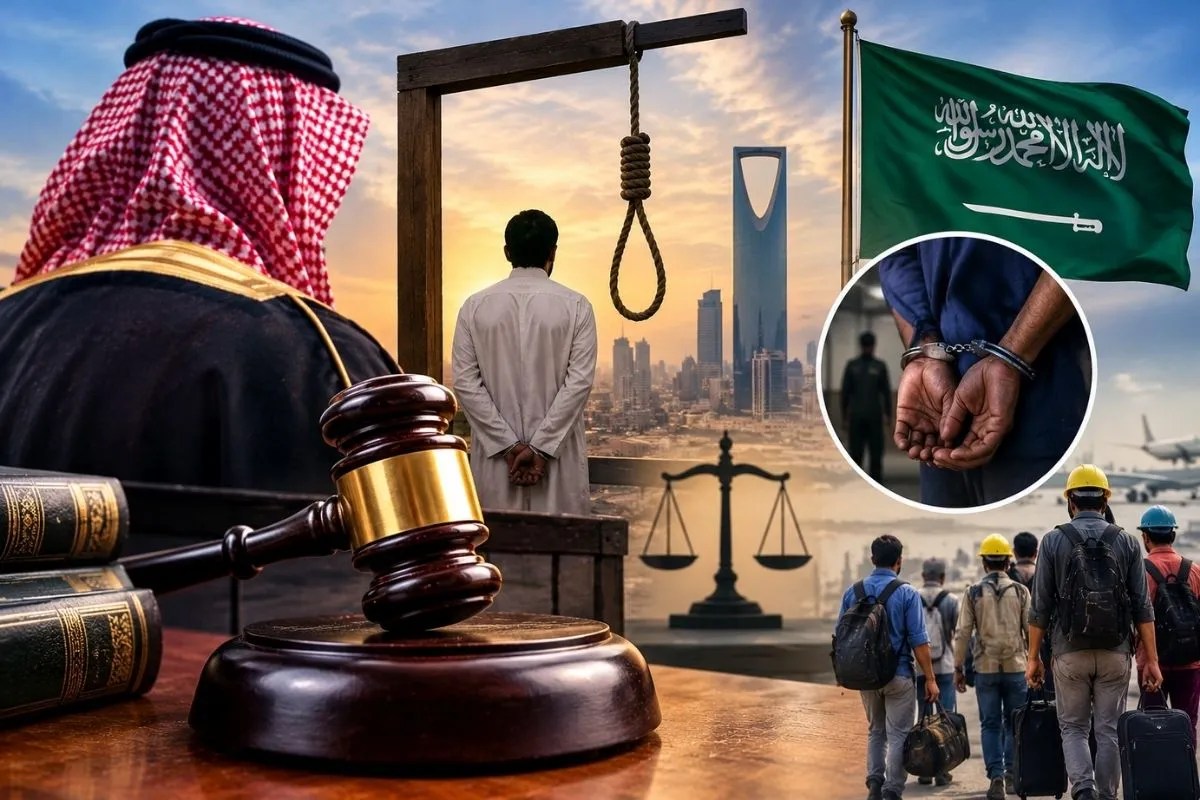
Booking a flight to Riyadh or Jeddah feels straightforward enough until you remember that the death penalty in Saudi Arabia isn't an abstract legal footnote—it's a reality that surged to record highs in 2025 and continued climbing into 2026.
Travelers often assume capital punishment only applies to obvious extremes like terrorism or premeditated murder. That assumption is dangerous.
In reality, Saudi courts have executed people for drug smuggling—including substances like hashish that many visitors treat casually back home—as well as violent offenses, espionage, and security-related charges. Amnesty International documented at least 356 executions in Saudi Arabia in 2025, breaking the previous record, with drug-related cases driving a huge share of the spike.
If you're heading there for work, tourism, pilgrimage, or transit, knowing how the system actually operates matters way more than vague internet rumors.
How Capital Offenses Actually Work Under Saudi Law
People love to throw around simple checklists of "crimes that carry execution," yet Saudi legal practice doesn't work like a rigid Western penal code. Courts apply interpretations of Islamic jurisprudence alongside royal decrees and statutory regulations.
Legal analysts generally point to three broad categories when explaining how death sentences arise:
- Qisas (retributive justice): Most commonly tied to intentional killing, where the victim's family holds enormous sway over whether the sentence is carried out or waived in exchange for financial compensation (diyya, or blood money).
- Hudud: Offenses traditionally defined in religious texts—such as armed robbery, banditry, or certain morality and faith-related infractions—though thresholds of proof are strict and real-world enforcement varies sharply.
- Ta'zir: Discretionary punishments set by rulers and courts for offenses not carrying fixed hudud or qisas penalties, which has heavily featured in drug trafficking and state-security cases.
From a practical standpoint, don't get bogged down debating theological labels at airport customs. What matters on the ground is that drug offenses, terrorism and security charges, murder, and certain violent or state crimes all sit squarely on the radar of Saudi prosecutors.
Drug Smuggling and the Harsh Reality of Zero Tolerance
If there's one area where travelers and migrant workers get blindsided, it's narcotics.
Back home, a small amount of weed or hashish might get you a ticket, a lecture, or probation. Bring it across a Saudi border—or get tricked into carrying a bag containing it—and you're stepping into a system that treats drug trafficking with brutal severity.
After a temporary pause on drug-related executions that lasted from early 2021 until late 2022, authorities resumed them and escalated dramatically. According to human rights monitoring by organizations like Amnesty International and ALQST, drug offenses accounted for the majority of recorded executions in 2025—around 240 out of 356—and kept climbing in the first half of 2026.
Foreign nationals have been hit hard in these cases. Human rights groups have repeatedly warned that many non-citizens face language barriers, limited access to consular assistance, rushed or opaque proceedings, and situations where mules or couriers claim they were coerced or deceived into transporting illicit goods. Even if you think you're "just helping a friend" or packing a bag someone handed you at the last minute, customs doesn't grade on a curve of naivety.
Terrorism, Security, and High-Stakes Political Charges
Counterterrorism and national security laws in Saudi Arabia cast a wide net. Obviously, plotting attacks, joining militant groups, or handling weapons and explosives falls under severe security prosecution.
What catches some visitors off guard is how broadly "security" or "public order" can be interpreted when activism, dissent, or sensitive online speech enters the picture. Rights organizations such as Human Rights Watch and Amnesty International have documented severe sentences—including death sentences in egregious cases—tied to political expression, protest activity, or alleged ties to banned groups.
Honestly, if you're a foreign visitor, you shouldn't treat Saudi Arabia like a place to test free-speech boundaries or join local political debates. Keep your travel focused, respectful, and low-drama. And check your social media history and phone contents before you fly—border inspections and digital scrutiny aren't hypothetical.
Why Foreigners Face Extra Risk Behind Closed Doors
Let's be real about the biggest trap for travelers: assuming due process looks like what you see on television.
Legal observers and human rights researchers note that trials in Saudi Arabia can move through multiple court levels—including appellate and supreme court review or royal ratification—yet transparency around exact charges, evidence, and execution dates is often limited. Foreign nationals sometimes struggle with translation quality, unfamiliar legal procedures, or delayed contact with their embassies.
That doesn't mean every arrest ends in catastrophe. Most routine tourist hiccups—a minor traffic fine, a lost passport, a misunderstanding over hotel rules—never go anywhere near capital territory. Still, if a foreigner does get pulled into a serious criminal or security investigation, the stakes escalate fast and outside help takes time to mobilize.
Smart Steps Before You Fly
You don't need to panic to travel smart. A few concrete habits cut your risk dramatically:
- Audit every bag and pocket yourself. Never carry sealed packages, "gifts," or extra bags for acquaintances, coworkers, or strangers. Double-check prescription medications against Saudi import rules and carry original prescriptions plus a doctor's note.
- Save your embassy's emergency numbers offline. Before takeoff, write down the contact details for your country's embassy or consulate in Riyadh and consulate general in Jeddah, along with your travel insurance emergency line.
- Keep your digital footprint clean and your behavior discreet. Avoid participating in protests, filming sensitive government or security sites, or posting commentary on Saudi politics while in the country.
- Read official advisories from your own government. Check your home foreign ministry's current travel advice for Saudi Arabia right before departure so you know about any fresh entry rules or regional security alerts.
Stay sharp, pack carefully, and know the rules of the road before your wheels touch down.