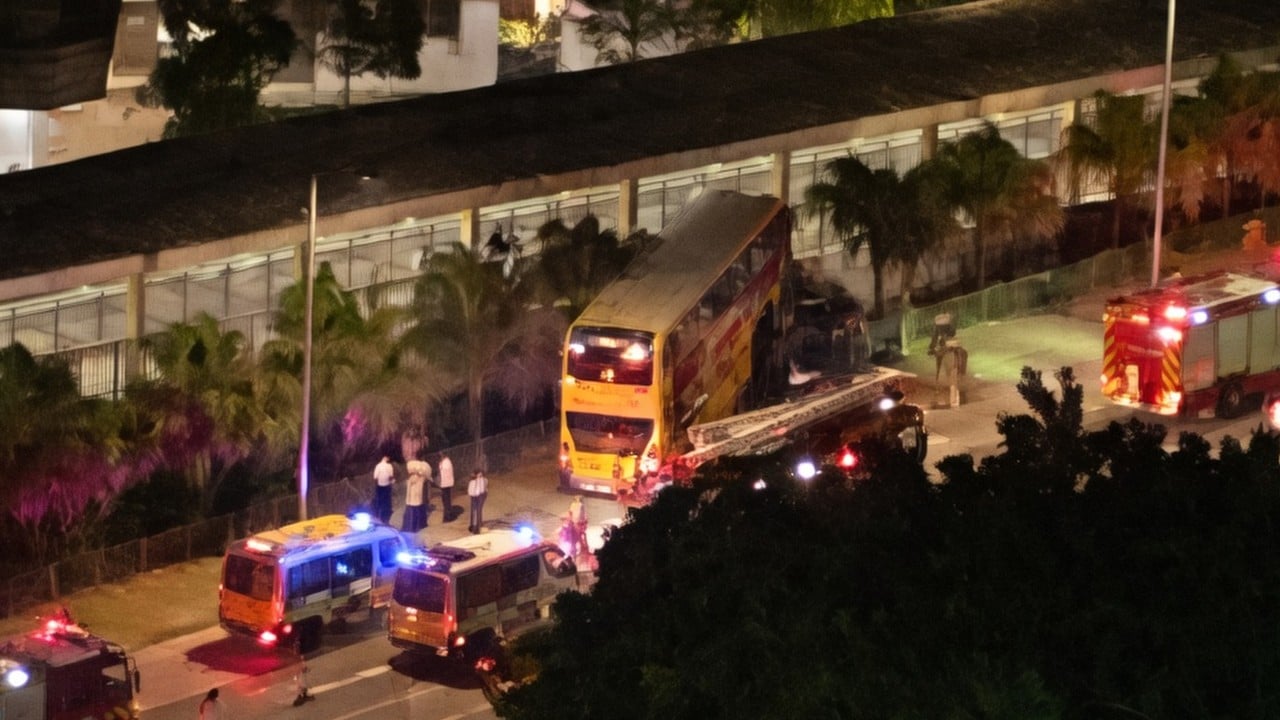
A Citybus driver died today after losing consciousness behind the wheel. He was navigating the Island Eastern Corridor, one of Hong Kong's most unforgiving stretches of highway. The double-decker bus, carrying passengers who expected a routine commute, veered out of control and slammed into a concrete side barrier. It’s a nightmare scenario that’s become far too common in our city.
Emergency services rushed to the scene near North Point. They found the 63-year-old driver slumped over his seat. Paramedics performed CPR right there on the asphalt, but it wasn't enough. He was later pronounced dead at Pamela Youde Nethersole Eastern Hospital. While the passengers escaped with a terrifying story and minor jolts, the driver's family is left with a void that a simple insurance payout can't fix.
This isn't just about one unlucky morning. It's about a transport system that pushes its human components to the absolute limit. We need to talk about what’s actually happening in those driver cabins because, honestly, the current situation is unsustainable.
The harsh reality of driving a bus in Hong Kong
Driving a bus in this city isn't like driving anywhere else. You're maneuvering a massive vehicle through narrow corridors, fighting aggressive taxi drivers, and managing hundreds of lives. All this happens while you're sitting for hours on end.
The driver involved in this incident was in his early 60s. That’s a standard age for the industry now. Young people don't want these jobs. The shifts are long. The pay doesn't match the stress. So, we rely on an aging workforce to keep the city moving. When you combine an aging demographic with high-stress environments and sedentary work, you get a recipe for sudden cardiac events or strokes.
Medical experts have pointed out for years that bus drivers are a high-risk group. They don't have time for regular, healthy meals. They grab whatever is fast and salty at the terminus. They don't get enough sleep. Their "breaks" are often just enough time to use the restroom before the next departure.
Why the Island Eastern Corridor makes everything worse
The Island Eastern Corridor (IEC) is a high-speed elevated highway. There’s almost no shoulder. If a driver loses control, the vehicle hits a wall or another car instantly. In this case, the bus grazed the side barrier for a significant distance before coming to a halt.
We got lucky this time. The bus didn't flip. It didn't plummet off the elevated section. It didn't plow into a line of smaller cars. But luck isn't a safety strategy.
When a driver collapses at 70 kilometers per hour, physics takes over. Modern buses have some safety features, but they aren't autonomous. They can't sense a driver’s heart stopping and safely pull over to the curb. Not yet, anyway. The Transport Department and companies like Citybus and KMB keep talking about "safety systems," but the most critical safety system is the person in the seat. If that person fails, the whole system crashes.
What the bus companies aren't telling you
Citybus issued a statement expressing "deep sadness." They mentioned the driver's most recent health check and his work schedule. They always do. Usually, they claim the driver had sufficient rest and passed his last physical.
But let's look at those physicals. They're often basic. A quick blood pressure check and a vision test don't always catch the underlying cardiovascular issues that lead to a sudden collapse. We need more than just a "pass" on a paper form. We need real-time health monitoring.
Some international transport fleets are experimenting with wearable tech. These devices monitor heart rate variability and fatigue levels. If a driver’s vitals spike or drop, a central command center gets an alert. Why aren't we seeing this in Hong Kong? The technology exists. The profit margins at these bus companies are healthy enough to cover it. Instead, they wait for an accident to happen and then cite "unforeseen medical circumstances."
The problem with the labor shortage
The average age of a public bus driver in Hong Kong is hovering around 50 to 60. Many are working well into their 60s because the companies can't find replacements. This creates a dangerous cycle.
- Drivers retire or leave due to stress.
- The remaining drivers have to work more overtime.
- Fatigue increases.
- Health declines.
- More incidents occur.
I’ve spoken to drivers who feel they can't take a day off even when they feel "off" because they don't want to let their team down or lose the overtime pay. That’s a culture of silence that kills.
The government needs to step in. It's not enough to just investigate the "cause of death." They need to investigate the working conditions that contribute to these deaths. If a driver is 63 and working 10-hour shifts on a high-speed route, that's a policy failure.
Immediate steps for a safer commute
We can't just wait for the next headline. If you're a commuter, you have a stake in this. If you're a policymaker, you have a responsibility.
The Transport Department should mandate advanced health screenings for all commercial drivers over 50. This should include mandatory ECGs and stress tests, not just a quick check-up.
Bus companies must invest in "Dead Man's Switch" technology that is more sensitive. Modern systems can detect if a driver's hands leave the wheel or if their head droops for more than a few seconds, automatically triggering the brakes and hazard lights. This technology should be standard, not an optional extra for new models.
We also need to rethink route assignments. Older drivers or those with known (but manageable) health conditions shouldn't be assigned to high-speed, high-risk routes like the IEC or the Tuen Mun Road. Keep them on lower-speed urban routes where a slow-speed collision is less likely to be fatal.
The death of this Citybus driver is a tragedy for his family. For the rest of us, it’s a warning. Our city is built on the backs of people who are being worked to the point of collapse. If we don't change the way we treat and monitor our drivers, we're just waiting for the next bus to veer off the road.
Check the maintenance and safety records of the routes you take. Demand transparency from the bus operators. Support labor unions that are fighting for better rest periods. Your life depends on the health of the person at the front of the bus. Don't forget that next time you tap your Octopus card.
Get involved by writing to the Transport Department. Ask why real-time health monitoring isn't a requirement for public franchise licenses. Push for a cap on shift lengths for drivers over a certain age. It’s time to stop treating these incidents as isolated medical flukes and start treating them as the systemic risks they are.