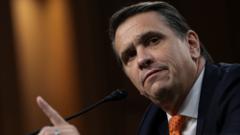
You have to hand it to Todd Blanche. The man knows how to survive a grueling five-hour grilling on Capitol Hill.
At his July 2026 Senate confirmation hearing to become the permanent U.S. Attorney General, the acting DOJ chief faced a barrage of tough questions from both sides of the aisle. But it was his handling of the Jeffrey Epstein files that brought the most dramatic, and highly calculated, moment of the day. Under intense pressure from Democratic Senator Richard Blumenthal, Blanche looked into the cameras and apologized.
"I will absolutely say that any mistake that we made should not have been made," Blanche said, referring to the sloppy redaction process that accidentally exposed the names and private details of Epstein's survivors. "I very much apologise."
It sounded like a moment of genuine accountability. But if you look closely at what happened next, that apology starts to look incredibly thin.
The Broken Promise of the Epstein Transparency Act
Let's look at the background. Last year, Congress passed the Epstein Transparency Act. It was supposed to finally blow the lid off the decades of secrecy surrounding the late financier's sex-trafficking ring. The law forced the Department of Justice to release millions of pages of documents, photos, and videos.
The DOJ, under Blanche's watch, dumped hundreds of thousands of files between December 2025 and March 2026. But they didn't just release information on the perpetrators; they screwed up the redactions so badly that sensitive personal details and images of the survivors themselves were exposed to the public.
Blanche called the review a "herculean task" and tried to defend his office by pointing out that dozens of lawyers were on standby to fix the mistakes. But that is cold comfort to the women who had their trauma laid bare to the world because of government incompetence.
The real kicker? When pushed to actually meet with these survivors to hear their concerns directly, Blanche balked.
He hid behind legal technicalities, claiming that because many survivors have lawyers, he is legally barred from meeting with them directly. "If they have lawyers... I'm prohibited from meeting directly with them," Blanche argued.
But that is an incredibly weak excuse for the head of the Department of Justice. Attorneys meet with represented parties all the time with their counsel present. Survivors aren't looking to bypass their legal representation; they want the nation's top law enforcement official to look them in the eye and listen.
Even worse, survivors have publicly accused Blanche of outright lying. In May, Blanche claimed he had met with survivors and their legal teams. That prompted an immediate, scathing joint statement from 18 of Epstein's victims, who stated flatly: "Acting Attorney General Todd Blanche has not met with any of us."
The pattern is hard to ignore. We see performative apologies on television, but zero actual engagement behind closed doors.
A DOJ Dogged by Questions of Independence
If the Epstein files were the emotional core of the hearing, the political elephant in the room was Blanche's cozy relationship with President Donald Trump.
Before jumping into the top ranks of the DOJ, Blanche was Trump's personal defense attorney in some of his most high-profile criminal cases. That transition from personal defense lawyer to the nation's chief law enforcement officer is a massive leap, and senators wanted to know exactly where Blanche's loyalties lie.
Republican Senator John Kennedy put it bluntly, asking Blanche if he considers the president a friend.
"I'm his lawyer — was his lawyer," Blanche stammered, before quickly correcting himself. "And now I'm the deputy attorney general." He added that meeting someone in a criminal defense context doesn't make them a friend.
But his record as acting AG tells a more complicated story. Throughout the hearing, Blanche had to defend several highly controversial decisions that seem to benefit his former client:
- The IRS Tax Settlement: Blanche defended a sweetheart settlement his department signed off on, which shields Trump and his sons from legal liability for past tax violations. Senator Adam Schiff grilled Blanche on whether this meant the president was effectively immune. Blanche denied that it protected Trump for tax returns filed this year, but conceded that the sweeping immunity for past returns stands. He even claimed he didn't write the document with his own signature on it and didn't know who typed it.
- The "Anti-Weaponization" Fund: Blanche faced tough questions about his role in setting up a taxpayer-funded pool of money meant to compensate Trump allies. Under immense pressure and court blocks, the DOJ has since scrapped the fund, but the fact that Blanche helped greenlight it in the first place raises major red flags about his independence.
- Targeting Reporters: Under Blanche, the DOJ recently subpoenaed New York Times journalists to identify their sources after an article about Air Force One security. Blanche defended the move, comparing journalists to "witnesses to a car crash." It's a stance that free-press advocates warn is a direct threat to the First Amendment.
What Happens Now?
Despite the intense grilling, Blanche's confirmation is not a done deal. While Judiciary Committee Chairman Chuck Grassley showered him with praise at the end of the five-hour session, moderate Republicans like Jon Cornyn and Thom Tillis are still publicly withholding their support, stating they need more assurances from the administration.
If you want to keep pressure on the Department of Justice to handle the remaining Epstein files with the care and transparency they deserve, you can't rely on passive television apologies.
The most effective next step is to contact the offices of the swing senators on the Senate Judiciary Committee—specifically Jon Cornyn and Thom Tillis. Let them know that an Attorney General who refuses to sit down with Epstein's survivors while actively shielding political allies does not deserve a lifetime of authority over the American justice system.
How the Todd Blanche confirmation hearing unfolded
This video provides a direct, concise look at the moment Todd Blanche faced the Senate Judiciary Committee and took responsibility for the errors in releasing the Epstein files.
http://googleusercontent.com/youtube_content/1
/GettyImages-522478216-5ab12c4e3de4230036949cee.jpg)
