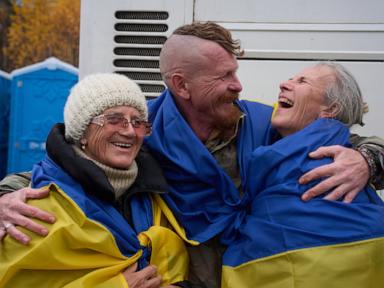
When families finally embrace at the Kolotilovka-Pokrovka crossing or the Mokrany-Domanove checkpoint along the Ukrainian-Belarusian border, the photographs capture pure relief, yet the reality behind those tears is an exhausting, dangerous thousand-mile odyssey through occupied territory and hostile states. Civilians fleeing Oleshky, a devastated town on the Russian-occupied left bank of the Dnipro River in Kherson Oblast, cannot simply cross a bridge to reach Ukrainian-held Kherson city just miles away. Instead, to reunite with loved ones in free Ukraine, evacuees must travel deep into Russian-controlled territory, traverse Crimea or mainland Russia, enter Belarus, and finally walk across a heavily mined, militarized frontier where humanitarian corridors barely function.
The geography of the Kherson front dictates this brutal math. Oleshky sits directly across the Dnipro River from the regional capital of Kherson, separated by water and a collapsed Antonivskyi Bridge. Since Russian forces retreated from the right bank in November 2022, the river has hardened into one of the most lethal active frontlines in Europe. Artillery duels, drone strikes, and sniper fire make boat crossings virtually suicidal for civilians. Worse still, the June 2023 destruction of the Kakhovka Hydroelectric Power Plant inundated Oleshky, turning streets into toxic canals, destroying homes, and collapsing basic infrastructure. For residents left behind—predominantly the elderly, the immobile, and those caring for sick relatives—remaining in Oleshky meant surviving without reliable electricity, clean water, or medical care under strict military occupation. Leaving meant accepting the only exit route Moscow leaves open: moving east and north, deeper into the territory of the occupying power. In similar news, take a look at: Stop Reading Voter Guides for LA City Council Districts 3 and 9.
The Architecture of Forced Filtration
To understand why a family reunion on the Belarusian border represents a triumph of human endurance, one must look at the bureaucratic and security gauntlet imposed along the way. Exiting occupied Kherson Oblast is not a matter of buying a bus ticket. Evacuees first face a network of Russian military checkpoints, where every traveler is subjected to filtration procedures.
During filtration, Russian security forces—often operatives from the Federal Security Service (FSB)—confiscate mobile phones, inspect message histories, demand passwords, and scrutinize social media accounts for any sign of pro-Ukrainian sentiment or communication with relatives serving in the Armed Forces of Ukraine. Men of fighting age face strip searches to check for military tattoos or bruising from rifle stocks. A deleted chat history is treated as proof of guilt. A contact saved under a Ukrainian spelling can trigger hours of interrogation or detention in makeshift basements. BBC News has also covered this fascinating subject in great detail.
For residents of Oleshky, the pressure is compounded by forced passportization. Russian occupation authorities have systematically restricted access to pensions, insulin, hospital care, and property rights for anyone who refuses to take a Russian passport. Yet accepting that passport creates a terrifying paradox for evacuees trying to reach Ukraine. At the border, carrying a Russian document invites suspicion, while refusing to take one makes surviving the journey through occupied territory and Russia almost impossible. Volunteers who coordinate these evacuations quietly advise families on how to navigate this trap, emphasizing that Ukrainian border guards recognize the coercion behind occupation-issued documents, provided the traveler holds valid proof of Ukrainian citizenship.
Why the Belarusian Corridor Became the Last Lifeline
For much of the full-scale invasion, the primary humanitarian corridor between Russia and Ukraine ran through the Kolotilovka-Pokrovka crossing, connecting Russia’s Belgorod region with Ukraine’s Sumy region. When intense cross-border fighting and Ukrainian incursions into the Kursk and Belgorod regions shut down that route in mid-2024, thousands of trapped civilians lost their only direct land exit. The Mokrany-Domanove crossing, situated in the dense forests and marshes of the Brest region in southwestern Belarus bordering Ukraine’s Volyn Oblast, abruptly became the sole viable gateway.
The logistics of reaching Mokrany from Oleshky are staggering. Evacuees—many of them wheelchair-bound, bedridden, or suffering from untreated chronic illnesses—must endure days of continuous road travel. Private carriers, operating in a gray market where prices routinely surge into hundreds of dollars per seat, transport passengers from Kherson Oblast through occupied Crimea or Mariupol, up through Rostov-on-Don and Moscow, and west into Belarus. For families in Oleshky living on meager savings, paying a driver is often impossible without crowdfunding from volunteer networks or financial support from relatives waiting on the other side.
Belarus occupies a deeply ambiguous position in this humanitarian pipeline. Minsk is Moscow’s closest military ally, having served as a staging ground for the 2022 invasion of northern Ukraine. Yet the Belarusian border remains one of the few stretches of frontier where Ukrainian and Belarusian border authorities maintain a quiet, functional mechanism for civilian transit. There are no direct buses crossing the neutral zone. The asphalt road between the Mokrany checkpoint on the Belarusian side and Domanove on the Ukrainian side is severed by anti-tank ditches, dragon's teeth fortifications, and minefields, leaving only a narrow pedestrian path.
Crossing the Neutral Zone on Foot
The final two kilometers between Belarus and Ukraine test the physical limits of people already broken by war. Because commercial vehicles cannot cross the border, evacuees must traverse the buffer zone on foot. In winter, freezing winds whip across the open forest corridor; in summer, heat and humidity bear down on travelers carrying their entire remaining lives in a couple of battered suitcases.
Volunteer organizations operating on the Ukrainian side, alongside the State Emergency Service of Ukraine and local authorities in Volyn, have established an intricate reception system right at the edge of the minefields. When word comes through encrypted messaging channels that an elderly or disabled resident from Oleshky has cleared Belarusian customs, Ukrainian volunteers push wheelchairs or carry stretchers into the gray zone to meet them.
The emotional weight of those reunions often masks the medical emergencies unfolding in real time. Medics stationed at the Domanove reception point routinely treat evacuees for hypertensive crises, severe dehydration, untreated fractures, and acute psychological trauma. Many people stepping onto Ukrainian soil have spent over two years under occupation, isolated from accurate news, convinced by relentless state television broadcasts that Ukraine had ceased to exist or that they would be arrested upon return. Seeing a daughter, a grandson, or a uniformed Ukrainian border guard offering hot tea and a blanket shatters years of psychological isolation in seconds.
The Invisible Network Moving People Out of Occupation
Governments rarely take direct credit for these rescues because publicity kills the routes. Behind almost every successful reunion at the Belarusian border sits an informal, decentralized coalition of volunteer drivers, coordinators, and humanitarian groups working across borders without official diplomatic protection.
To understand how this shadow network operates, consider a typical extraction from Oleshky. A family member in Kyiv or Lviv contacts a volunteer hotline, providing the address and medical condition of an elderly parent trapped near the Dnipro River. Coordinators inside occupied territory—operating under extreme personal risk—verify the person's readiness to leave and arrange a local driver willing to enter a shell-pocked neighborhood where Russian drone operators routinely target civilian cars. Once the evacuee reaches a staging hub in Crimea or southern Russia, a second driver takes over for the long haul north toward Minsk. At every step, coordinators monitor check-ins, scrub digital footprints, and prepare contingency funds in case border guards demand bribes or detain a traveler for secondary questioning.
This reliance on private volunteers exposes a massive gap in international humanitarian oversight. Major global organizations, bound by strict neutrality mandates and dependent on host-state permissions, have almost no operational presence inside Russian-occupied Kherson Oblast. Moscow has consistently denied the United Nations and the International Committee of the Red Cross unfettered access to areas affected by the Kakhovka dam collapse and ongoing shelling. Consequently, the burden of rescuing Europe’s most vulnerable war victims falls onto ordinary citizens using encrypted apps, donated vans, and sheer nerve.
What Awaits Evacuees After the Border Embrace
Crossing into Volyn Oblast ends the immediate physical danger of occupation, yet it begins a daunting struggle for survival inside a country stretched thin by years of war. The tears of joy at the border checkpoint quickly give way to the harsh realities of internal displacement.
Most evacuees from Oleshky arrive with nothing. Their homes were either flattened by artillery, looted by occupying troops, or ruined by the 2023 floodwaters. While Ukrainian state agencies provide immediate one-time cash assistance, temporary shelter in modular towns or converted dormitories, and psychological support, long-term housing remains critically scarce. Elderly evacuees who spent their lives tending gardens in the mild southern climate of Kherson suddenly find themselves navigating unfamiliar northern cities, dependent on modest state pensions that barely cover rent and medication.
Furthermore, the psychological toll of occupation lingers long after the border crossing. Survivors often grapple with profound guilt over leaving neighbors behind, anxiety about relatives who chose to stay to guard family property, and disorientation when confronting the trauma of the war years. Rebuilding a life at seventy or eighty years old requires more than a warm welcome at a border post; it demands sustained social services, specialized geriatric care, and legal assistance to restore lost property deeds and civil records destroyed during the occupation.
The Shrinking Window for Escape
Every month, getting out of towns like Oleshky becomes harder. Russian military authorities have tightened movement restrictions along the left bank of the Dnipro, establishing closed military zones within fifteen kilometers of the river. Entering or leaving these zones requires special passes issued by occupation commandants, documents that are increasingly denied to anyone without a Russian passport.
At the same time, the economic cost of evacuation continues to climb. Fuel prices, vehicle wear on cratered roads, and the high risk to drivers operating near the frontlines have driven transport fees beyond the reach of ordinary pensioners. Meanwhile, volunteer organizations face donor fatigue as global attention shifts to other crises, leaving fewer funds to subsidize tickets for destitute families.
Political shifts in Minsk or Moscow could sever the Mokrany-Domanove corridor overnight without warning, just as fighting closed the Sumy crossing. When that narrow footpath through the Belarusian forest finally closes, thousands of remaining civilians along the occupied Dnipro will be locked behind an impenetrable front, leaving families on both sides of the river staring across a few miles of water with no way left to reach each other.