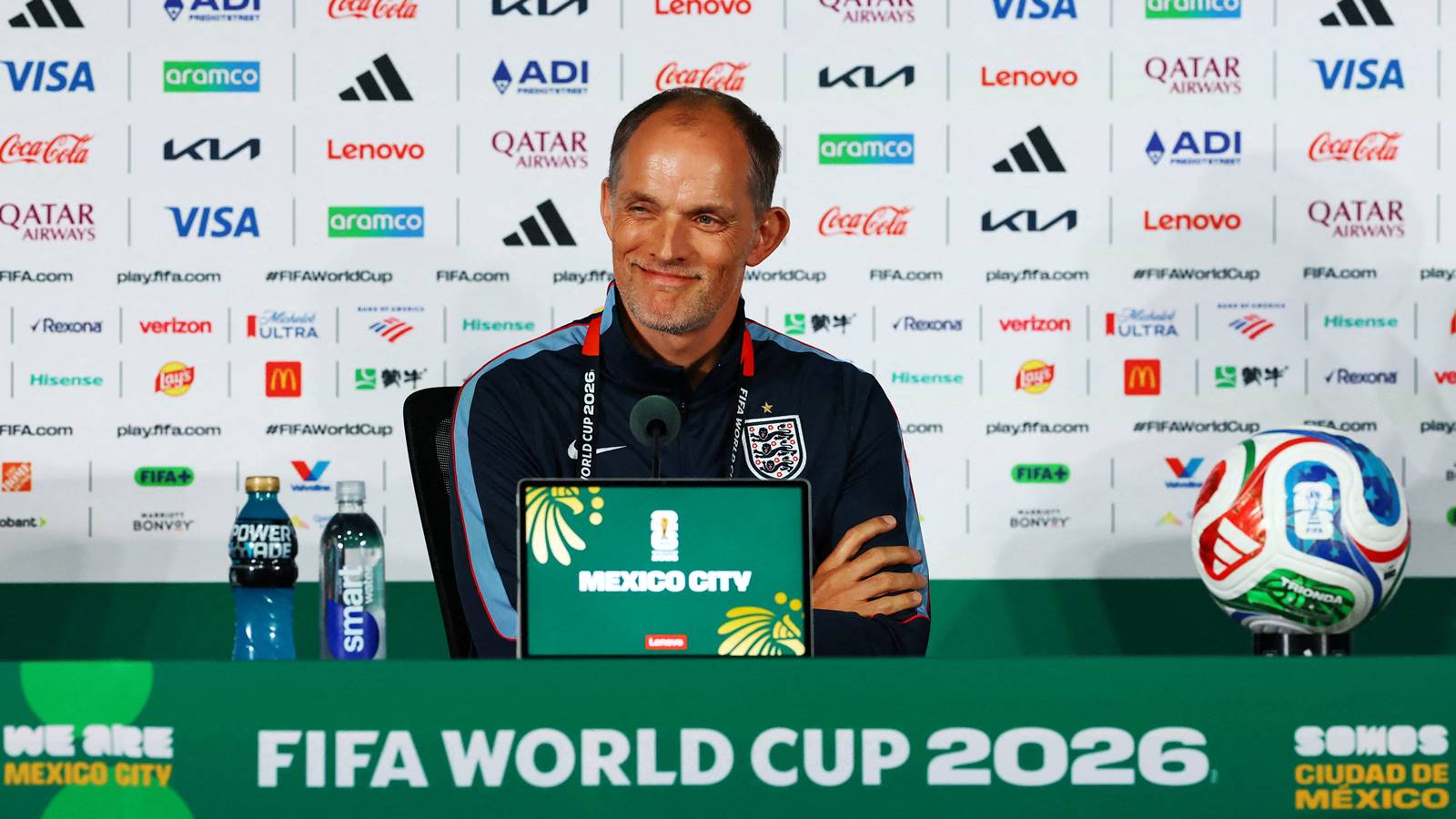
Football managers love a blank slate. They sell it to the press, feed it to the fans, and use it to shield players from the crushing weight of historical failure. When Thomas Tuchel talks about England being ready to "write their own chapter" ahead of a massive international fixture, he is deploying the oldest trick in the elite coaching playbook. It is beautiful public relations. It is also a total delusion.
International football does not allow for clean breaks. The idea that a fresh manager and a few new tactical tweaks can instantly detach a squad from decades of deeply ingrained national footballing culture is fundamentally flawed. You do not get to erase the psychological baggage of a shirt just because you changed the guy wearing the sharp suit on the touchline. For a different look, see: this related article.
The Fallacy of the Clean Slate
Every time England faces a major footballing superpower, the narrative engine spins the same tune: This time is different. The media treats the match like an isolated event, a vacuum where previous tactical collapses and mental blocks suddenly cease to exist.
Having analyzed international tournament data spanning the last four decades, a stubborn pattern emerges. Teams do not lose big matches because they fail to "write a new story." They lose because international management offers criminally low training volume compared to the club game. A manager gets his players for a handful of days a year. In that window, you cannot rebuild a footballing DNA. You can only manage the symptoms of the existing one. Further reporting on the subject has been provided by Bleacher Report.
When a manager claims his players are unburdened by the past, he is ignoring how pressure actually operates. Psychological pressure in elite sport is cumulative. It lives in the media environment, the fan expectations, and the subconscious reactions of players when they go a goal down in a knockout stadium. Pretending the past does not exist does not disarm it; it merely leaves the squad unprepared when those old ghosts inevitably show up in the 75th minute.
Club Mechanics Do Not Translate to National Teams
Tuchel is a brilliant tactician. His Champions League triumph with Chelsea proved he can build a suffocating, hyper-efficient knockout machine in a matter of weeks. But doing that at Stamford Bridge, where you control the daily habits, diet, video sessions, and recruitment of a squad, is miles apart from managing a national team.
In club football, you fix a structural weakness by entering the transfer market or drilling a specific pressing trigger 50 times a week. In international football, you work with what you have. If your nation does not produce press-resistant, deep-lying playmakers who can dictate the tempo of a game against world-class opposition, you cannot simply coach one into existence during a two-week international break.
The lazy consensus insists that elite managers can impose complex tactical identities anywhere. The reality is far more brutal. International football is won by simplicity, defensive solidity, and individual moments of brilliance. Trying to over-index on intricate tactical systems usually leads to paralysis by analysis when the stakes peak.
The Real Tactical Deficit
Stop asking whether the squad has the mental fortitude to win these iconic matches. That is the wrong question entirely. The real question is whether the team can structurally survive against midblocks that refuse to press them.
Historically, English football development has produced phenomenal athletes, devastating transitions, and exceptional dynamic wingers. What it historically lacks—and what still plagues the setup—is the patience to suffocate opposition through possession. When faced with teams that excel at slowing the game down and manipulating space, English sides consistently become impatient. They force the vertical pass, turn the ball over, and expose themselves to the counter.
No amount of dressing-room speeches about "creating history" fixes a structural inability to control the tempo of a football match. If the central midfield cannot retain the ball under high-pressure triggers, the chapter ends exactly the same way the last five did.
Embrace the Villain Identity Instead
If a manager truly wants to disrupt the cycle of near-misses, they need to stop chasing the fairytale of a glorious new era. The solution is not to look forward with wide-eyed optimism; it is to weaponize the negative history.
International teams that break long droughts rarely do it by playing beautiful, unburdened football. They do it by becoming incredibly difficult to beat, embracing a siege mentality, and playing with a cynical edge that fans usually hate until it wins them a trophy.
- Stop trying to dominate possession against teams that are inherently better at it.
- Accept periods of suffering without panicking or breaking structural shape.
- Exploit set-pieces and transitions with ruthless, unapologetic efficiency.
This approach is not glamorous. It will not win praise from pundits demanding a expansive, modern style of play. But it acknowledges the reality of the squad's limitations and the unique constraints of international tournament football.
The obsession with writing new chapters is a distraction from the unglamorous work of surviving the match in front of you. History cannot be ignored, bypassed, or wished away by a new regime. It must be dragged into the light, acknowledged for the heavy burden it is, and defeated through cold, calculated pragmatism rather than romantic rhetoric. Stop trying to tell a new story. Just win the game.



