The hum of a commercial jet engine at cruising altitude is supposed to be a lullaby. It is a monotonous, white-noise drone that lulls tired business travelers to sleep and gives nervous flyers permission to grip their armrests a little less tightly. We surrender ourselves to the altitude, trusting an invisible machinery of physics, metallurgy, and unspoken social contracts to carry us through the troposphere. We assume that everyone in the aluminum tube shares a fundamental pact: we will all remain seated, breathing recycled air, until the wheels hit the tarmac.
Then, the air changes.
It is never loud at first. It starts as a shift in the acoustic texture of the cabin—a sharp voice cutting through the steady roar, a sudden spike of kinetic energy in row twelve. You look up from your book, your laptop, or your stale packet of pretzels, and the thin veneer of civilization peels away in a single heartbeat.
Imagine sitting in seat 14C. The cabin smells of lukewarm coffee and recycled oxygen. Suddenly, the passenger in row 30 decides that the laws of gravity, aviation, and basic human decency no longer apply to them.
What happens next is a descent into a very specific kind of modern nightmare.
Commercial aviation relies on a fragile architecture of trust. When you step onto a Boeing or an Airbus, you are entering a pressurized cylinder flying at five hundred miles per hour, seven miles above the earth. You are locked in a metal tube with two hundred strangers. The system works only because ninety-nine point nine percent of those strangers agree to suppress their worst impulses. They agree to wait for the bathroom, to keep their shoes on, and to refrain from throwing punches at flight attendants over a delayed beverage service.
When that social contract shatters, the response must be swift, clinical, and absolute.
On a routine flight, the escalation from minor disturbance to full-scale emergency is terrifyingly fast. A passenger becomes combative. Maybe it is alcohol. Maybe it is an unmedicated psychiatric crisis. Maybe it is simply the toxic cocktail of modern travel anxiety meeting an unchecked ego. Crew members step into the breach. These are people whose primary training involves emergency evacuation slides and cabin depressurization protocols, not mixed martial arts or psychological crisis negotiation. Yet, they are routinely asked to double as bouncers at thirty thousand feet.
When a disruptive passenger attempts to breach the cockpit door, assault crew members, or tear apart the interior fixtures of the aircraft, the options available to the flight crew narrow drastically. You cannot pull over to the side of the road. You cannot open a window to let off steam. You are trapped in a flying tube with a volatile variable.
Enter the industrial-grade restraint. Or, more plainly, duct tape.
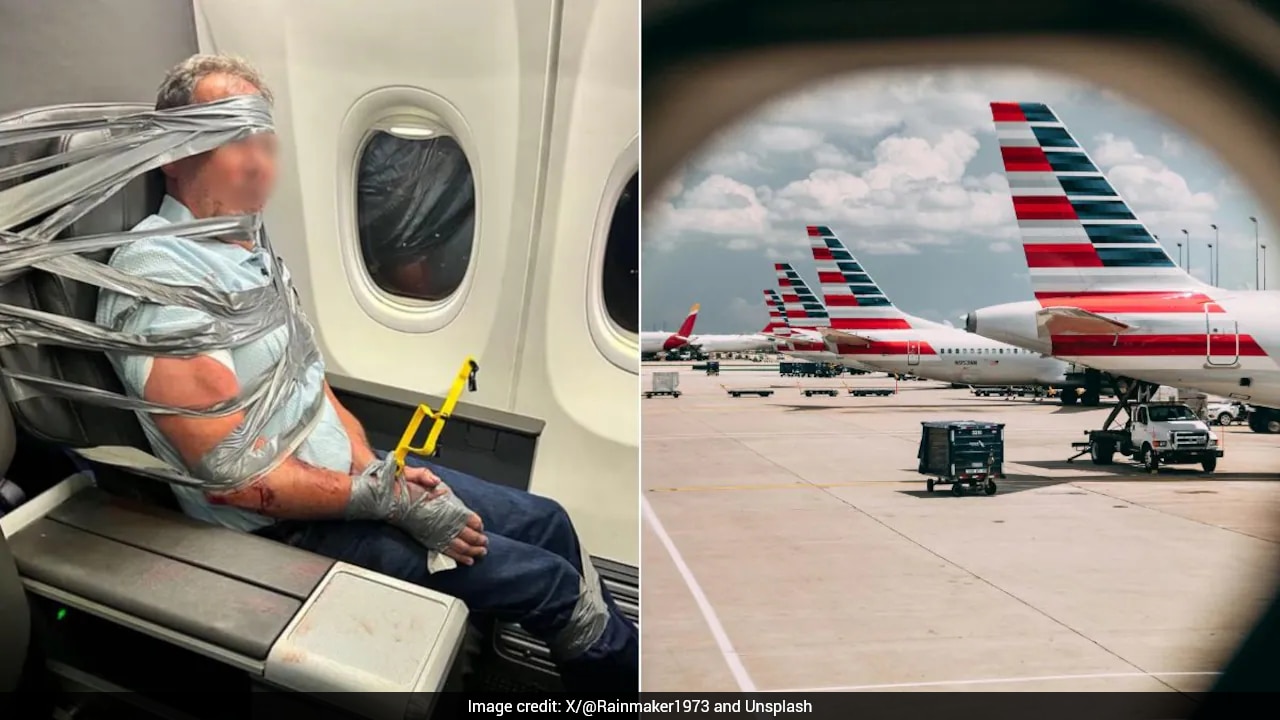
It sounds like an urban legend or a darkly comic meme birthed on social media. Passengers strapped to their seats with silver adhesive tape, looking like modern mummies trapped in economy class. But ask any veteran flight attendant, and they will tell you it is a grim, highly functional reality of modern skies. When physical force alone cannot neutralize a threat to the safety of the aircraft, crew members and able-bodied passengers must improvise. They become a tactical unit, utilizing whatever is at hand to secure the cabin.
Consider the physical reality of the intervention. This is not a controlled environment on solid ground. The floor is vibrating. The air is thin. Adrenaline is flooding the systems of everyone involved. To subdue a thrashing, screaming individual in the cramped confines of an airline seat requires brutal, exhausting coordination.
And then comes the application. Strip by strip. Across the chest. Over the shoulders. Securing the arms to the armrests.
It is an arresting visual. It is also an absolute necessity.
When an American Airlines flight was forced to make an emergency diversion because a passenger lost their grip on reality and tried to force open an exit door during mid-flight, the crew did not hesitate. They did not wait for a committee meeting. They secured the threat. Eyewitness accounts from that flight describe a scene of collective shock giving way to raw, frantic action. Passengers who moments before were dozing off found themselves holding down a flailing, screaming human being while flight attendants deployed the heavy-duty tape.
The silence that followed in the cabin was heavy. It was the silence of collective trauma.
Why are we seeing more of this? Why has the friendly skies rhetoric of the mid-twentieth century devolved into viral videos of mid-air brawls and duct-taped flyers?
The data paints an uncomfortable picture. Federal Aviation Administration records show a sharp, alarming spike in unruly passenger incidents over recent years. While the absolute peak numbers seen during the immediate post-pandemic travel rebound have fluctuated, the baseline hostility in public spaces has crept upward. We are angrier. We are more brittle. The indignities of modern air travel—cramped seating, delayed flights, lost baggage, algorithmic ticket pricing, and the general erosion of personal space—act as a slow-cooker for human frustration.
Most people manage the pressure. They pop an edible, listen to a podcast, or stare blankly into the back of the seat ahead of them. But for a tiny fraction of travelers, the pressure valve blows completely.
When a flight makes an emergency landing due to a passenger disturbance, the economic and logistical ripples are immediate and severe. Fuel is dumped. Schedules are shattered for hundreds of connecting passengers. Law enforcement waits at the gate, lights flashing on the tarmac. The disruptive individual is hauled off in cuffs, facing federal charges, steep fines, and a permanent spot on the no-fly list.
Yet, the legal consequences feel disconnected from the immediate emotional reality of sitting in row 22, watching a fellow human being wrapped like cargo because they lost control of their own mind.
We look at these viral images with morbid fascination. We share the TikTok videos. We shake our heads at the audacity of it all. But beneath the dark humor of the duct-tape aesthetic lies a sobering truth about our current cultural moment. We are riding in increasingly close quarters, pushed to our psychological limits, trusting our lives to machines and strangers we barely understand.
The plane lands. The flashing lights fade. The doors open, and we file out into the terminal, blinking against the harsh fluorescent lights of the arrival gate, eager to catch our connections, to pretend that nothing happened, that we are still civilized, that the tape was just an anomaly.
And somewhere back in the cabin, the cleanup begins.