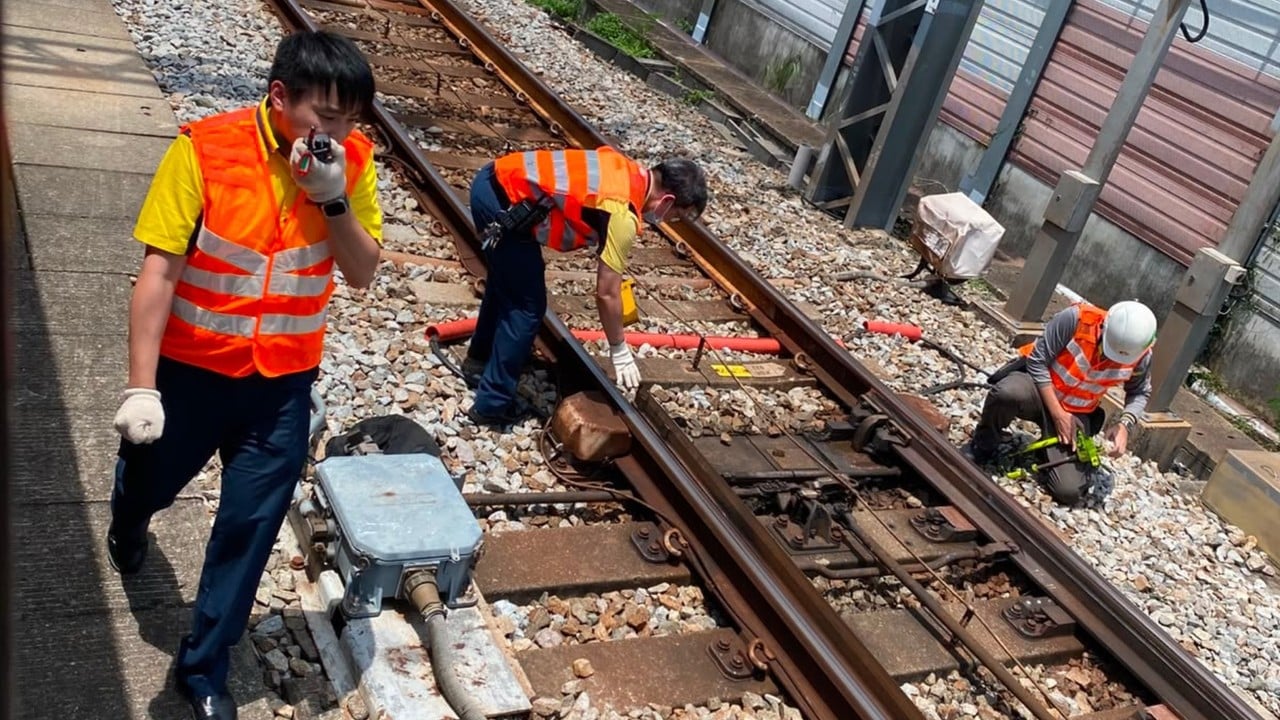
Every time a signal blips on the mass transit railway and thousands of commuters find themselves staring blankly at a static platform display, the collective outrage is entirely predictable. Headlines scream about thirty-minute delays. Passengers take to social media to vent about lost productivity, broken monopolies, and corporate negligence. Pundits demand heads roll in the boardroom. Everyone agrees on the lazy consensus: the system is failing us, reliability should be absolute, and any hiccup is an intolerable insult to the modern urbanite.
They are completely wrong.
I have spent two decades advising transport authorities and analyzing the economics of high-density infrastructure. I have watched corporations panic and throw billions at redundant cabling just to shave thirty seconds off recovery times, only to watch the same system choke on its own complexity ten months later.
Here is the inconvenient truth nobody wants to say out loud. A thirty-minute delay on a network moving millions of people daily is not a sign of systemic collapse. It is the mathematical price of running an under-priced, hyper-dense public utility that operates at the absolute edge of physical capacity.
If you want zero delays, you can have them. But you are not going to like the invoice.
The Myth of Absolute Reliability
Let us define what an MTR signal fault actually is. Modern signaling is not a set of colored lights operated by a guy in a tower drinking tea. It is a dense, interlocking lattice of automated block circuits, radio transmissions, and fail-safe logic designed around a singular, non-negotiable priority: keeping steel wheels from occupying the same stretch of track at the same time.
When a sensor detects an anomaly—whether it is a stray piece of metallic debris, a moisture spike in a junction box, or a momentary drop in voltage—the system does not guess. It defaults to safety. It slams the brakes on operations in that zone.
The public looks at this and cries incompetence. That is because people treat public transit like a consumer software app. They expect the absolute uptime of a cloud server from a multi-ton chunk of iron hurtling down a concrete tunnel.
Physics does not care about your morning meeting.
When you pack ten train cars every two minutes during peak hours, you eliminate all margin for error. Think of it like a highway lane moving at seventy miles per hour with a two-foot gap between bumpers. The moment one driver taps the brakes too hard, you get a shockwave. On a railway, that shockwave propagates backward into a cascade of schedule adjustments. A thirty-minute hold is the system successfully absorbing a kinetic anomaly without letting things turn catastrophic.
The Economic Distortion of Cheap Fares
Why do these faults trigger such visceral rage? Because the economic feedback loop is broken.
Hong Kong's transport network is an engineering marvel. It is consistently held up globally as one of the few systems that turns an operating profit primarily through property development along its lines. Fares have historically been kept artificially low, shielded from true inflationary pressures by political populism and public expectation.
When you under-price a scarce asset, you distort demand. When a service costs pennies relative to the value of the time it saves, everyone demands perfection because they feel entitled to absolute perfection for the price of a cup of coffee.
Imagine a scenario where dynamic surge pricing hit the transit system during peak congestion hours. Imagine paying triple the fare to guarantee a seat on a train that leaves precisely on the second. The public would riot. Yet, people happily pay triple for an Uber when it starts raining.
The commuter wants Ferrari-level reliability on a city-bus budget, and then throws a tantrum when physics reminds them that iron and copper wear down under relentless pounding.
The Danger of Over-Engineering
The standard corporate response to a major delay is to promise more technology. Boards authorize massive capital expenditure programs to upgrade legacy signaling, install predictive artificial intelligence diagnostics, and deploy redundant fiber optics.
I have seen companies blow millions on this cycle. They treat hardware updates like a software patch.
Here is the downside of that approach: complexity breeds fragility. The more intricate your automated diagnostic layers become, the more potential points of failure you introduce into the network. You trade mechanical wear-and-tear for software latency and integration bugs. A system with three layers of backup redundancy does not eliminate failures; it simply creates weirder, harder-to-diagnose failures that take twice as long to clear when the edge cases finally hit.
True operational resilience does not come from throwing more tech at the tracks. It comes from cultural realism and passenger elasticity.
What You Should Be Doing Instead
Stop expecting perfection from legacy mechanical infrastructure operating at maximum capacity. Instead of screaming at customer service agents who have zero control over line voltage, adjust your operational architecture.
First, build buffer time into your morning. If a thirty-minute delay completely ruins your life, your schedule is too tight. That is a personal risk management failure, not a transit failure.
Second, understand the trade-offs of urban density. If you want to live in a hyper-efficient, vertically stacked metropolis of eight million people, you are sharing infrastructure with millions of others. Friction is the tax you pay for density. If you hate friction, move to a suburb.
The next time a signal fault brings your morning commute to a grinding halt, do not pull out your phone to rage-tweet at the operator. Recognize that you are sitting inside one of the most efficient mass transit marvels in human history, pausing briefly because the system chose to value your safety over your arrival time.
Count yourself lucky you are reading about a delayed train instead of investigating a derailed one.