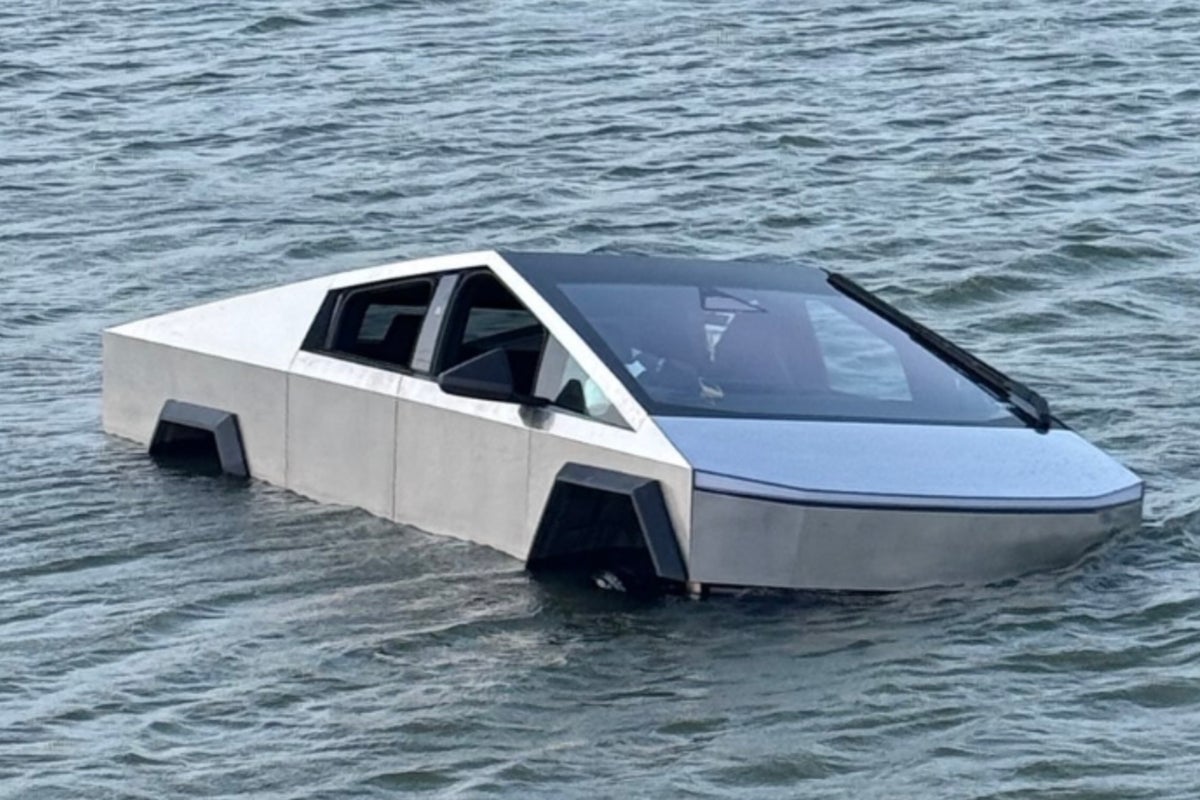
You bought a $100,000 stainless steel fortress. Elon Musk previously hinted that it could briefly serve as a boat. So, you find a body of water, hit the touchscreen, and drive right in. What could go wrong?
A 70-year-old Texas man named Jimmy Jack McDaniel found out the hard way. He drove his Tesla Cybertruck straight into Grapevine Lake near Dallas. He wasn't trying to escape a flash flood. He just wanted to test the truck's highly publicized Wade Mode. Instead of an off-road triumph, he got a disabled truck, a rescue crew extraction, and a trip to jail.
This isn't just another viral EV fail. It's a harsh lesson in what happens when tech marketing collides with state law and basic physics. If you think Wade Mode gives you a green light to treat your electric pickup like a jet ski, you're missing the fine print entirely.
The Grapevine Lake Disaster
The incident unfolded on a Monday evening at the Katie’s Woods Park Boat Ramp. McDaniel was giving a ride to a father and son visiting from Germany. Wanting to show off the truck's capabilities, he steered the massive EV off the rocky edge and directly into Grapevine Lake.
Bystanders watched in disbelief. One witness caught the moment on video, joking, "Yo sir, you can’t park there," as the silver truck began taking on water. Within moments, the seafaring experiment tanked. The truck hit large rocks along the shoreline, lost steering, and became completely disabled. Water started filling the cabin. McDaniel and his passengers had to awkwardly scramble out of the power windows to escape onto a nearby dock.
The Grapevine Fire Department Water Rescue Team had to pull the waterlogged truck out of the lake with a wrecker. But the real surprise came when the police showed up. McDaniel wasn't just given a warning. He was booked into the Grapevine Jail.
Why the Police Handed Out Boat Tickets to a Truck
The legal fallout from this stunt is where things get weird. The Grapevine Police Department didn't just cite McDaniel for reckless driving. Because he entered a public body of water, Texas marine laws kicked in.
McDaniel faces a bizarre cocktail of charges:
- Operating a vehicle in a closed section of a park or lake.
- Operating a vessel without a valid boat registration.
- Multiple water safety equipment violations, including a lack of lifejackets and a fire extinguisher.
The moment your wheels leave dry land and enter a public waterway intentionally, local authorities can classify your vehicle as a boat. If you don't have a marine registration sticker on your stainless steel door and a pile of life vests under the seat, you are breaking the law.
McDaniel later claimed he had driven the truck into the Atlantic Ocean and the lake before without issues. He blamed this failure on a "miscalculation" that took him into deep water, causing a short circuit in the charging port that killed the steering.
What Wade Mode Actually Does
Let's clear up the engineering reality. Wade Mode is a real feature, but it doesn't turn your truck into a submarine. It's one of the vehicle's off-road settings designed for specific, controlled situations.
When you turn on Wade Mode, two things happen:
- The air suspension pumps up: The truck raises its ride height to "Very High" to maximize ground clearance.
- The battery pressurizes: The system uses air pressure to seal off the high-voltage battery pack, preventing outside water from seeping into critical electrical components.
Tesla's owner's manual explicitly states that the feature is meant for crossing shallow freshwater like rivers or creeks. It has a strict 30-minute time limit. Most importantly, the maximum wade depth is 32 inches—measured directly from the bottom of the tire.
Thirty-two inches is less than three feet. It’s meant for navigating a flooded trail or a shallow stream crossing, not plunging into a deep Texas reservoir via a boat ramp.
The Cost of Overconfidence
The biggest issue with features like Wade Mode isn't the engineering; it's the psychology. When a vehicle is marketed with aggressive, apocalyptic branding, buyers assume it can bypass the rules of nature.
Tesla explicitly warns owners that they must manually gauge the water depth before entering. The manual also notes that the truck can easily sink into soft or muddy underwater surfaces, which traps the vehicle regardless of how well the battery is sealed. If you push the truck past its 32-inch limit, water will find its way into the cabin and the auxiliary electronics.
If you ruin your truck by going too deep, don't expect a free repair. Water ingress caused by exceeding Tesla's guidelines completely voids the warranty. You're looking at a five-figure repair bill for a giant, stainless steel paperweight.
If you own a Cybertruck and want to keep it out of the impound lot, follow a few basic rules. Never drive into water that you haven't physically scouted first. Keep your speed between 1 and 3 mph when crossing water to prevent a bow wave from splashing into the upper intake areas. Never disable the mode until you are fully back on dry land. Most importantly, stay off boat ramps and out of public lakes. Leave the boating to actual boats, or make sure you have some lifejackets handy.