Cold.
It enters the kitchen through the unsealed crack beneath a wooden door long before the sun clears the rooftops, carrying the damp bite of a November morning and the sharp, metallic tang of distant traffic. A kettle sits on a burner. Nothing happens. No blue ring flares to life beneath the blackened steel base. No soft whoosh breaks the quiet of the house. Just a faint, dry click from a striker that has clicked twenty times already, a mechanical plea unanswered by the metal cylinder tucked beneath the sink. For an alternative perspective, check out: this related article.
Across Pakistan, an LPG crisis has turned an ordinary domestic staple into a quiet emergency. In several areas, the price of a single domestic gas cylinder has climbed to 10,000 rupees—a figure that looks like an abstract headline on a television ticker until you translate it into flour, school shoes, medicine, or the simple act of boiling water before dawn.
This is a hypothetical scenario, built to trace a very real pattern. Picture Tariq, a rickshaw driver in an outer neighborhood of Rawalpindi, standing beside a steel cylinder that feels heavier every week even though the gas inside it grows scarcer. His hands smell faintly of diesel and cold morning air. Inside, his wife, Rubina, watches the clock tick past six-thirty. Their youngest son has a mild cough, and the warm broth she usually prepares before his walk to school requires fuel she cannot afford to burn casually. Ten thousand rupees for a single cylinder is not a line item in Tariq's budget. It is nearly half a month's work vanishing into thin air, leaving behind a choice between heat and bread. Similar insight on this trend has been provided by The New York Times.
Why does a canister of liquefied petroleum gas—something most people treat like background infrastructure until it vanishes—suddenly carry the weight of a household crisis?
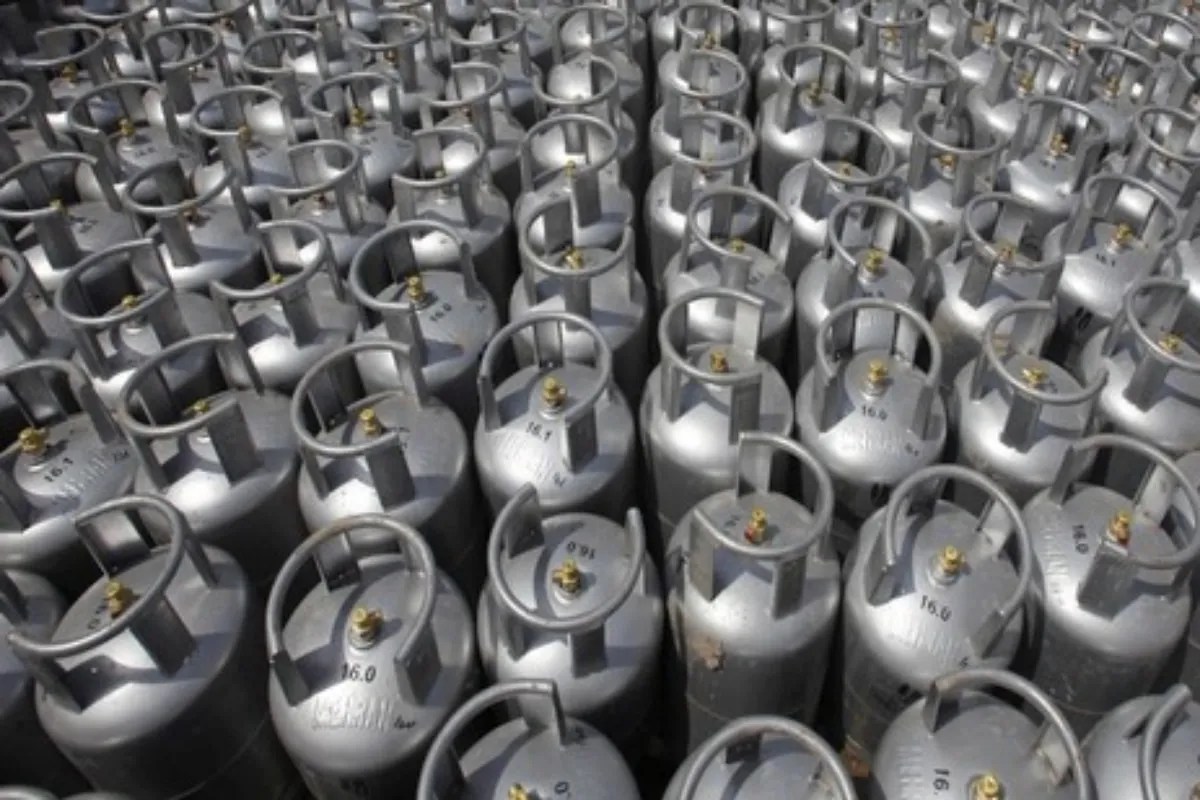
To understand the shock, it helps to step back from the street corner and look at what LPG actually is. Liquefied petroleum gas is a blend of propane and butane kept under pressure so it stays liquid inside a heavy steel shell, then vaporizes the instant a valve opens. Think of it like a tightly wound spring storing summer heat for a winter evening. When supply chains run smoothly, that spring releases energy steadily, predictably, almost invisibly. When bottlenecks form—through import delays, quota disputes, currency pressure, or local hoarding—that spring tightens until the cost snaps upward.
I have sat in kitchens where the blue flame was treated as a birthright of modern life, right up until the afternoon it sputtered out mid-meal. Half-cooked lentils in a pot have a strange way of making time feel heavy. You stand over a dead stove holding a wooden spoon, realizing how much daily dignity depends on something you never thought to thank.
The Invisible Math Behind a Ten-Thousand-Rupee Flame
Price spikes rarely arrive with a single dramatic explosion. More often, they creep in through small frictions that compound behind closed doors.
When domestic pipeline gas runs low or unreliable—a familiar strain in many Pakistani cities during colder months—families lean harder on LPG cylinders. Demand rises right as seasonal chill sets in. If imported supply slows or distributors hold back stock waiting for higher rates, scarcity feeds on itself. A dealer who normally sells at regulated or semi-regulated margins faces higher replacement costs or tighter allocations; before long, informal markups appear, and ten thousand rupees stops sounding like an outlier and starts sounding like the going rate in hard-hit pockets.
Consider what happens next: a family that once bought a full cylinder every few weeks starts buying decanted portions—a couple of kilograms at a time—from makeshift roadside setups.
That shift is a metaphor for something larger than a retail transaction. It is the fragmentation of security. Buying fuel in small, improvised increments strips away buffer room. Every meal becomes a negotiation. Every winter evening becomes an exercise in rationing warmth. And decanting carries hazards of its own, turning desperation into a safety gamble in cramped rooms with poor ventilation.
Here is the part that is easy to miss from afar: an LPG crisis is never just an energy story. It is a labor story, a health story, and a time story rolled into one.
When a stove goes cold, someone has to make up the difference. Usually, that means extra hours spent coaxing stubborn wood or low-grade alternatives, or traveling farther to track down a cylinder that actually has pressure behind the valve. Time spent hunting for fuel is time stolen from rest, caregiving, or earning. In households already stretched thin by inflation, every lost hour has a price tag.
Where Policy Meets the Kitchen Floor
Economics textbooks love clean curves—supply meets demand, equilibrium appears, everyone goes home happy. Real life is messier.
When cylinder prices hit 10,000 rupees in parts of Pakistan, people do not experience a curve. They experience a jolt in the chest. They wonder whether the rate will drop tomorrow or climb higher next week. They ask neighbors whether a shop two streets over has stock, or whether the shortage is spreading. Uncertainty has its own exhausting weight; even when a pot eventually warms up, the anxiety of running empty lingers in the back of the mind.
I will admit something candidly: energy markets and supply chains can feel labyrinthine even to people who follow them closely. Quotas, freight costs, exchange rates, regional distribution—it is easy for explanations to blur into jargon while a family sits shivering in a sweater.
Yet the human logic is crystal clear. People adapt fast when cornered, though adaptation rarely feels triumphant in the moment.
Returning to our hypothetical household in Rawalpindi, Tariq does not solve global or national energy logistics over a cup of tea. What he does instead is practical and immediate. He asks a cousin who works near a depot to check availability before evening traffic peaks. Rubina shifts the heaviest cooking to midday when the house is slightly warmer, saving whatever gas remains for the evening chill. They stretch what they have, minute by minute, flame by low flame.
That kind of quiet improvisation shows up nowhere in official spreadsheets. Still, it is the bedrock of how ordinary families survive shocks they did not create.
The Hidden Cost of Waiting It Out
There is a temptation, whenever prices spike this sharply, to treat the moment as a temporary blip that will simply fade on its own. Sometimes relief comes quickly once shipments clear or enforcement tightens. Sometimes relief drags out, leaving deep marks on household savings that take months to rebuild.
Look closely at what ten thousand rupees represents for a working family. It is school fees kept current. It is a doctor's visit without borrowing from a relative. It is breathing room when an unexpected expense hits. Paying that much for a single cylinder drains reserves right when winter makes basic comfort harder to maintain.
And there is a broader ripple effect across neighborhoods. Small eateries, tea stalls, and home-based food makers—vital lifelines in urban and semi-urban areas—feel the squeeze too. When cooking fuel jumps, either food prices rise or margins vanish. A cup of hot tea or a simple plate of rice is woven into the social fabric of the street; when fuel becomes scarce, even small communal comforts grow expensive.
Some days, the hardest part is not knowing what comes next. Will supply stabilize? Will prices cool down? Will another surprise hit next month? Anyone who has watched bills climb faster than paychecks knows that knot in the stomach. You don't need a degree in economics to feel the math turning against you.
Still, pressure has a way of clarifying what matters most. Strip away the noise, and a household needs remarkably little to feel steady: a roof that holds out the wind, food on the table, health in the family, and enough warmth to sleep without shivering. When a single cylinder costs 10,000 rupees, one of those pillars is pushed right to the edge.
Out on the street, the evening air turns sharp again. Windows close a little tighter. Somewhere behind a painted metal door, a striker clicks once, twice, three times—waiting for the small, steady blue ring that turns cold iron and raw ingredients into a meal.


