Salt. That is the first thing you notice when the ferry pulls away from Tsim Sha Tsui at dusk, even on a cool evening when the harbor water turns the color of beaten pewter. The air carries brine from the South China Sea, warm exhaust from idling tugs, and the faint, metallic hum of thousands of air conditioners cooling towers stacked up the granite slopes of Hong Kong Island.
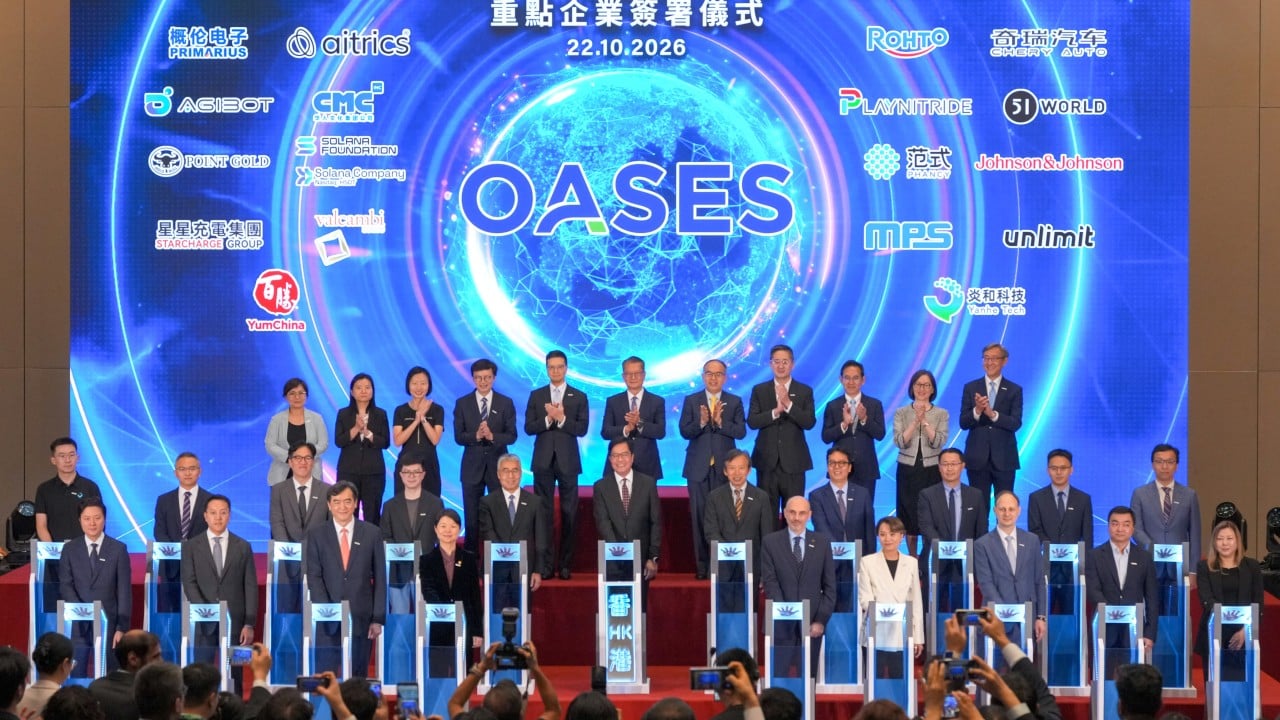
Numbers. That is what most people read when a press release arrives announcing that Hong Kong has attracted another 18 strategic firms pledging HK$10 billion in investment. Eighteen companies. Ten billion Hong Kong dollars. To a tired reader skimming a financial feed on a Tuesday morning, those figures land like pebbles dropped into a deep well—a brief plink, a ripple that vanishes before you finish your coffee.
Yet numbers are rarely the whole story. Behind every pledged billion sits a room full of exhausted founders, legal counsel arguing over lease covenants at midnight, lab equipment crated on a dock in Shenzhen or Rotterdam, and families packing suitcases because someone decided that a steep, humid strip of coastal rock was the one place on earth where their next ten years had a fighting chance.
I have spent years watching cities try to buy their futures with ribbon cuttings and tax holidays. Sometimes the ribbons hold. Sometimes the buildings sit half-empty, echoing with promises that sounded grand in a boardroom and hollow on a windy sidewalk. Deciding whether a city is actually reinventing itself or merely decorating its balance sheet takes patience, skepticism, and a willingness to look past the headline tally.
Why Headlines Flatten Living Ambition
When a government office announces a new batch of strategic enterprises bringing HK$10 billion in committed capital, the language is almost always clinical. You read about priority sectors, regional headquarters, research and development hubs, job creation targets, and long-term economic resilience. None of those words are wrong, and all of them miss the pulse of the thing.
Think of a city's economy like a classic mechanical watch rather than a spreadsheet. A spreadsheet tells you how many gears you ordered and what each one cost. The watch tells you whether the escapement ticks cleanly when humidity spikes or whether friction slows the balance wheel down after three o'clock in the afternoon.
For decades, Hong Kong's watch ran on a famous, fierce rhythm: trade, shipping, clearing cross-border deals, and underwriting capital for companies that wanted to reach global markets or enter mainland China. Anyone who walked along Des Voeux Road or stood on the footbridges of Central felt that urgency—people moving fast with briefcases and phones pressed to their ears, turning paperwork and relationships into motion.
Then the world grew sharper elbows. Supply chains fragmented, interest rates swung hard, tariffs redrew shipping lanes, and rival hubs across Asia spent fortunes courting the exact same engineers, biotech researchers, and climate-tech founders. Whenever a city faces that kind of pressure, a nagging doubt creeps into the conversation: is the old engine still enough, or is it time to build new cylinders before the current ones wear thin?
That doubt is real, and pretending it does not exist makes any cheerleading sound brittle. Anyone who has watched an ambitious project stall over zoning rules, talent visas, or slow procurement knows that capital pledged on paper is not the same as concrete poured or patents filed. Money can hesitate. Commitments can stretch over years. A pledge is a vote of confidence, not a finished bridge.
Inside the Rooms Where Decisions Actually Happen
To see what eighteen strategic firms and HK$10 billion mean on the ground, let us step into a hypothetical scenario—explicitly framed as a composite picture drawn from how real expansion decisions unfold across Hong Kong's science parks and commercial towers.
Picture Mei-Ling, a hypothetical chief operating officer at a mid-sized clean-energy materials company that develops next-generation battery components. For eighteen months, her board has debated where to anchor its next regional manufacturing and testing footprint. One option sits in Southeast Asia, offering lower land costs and familiar assembly lines. Another sits in Europe, close to automotive buyers. The third is Hong Kong.
At first, Mei-Ling's finance team pushes back hard against Hong Kong. Rent stings. Housing costs make relocating senior engineers a hard sell. "Why pay a premium here," her chief financial officer asks during a rainy video call, "when we can put a plant somewhere cheaper and ship?"
It is a fair question. If cost per square foot were the only variable, many expansion plans would never survive the first spreadsheet.
Mei-Ling flies into Chek Lap Kok anyway. She spends three days riding the Airport Express, walking through research labs, talking to university researchers, and sitting with trade and investment specialists who know how customs clearance, cross-border testing, and intellectual property protection actually behave when a shipment hits a snag at 2 a.m. She notices something subtle: when a technical problem comes up in Hong Kong, the person who can solve it is often a forty-minute train or cab ride away, rather than three time zones across an ocean.
Metaphor alert: choosing where to plant a strategic hub is less like buying a coat off a rack and more like planting a banyan tree—you care less about the pot today and far more about whether the soil and water will hold when monsoon winds hit five winters from now.
Across the harbor, another hypothetical founder—let us call him Tariq, leading a medical diagnostics startup—faces a different friction. His team has promising assay technology, but clinical validation, regulatory pathways, and access to specialized capital require deep institutional muscle. Moving to a major financial and research center is not about cheap real estate; it is about proximity to hospitals, legal specialists, international investors, and talent pools that understand both Asian and Western standards.
When eighteen companies sign on under a strategic enterprise push backed by HK$10 billion in planned investment, they are not all chasing the same prize. One firm may be scaling artificial intelligence applications for logistics; another may be advancing biotechnology or advanced materials; another may be establishing a regional treasury or high-value operations center. Together, those eighteen names represent eighteen separate bets that the city's ecosystem—its legal system, its currency convertibility, its port and air links, its universities, and its position beside the Greater Bay Area—still gives them an edge they cannot easily replicate elsewhere.
The Invisible Stakes Beneath the Balance Sheet
So why does it matter to an ordinary person whether eighteen more firms commit HK$10 billion?
Start with work. Not abstract "job creation" statistics that sound like wallpaper, but real paychecks and real career ladders. For years, bright graduates in Hong Kong faced a narrow funnel: finance, law, accounting, property, or civil service. Those fields built immense wealth, yet a healthy city needs bench depth. When strategic firms set up labs, engineering teams, and operational centers, they create demand for roles that did not exist in the same volume a decade ago—data scientists, clinical researchers, supply-chain specialists, hardware testers, regulatory analysts.
A young engineer who once felt forced to leave home to find serious R&D work suddenly has another reason to stay—or to come back after studying abroad. A mid-career technician gets a shot at a role with global reach instead of local stagnation.
Consider what happens next when those ripples move outward:
A city thrives not merely when money enters its banks, but when curiosity stays inside its streets.
Local vendors supply components, catering, maintenance, and logistics. Universities see stronger ties between laboratory research and commercial application. Small cafes and noodle shops near science and business clusters feel the weekday rush of people who have a reason to be there—people arguing over prototypes, testing equipment, and building something tangible.
Yet there is a flip side that demands honesty. Every influx of high-value enterprise brings pressure. Housing affordability remains a raw nerve in Hong Kong; crowded flats and steep rents are not theoretical talking points to families trying to raise children between Kowloon and Hong Kong Island. If growth only enriches top-tier specialists and landlords while leaving everyday residents feeling squeezed, resentment builds faster than goodwill.
Public support for strategic investment holds up best when residents see tangible spillovers—better career pathways, stronger local innovation, cleaner technologies, and public revenue that eases everyday pressures rather than merely polishing glass facades.
History Does Not Repeat—It Rhymes With Effort
Anyone who knows Hong Kong's history knows how quickly fortunes can shift and how stubbornly this place adapts.
Go back to the post-war decades. A city packed with refugees, short on natural resources, lacking vast arable land, turning small textile workshops and trading houses into export powerhouses. Skeptics back then had plenty of reasons to doubt. Resource scarcity is real. Small domestic markets limit scale. External shocks hit hard.
Still, adaptation was never automatic. It took grueling work, pragmatic policy, relentless hustle on the docks and trading floors, and a willingness to reinvent when old advantages eroded.
Today's test looks different. The competition is stiffer. Geopolitics is noisier. Technology moves so fast that a business plan drafted eighteen months ago can feel dated before the ink dries. Attracting another 18 strategic firms with HK$10 billion in pledged investment does not magically erase every headwind on the horizon. Anyone who tells you otherwise is selling fairy tales.
What it does—if executed well—is keep momentum alive. In business and in city-building alike, momentum is fragile. Once a place stops attracting builders and starts only defending old turf, gravity takes over. Landing eighteen strategic commitments keeps new builders walking through the door.
Even then, the real work starts after the announcement fades. Capital pledged must turn into actual capital deployed. Promises of local hiring must become real training and mentorship. Regulatory processes must stay nimble enough that founders do not spend half their energy fighting red tape instead of solving hard technical problems.
That is the quiet tension of any economic turning point. Hope and skepticism sit in the same chair. You cheer the arrival of fresh investment and serious operators, while keeping one eye on execution, accountability, and everyday life on the ground.
Late at night, when the harbor ferries slow their crossings and neon reflections stretch across dark water toward the peak, a city does not look like a press release. It looks like a living organism—noisy, crowded, stubborn, occasionally bruised, still breathing hard in the salt air. Ten billion dollars on paper is just ink and expectation until hands put it to work, and tomorrow morning, another tide rolls into the harbor.