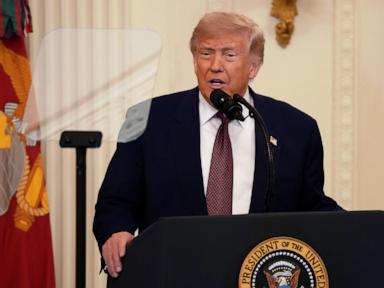
The federal investigation into Gabriel Perez, a longtime teleprompter operator for the White House, exposes a systemic flaw in the design of political prediction markets. By allegedly using direct access to prepared speech drafts to extract over $100,000 on Kalshi’s "mention markets," Perez did not merely violate ethical guidelines. He exposed a fundamental vulnerability in micro-liquidity event contracts: when the underlying asset is a sequence of spoken words, the information gap between the text creator and the market maker is absolute.
This case represents the first public instance of an insider trading probe involving a White House staffer on a domestic prediction platform. While mainstream reporting frames this as a simple political scandal, an analytical breakdown reveals it as a classic execution of risk-free arbitrage. Understanding the mechanics of this trade requires examining the structural flaws of mention markets, the mathematics of the adverse selection death spiral, and the regulatory challenges facing the Commodity Futures Trading Commission (CFTC).
The Mechanics of the Mention Market Contract
Prediction markets like Kalshi and Polymarket list binary contracts that resolve to either $1.00 or $0.00 based on whether an event occurs. In a mention market, the event is the oral delivery of a specific word or phrase by a public figure during a designated broadcast window.
For example, during a State of the Union address, contracts are generated for terms like "rigged election," "fake news," or specific geopolitical terms. The market operates under basic binary option pricing:
$$P = p \cdot C$$
Where $P$ is the current market price of the contract, $p$ is the market's implied probability of the word being spoken, and $C$ is the payout value ($1.00).
A retail speculator must weigh historical speech patterns, political incentives, and drafting team styles to estimate $p$. Conversely, a teleprompter operator holds the XML script file loaded directly into the prompting software. For the insider, $p$ is not a probability; it is a binary certainty of either $0$ or $1$, subject only to real-time speech deviations.
This structural dynamic creates an insurmountable information asymmetry. The insider can purchase underpriced contracts (e.g., a "Yes" contract trading at $0.15 for a word they know is in the draft) or sell overpriced contracts (e.g., a "Yes" contract trading at $0.85 for a word omitted from the final draft) with near-zero risk.
The Teleprompter Operator as an Information Bottleneck
To understand how this arbitrage is executed, one must map the sequence of White House speech preparation. The workflow of a high-profile address follows a strict transmission path:
- Drafting and Policy Input: Speechwriters, policy advisors, and senior officials iterate on text in closed document systems.
- Final Sign-off: The President or senior leadership approves the final draft, typically hours or minutes before delivery.
- Technical Loading: The finalized text is converted into specialized prompting formats and transferred via secure local networks or physical media to the teleprompter workstation.
- Real-time Modulation: During the speech, the operator manually scrolls the text to match the speaker's cadence.
The teleprompter operator sits at the narrowest point of this information pipeline. While senior advisors know the policy goals, the operator is one of the few individuals who possesses the exact, character-for-character transcription of the text loaded into the podium monitors immediately prior to the broadcast.
In the case of Perez, who had worked with Trump's team since 2016, this access was uniquely valuable. Trump's speaking style is notoriously non-linear, blending prepared text with off-the-cuff remarks. To mitigate the risk of spontaneous divergence, Perez allegedly adjusted his trading positions in real-time. According to sources familiar with the CFTC investigation, Perez backed out of certain bets mid-speech when Trump began to veer away from the pre-loaded script. This real-time hedging demonstrates an advanced understanding of both the physical speech environment and the latency limits of the prediction platform.
The Adverse Selection Death Spiral for Market Makers
In traditional financial markets, market makers provide liquidity by posting bid and ask prices, earning a profit on the spread. They manage inventory risk by adjusting prices in response to order flow. In highly specialized, low-volume prediction markets, market makers are highly vulnerable to informed traders.
When an insider trades on absolute information, it triggers a process known as adverse selection. The sequence unfolds as follows:
[Insider Obtains Prepared Script]
              │
              ▼
[Insider Sweeps Underpriced Contracts]
              │
              ▼
[Market Maker Fills Orders at Stale Prices]
              │
              ▼
[Market Maker Incurs Immediate Unhedgable Loss]
              │
              ▼
[Liquidity Depletes / Spreads Widen]
Because the outcome of a speech contract is determined in a single, un-hedgable event, the market maker cannot offset their risk by purchasing a correlated asset. If a teleprompter operator buys $50,000 worth of "Yes" contracts on a niche word at $0.10, the market maker is forced to absorb the liability of a $500,000 payout upon resolution.
The immediate consequence of this vulnerability is the degradation of the market itself. If market makers suspect that an insider is active in the order book, they respond by:
- Widening the bid-ask spread to prohibitive levels.
- Drastically lowering the maximum contract limits per user.
- Withdrawing liquidity entirely, rendering the market inactive.
The existence of unresolved insider access destroys the viability of the contract class. This is why financial firms like Robinhood have deliberately excluded mention markets from their prediction offerings, citing the inherent risk of manipulation and information leaks.
The Breakdown of Prediction Market Surveillance
Kalshi’s surveillance systems flagged Perez’s account after identifying highly anomalous trading patterns during major public addresses, including the State of the Union in February and the World Economic Forum in January.
Unlike equity markets, where insider trading is often obscured by complex option webs or shell companies, the physical constraints of prediction platforms make detection relatively straightforward for exchange operators. Kalshi identified the leak using a three-tiered detection framework:
Temporal Alignment
The suspect account executed high-volume, directional trades immediately after the final speech drafts were locked but before the public broadcast commenced. The short duration between trade execution and event resolution left no room for public information digestion.
Directional Accuracy
The account maintained an statistically impossible win rate across highly specific, low-probability linguistic outcomes. In prediction markets, consistently profiting from tail-risk events (contracts trading below $0.10) over multiple consecutive events indicates access to non-public datasets.
Identity Verification
Under federal regulations and exchange rules, Kalshi requires Know-Your-Customer (KYC) documentation. A cross-reference of the anomalous account's personal details with public payrolls and federal employment databases quickly linked the trading profile directly to the technical team operating the White House teleprompter.
Following the internal flags, Kalshi froze approximately $90,000 of Perez's profits and referred the findings to the CFTC. The regulatory body now faces the challenge of applying existing statutory frameworks to an asset class that does not fit neatly into traditional definitions of securities or commodities.
Regulatory Gaps and the Definition of Insider Trading
The CFTC's jurisdiction over prediction markets stems from its authority over swap contracts and commodity futures. Under Section 6(c)(1) of the Commodity Exchange Act and CFTC Rule 180.1, it is unlawful to employ manipulative or deceptive devices in connection with any swap or contract of sale of any commodity.
However, prosecuting insider trading in this context presents distinct legal hurdles compared to the SEC’s established framework under Rule 10b-5 for equities. The prosecution must establish several core legal pillars:
- The Duty of Trust: The government must prove Perez owed a duty of trust and confidentiality to his employer (the Executive Office of the President) not to misuse non-public information for personal financial gain.
- Materiality: In equity markets, information is material if a reasonable investor would consider it important in making an investment decision. For a speech contract, the text of the speech is the entire basis of the asset's value, making the drafts undeniably material.
- The Definition of a Commodity: Because Kalshi operates under CFTC oversight, the underlying contracts are treated as event contracts. The defense may argue that political speeches are not "commodities" under traditional interpretations, though the CFTC’s anti-manipulation authority is broadly applied to any registered entity or transaction on a designated contract market.
If the CFTC secures a civil settlement or refers the case to the Department of Justice for criminal prosecution, it will establish a clear legal precedent: public employees who trade on the contents of official government proceedings prior to public release are subject to the same insider trading liabilities as corporate executives trading on quarterly earnings.
Structural Mitigations for Event Platforms
To survive regulatory scrutiny and protect liquidity providers, prediction platforms must redesign how mention markets are structured. Relying solely on post-trade surveillance is insufficient to prevent the systemic drain of market-maker capital. Platforms must implement structural controls directly into the contract design.
The most effective mechanism is the implementation of a mandatory trading lockout period. Under this protocol, all trading on speech-related contracts must be halted and the order books frozen a minimum of two hours before the scheduled start time of the event. This window corresponds to the typical technical lockup period where speech drafts are distributed to teleprompter operators, broadcast networks, and translation teams. By closing the market prior to the distribution of the final text, the platform eliminates the temporal window where insider information can be monetized.
Additionally, exchanges must require comprehensive employment disclosures for users trading in highly specific policy or governmental niches. Kalshi has begun implementing workplace disclosure mandates for high-risk contracts, but this must be expanded into an automated registry of restricted traders. Individuals with technical, administrative, or editorial access to state communications, legislative drafts, or regulatory announcements must be structurally barred from holding positions in corresponding event markets. Without these hard barriers, prediction markets will continue to operate as highly vulnerable venues for low-risk, high-yield insider exploitation.