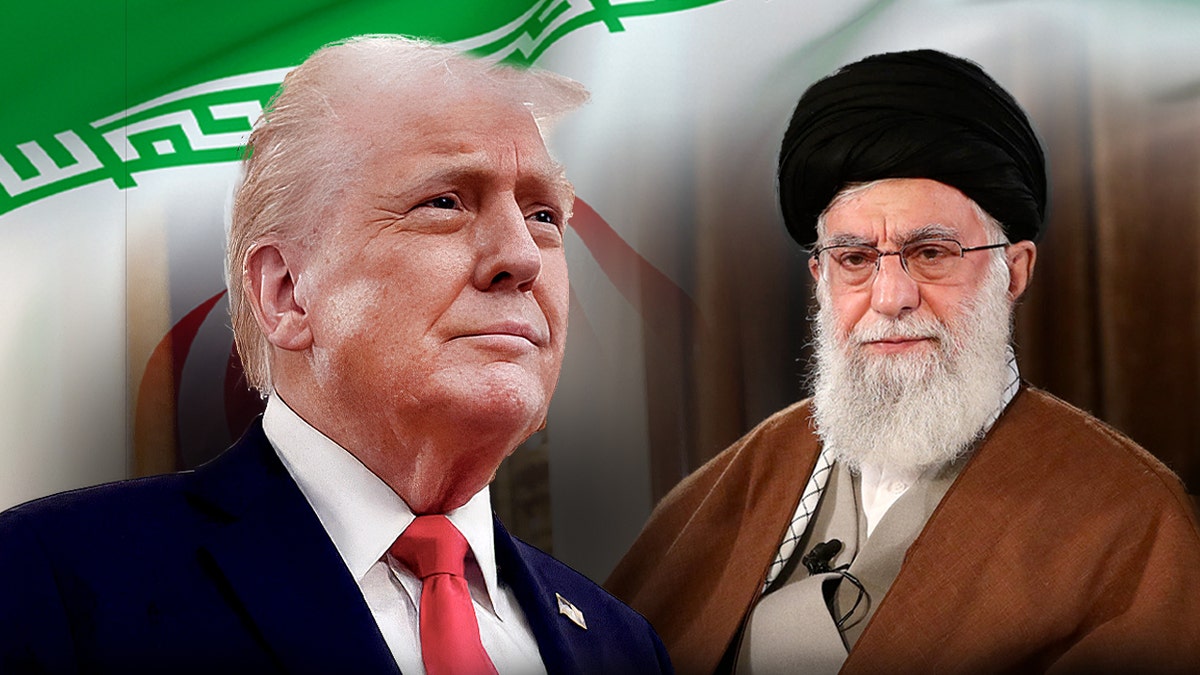
The fragile architecture of Middle Eastern diplomacy just hit a familiar concrete wall. Reports from IRIB, Iran's state broadcaster, confirm that Tehran has officially dismissed the latest set of American conditions for negotiations, viewing them as a non-starter designed to trigger internal collapse rather than external cooperation. This rejection arrived almost simultaneously with a surprising tactical pivot from Washington. Donald Trump has unilaterally extended a ceasefire in regional flashpoints, a move that appears less like an olive branch and more like a strategic strangulation.
By freezing active hostilities without lifting economic sanctions, the White House is betting that time is a more effective weapon than Tomahawk missiles. Iran sees this. They know that a ceasefire without "sanctions relief" is simply a slower way to lose a war. The current impasse isn't about a lack of communication channels; it is about a fundamental disagreement on the price of entry to the meeting room. Read more on a connected subject: this related article.
The Mirage of De-escalation
Washington’s decision to hold fire doesn’t signal a shift toward peace. It is a refinement of maximum pressure. When a superpower unilaterally stops shooting but keeps its hand around the throat of a nation’s banking system, it isn't de-escalating. It is repositioning.
The extension of this ceasefire serves several domestic and international purposes for the Trump administration. First, it quietens the voices in Congress wary of another "forever war" in the lead-up to an election cycle. Second, it places the burden of "aggression" squarely on Tehran. If Iran or its regional proxies strike now, they are the ones breaking a peace that Washington has publicly offered. It is a masterful, if cynical, use of diplomatic optics to isolate an opponent. Additional reporting by The Guardian delves into comparable views on this issue.
Iran’s leadership, specifically the hardliners who currently hold the steering wheel in Tehran, are not fooled by the silence of the guns. For the Islamic Revolutionary Guard Corps (IRGC), a ceasefire that maintains the current oil embargo is an existential threat. They require cash flow to maintain their network of regional influence. Without it, the "forward defense" strategy that keeps their enemies at a distance begins to crumble.
Why the US Conditions Failed on Arrival
The specific conditions rejected by Tehran likely centered on three non-negotiable pillars of Iranian statehood: the ballistic missile program, the regional proxy network, and the permanent closure of all nuclear pathways. To the US, these are common-sense requirements for a "normal" nation. To Iran, these are the tools that prevent them from becoming the next Libya or Iraq.
Historical precedent weighs heavily here. The Iranian leadership watched the disarmament of Muammar Gaddafi and his subsequent demise. They have zero incentive to trade their primary deterrents for a promise of "better relations" that can be rescinded by the next occupant of the Oval Office. This creates a circular logic where neither side can move because the very act of moving is perceived as a surrender.
Furthermore, the demand that Iran cease all support for groups like Hezbollah and the Houthis ignores the reality of how Tehran projects power. These are not just "proxies" they can switch off like a light. They are the result of decades of investment and ideological alignment. Asking Iran to abandon them is asking them to retreat back within their borders and wait for their rivals to surround them.
The Economic Engine of Resistance
Underneath the rhetoric of "dignity" and "sovereignty" lies a brutal economic reality. Iran is currently operating on what it calls a "resistance economy." This isn't a sustainable growth model. It is a survivalist bunker.
The unilateral ceasefire extension actually makes the economic situation harder for Tehran to manage. When there is an active threat of war, the population can be rallied around the flag. Hardship is framed as a patriotic sacrifice. In a state of "neither war nor peace," the focus shifts back to the mismanagement of the domestic economy, the skyrocketing price of basic goods, and the corruption within the state-linked foundations.
- Inflation rates have consistently hovered in a range that would trigger a revolution in most Western democracies.
- The Rial has become a volatile currency that loses value faster than it can be printed.
- Youth unemployment remains a ticking time bomb for the regime’s stability.
Washington knows this. By extending the ceasefire, they are denying Tehran the "rally around the flag" effect while allowing the internal pressure of the sanctions to cook the regime from the inside out. It is a siege by other means.
The Regional Chessboard
While the two main players stare each other down, the rest of the region is scrambling to adjust to this new "static" conflict. Saudi Arabia and the United Arab Emirates are watching the ceasefire with a mix of relief and skepticism. They benefit from the lack of missile attacks on their infrastructure, but they fear a scenario where Washington cuts a deal that leaves them exposed to Iranian influence.
Israel, meanwhile, remains the wildcard. A unilateral US ceasefire does not necessarily bind the hands of the Israeli Air Force if they perceive a "red line" being crossed in Lebanon or Syria. This creates a dangerous decoupling of interests. If Trump is committed to a ceasefire but Netanyahu is committed to pre-emption, the US could be dragged back into a conflict it just tried to freeze.
The Intelligence Gap
One of the biggest risks in this standoff is the misinterpretation of intent. In my years covering these escalations, the most dangerous moments weren't the planned strikes, but the accidents. With a unilateral ceasefire in place, the margin for error is razor-thin.
If a low-level commander in the Persian Gulf misinterprets a naval maneuver, or if a cyberattack of unknown origin takes down a power grid, the "ceasefire" collapses instantly. Because there is no formal agreement—only a unilateral declaration—there are no hotlines to de-escalate the de-escalation. We are essentially watching two boxers standing in the center of the ring, gloves down, but with their fingers hovering over the "reset" button on a landmine.
The Illusion of Choice
Tehran’s rejection of the US conditions was predictable. The Supreme Leader cannot be seen to be bullied into a room where the terms have already been dictated by his primary adversary. However, the rejection leaves Iran with few moves.
They can attempt to wait out the current administration, hoping for a change in US policy, but their economy might not have that much time left. Alternatively, they can "escalate to de-escalate"—performing a controlled provocation designed to force the US to offer better terms. This is the path they have taken in the past, but it is a high-wire act with no safety net.
The Trump administration’s extension of the ceasefire is a brilliant, cold-blooded maneuver. It maintains the status quo of Iranian suffering while removing the immediate political cost of war. It creates a vacuum of action that Tehran is finding impossible to fill.
The real story here isn't the rejection of the conditions. It is the realization that the US has found a way to wage war without firing a single shot, and Iran has yet to find an answer for it. This isn't a peace process. It is a stalemate where only one side is losing blood.
Keep an eye on the Strait of Hormuz. When diplomacy fails and ceasefires become suffocating, the sea is usually where the pressure finds its vent.