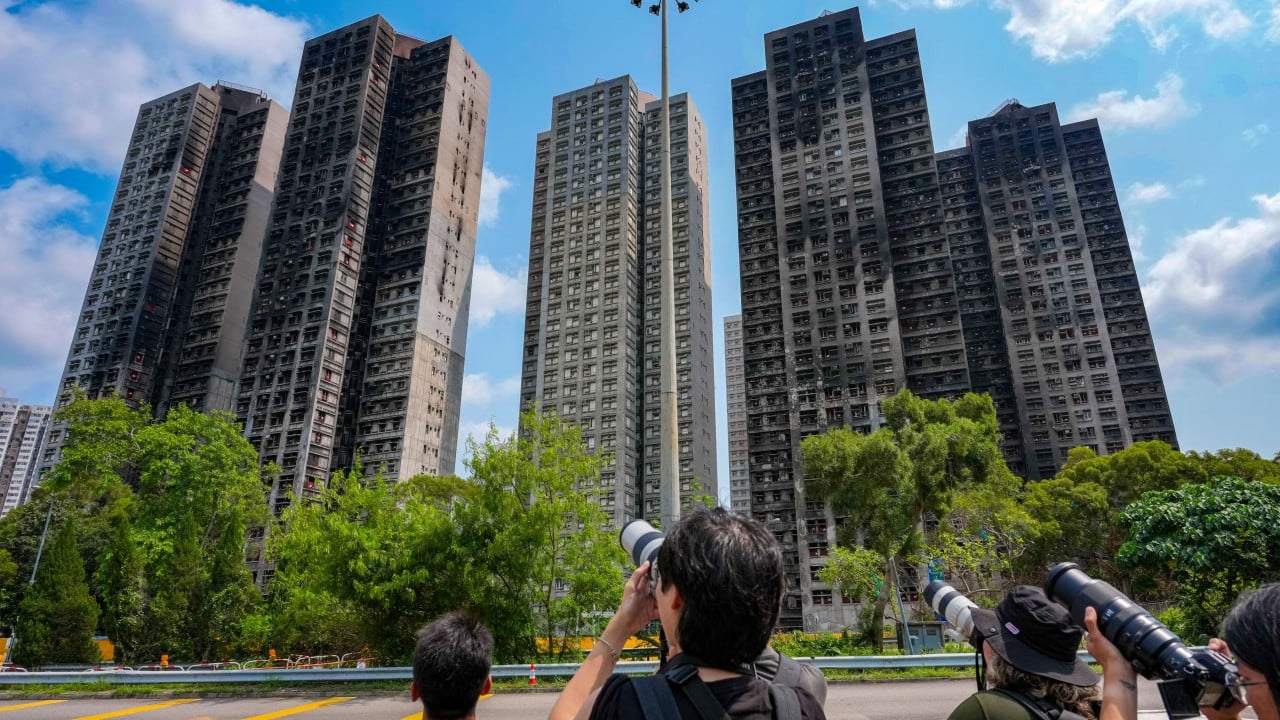
Hong Kong's safety standards just hit a wall of harsh reality. During the recent inquiry into the tragic Tai Po fire, officials admitted something that should make every resident's blood boil. There aren't any specific regulations for the use of highly flammable polyfoam in construction sites. It's a massive oversight. We're talking about a material that turns a small spark into an inferno in seconds, yet it's treated like any other piece of debris. This isn't just a bureaucratic slip-up. It's a failure that costs lives.
The probe into the Tai Po blaze has pulled back the curtain on a system that is dangerously behind the times. While other global cities have strict protocols for how foam is stored and used, Hong Kong seems to be relying on "good intentions" and vague guidelines. You can't fight a fire with guidelines. You need laws.
Why the Absence of Foam Regulations is Unacceptable
The inquiry heard testimony that described the lack of oversight as "unacceptable." That's an understatement. Polyfoam, or expanded polystyrene, is basically solidified gasoline. When it catches fire, it doesn't just burn. It melts, drips, and releases thick, toxic black smoke. This smoke kills people long before the flames ever reach them.
Evidence presented during the hearings showed that workers on the Tai Po site were often unaware of how quickly this stuff spreads. They weren't trained to handle it. They weren't told it was a high-risk material. In many ways, they were working inside a tinderbox. The fire services department and the buildings department are now under the microscope, and rightly so. They've allowed a situation where contractors can stack tons of flammable material without a single specific safety check for that specific substance.
We often think of construction sites as controlled environments. This inquiry proves they're often the exact opposite. If a contractor wants to save money by using cheap, unregulated insulation, there's very little in the current legal framework to stop them until it’s too late.
The Toxic Reality of Polyfoam Fires
To understand why this matters, you have to understand the science of the burn. Polyfoam is a polymer. When it reaches a certain temperature, the chemical bonds break down. This doesn't just happen at the point of contact with a flame. The heat causes the material to "off-gas." These gases are themselves flammable.
[Image of chemical structure of polystyrene]
When a pile of foam ignites, the heat creates a feedback loop. The more it burns, the more gas it releases. The more gas it releases, the bigger the fire gets. It's an exponential growth curve that no fire extinguisher can handle once it starts. In the Tai Po case, the speed of the spread was so fast that escape routes were blocked within minutes.
The Hidden Danger of Toxic Fumes
Firefighters will tell you the flames are only half the battle. The smoke from burning foam contains hydrogen cyanide and carbon monoxide. Basically, it's a chemical weapon. In the confined spaces of a construction site or a high-rise building, these fumes settle into stairwells and corridors. You take two breaths and you're unconscious.
The inquiry heard that the density of the smoke in the Tai Po incident was a major factor in the high casualty rate. People couldn't see their hands in front of their faces. They were disoriented. They were suffocating. And yet, we still don't have a law that says "you cannot store this much foam in a single area." It’s madness.
Comparing Hong Kong to Global Safety Standards
If you look at cities like London or New York, the rules are different. Following high-profile disasters like the Grenfell Tower fire, there's been a massive push to ban flammable cladding and strictly regulate foam insulation. Hong Kong likes to call itself a world-class city. But in terms of fire safety for modern building materials, we're stuck in the last century.
Experts at the inquiry pointed out that the current Fire Services Ordinance is too broad. It treats "combustible materials" as a single category. But a pile of wood and a pile of polyfoam are not the same thing. One burns slowly and predictably. The other is a bomb. We need a tiered system that recognizes the specific risks of synthetic materials.
Many developed nations require foam materials to be treated with fire retardants. They also mandate "compartmentalization." This means if a fire starts in one section, the materials are arranged so it can't jump to the next. In the Tai Po fire, there was no compartmentalization. The foam was spread throughout the site, acting as a fuse that carried the fire from one end to the other.
The Contractor Problem and Low Oversight
Why hasn't this changed? Honestly, it comes down to cost and convenience. Regulations mean inspections. Inspections mean delays. Delays mean less profit for developers. For years, the industry has pushed back against stricter rules, claiming they’re "unnecessary" or "burdensome."
But the Tai Po probe has exposed the lie in that argument. The "burden" of a few extra safety checks is nothing compared to the burden of losing a family member. The inquiry revealed that site supervisors often turned a blind eye to how foam was stored. It was shoved into corners, left in hallways, and stacked near electrical equipment.
I've seen this on dozens of sites across the city. It's a culture of "it'll be fine." Until it isn't. The government can't keep letting the industry police itself. It clearly doesn't work. We need independent inspectors who have the power to shut down a site immediately if they find unregulated flammable materials stored improperly.
What Needs to Change Right Now
We don't need another three-year study. We need action. The inquiry has laid out the facts, and they're damning. The first step is a total ban on the use of non-fire-retardant foam in any major construction project. If it's not treated to resist ignition, it shouldn't be on the site. Period.
Next, we need specific storage quotas. No more "fill the room" mentality. There should be a legal limit on how much polyfoam can be kept in any one location at any one time. This forces contractors to manage their logistics better and reduces the potential fuel load for a fire.
Better Training for Site Workers
You can't expect a laborer to know the chemical properties of expanded polystyrene. It’s the responsibility of the firm and the government to provide that education. Every worker should have to go through a mandatory fire safety module that specifically covers synthetic materials. They need to know that a cigarette butt or a grinding spark isn't just a nuisance—it’s a potential death sentence when foam is nearby.
Finally, we need real consequences. Fines for safety violations in Hong Kong are often seen as just a "cost of doing business." They’re too low. If a developer's negligence leads to a fire because they ignored material safety, they should face criminal charges, not just a slap on the wrist.
Taking Personal Responsibility for Safety
While we wait for the bureaucrats to catch up, you have to be your own advocate. If you live near a construction site or work on one, pay attention. Do you see piles of white or blue foam sitting out in the sun? Is it near electrical cables or areas where welding is happening?
Don't wait for a tragedy to happen. Report it. Use the government's hotlines. Pressure your local representatives. The Tai Po fire probe has given us the evidence we need to demand change. We know the system is broken. Now we have to fix it before the next spark flies.
Check the fire safety rating of your own building materials if you're doing renovations. Ask your contractor for the fire certificates for any insulation they're installing. If they can't provide them, fire the contractor. Your life is worth more than their profit margin. Stop accepting "industry standard" as "safe." In Hong Kong, those two things are currently miles apart.
Demand that the Buildings Department updates its code of practice to include specific chapters on foam plastics. Write to the Secretary for Security and ask why the Fire Services Ordinance hasn't been updated to reflect 21st-century building materials. The information coming out of the Tai Po inquiry is a gift of knowledge bought at a terrible price. Don't let it go to waste. Fix the rules. Save the next person.