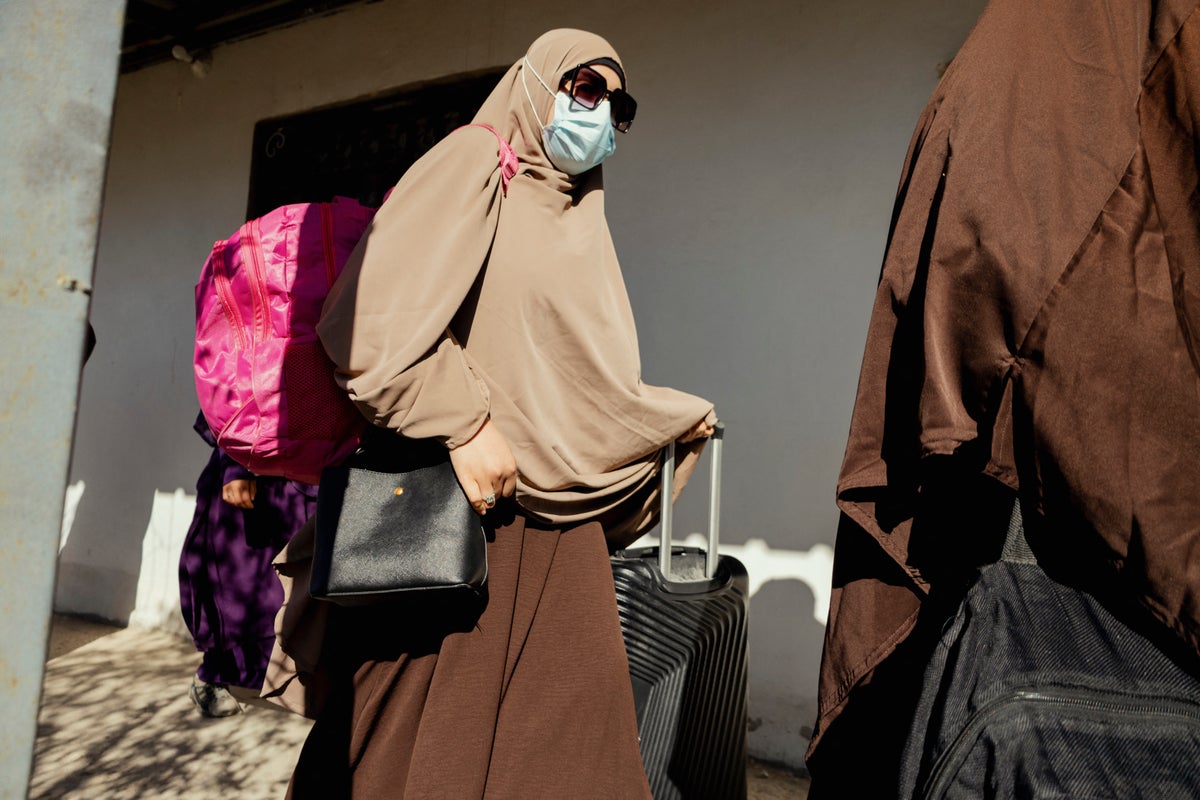
The arrival of thirteen Australian citizens from the ruins of the Islamic State is not a triumph of diplomacy or humanitarian grace. It is the result of a geopolitical collapse that forced Canberra's hand. For years, the federal government maintained a policy of "active neglect," hoping the problem of the Al-Roj and Al-Hol detention camps would resolve itself through attrition or regional absorption. But as the United States winds down its presence in Northeast Syria and Kurdish forces cede control to the Damascus regime, the shield of distance has shattered.
Four women and nine children are now transiting back to a country that explicitly told them they were not wanted. Home Affairs Minister Tony Burke has been blunt, stating the government provided zero assistance and that these families made "appalling" choices. This rhetoric serves a domestic political purpose, but it masks a deeper systemic failure. By refusing to manage the repatriation process, the government has lost the ability to control the timing, the security vetting, and the narrative of their return.
The Myth of Preparedness
The official line is that Australia’s security agencies are ready. Police Commissioner Krissy Barrett suggests that years of investigation have prepared the ground for immediate arrests. This claim warrants skepticism. Gathering admissible evidence from a war zone—where witnesses are dead, records are destroyed, and chain of custody is non-existent—is a legal nightmare.
Most of these women will likely enter a legal gray zone. They may face Temporary Exclusion Orders (TEOs) or control orders, which restrict their movement and associations, but these are band-aids. They are not convictions. The "full force of the law" often turns out to be a series of administrative hurdles rather than a prison cell. This creates a lingering security risk that the government is essentially outsourcing to local police and social services.
The Shift from Kurdish to Syrian Control
The catalyst for this sudden movement was not an Australian policy change. It was a shift in the Syrian power dynamic. For years, the Syrian Democratic Forces (SDF) acted as the West’s jailers. They held the families in exchange for political legitimacy and financial aid. As the U.S. presence wanes, the SDF is being forced to hand over these facilities to the Bashar al-Assad government.
- The Assad Factor: Damascus has no interest in feeding and housing foreign radicalized citizens. Their strategy is simple: push them out.
- The Damascus Bottleneck: Reports indicate this group had to navigate a complex, privately funded route to Damascus before they could even board a flight.
- The Passport Dilemma: While the government denies assistance, it still issued the travel documents. You cannot board an international flight without them. This suggests a quiet, bureaucratic surrender behind the scenes.
The Children of the Caliphate
Nine of those returning are children. Some have spent seven years in Al-Roj. Others were born there. These are not just "ISIS-linked families"; they are a generation of Australians who have known nothing but razor wire and extremist indoctrination.
The government’s plan for these children is vague, leaning heavily on "community reintegration." Yet, Australia’s de-radicalization infrastructure is uneven. We are asking local schools and social workers to manage the psychological fallout of a brutal civil war. This is not just a security challenge; it is a generational liability. If the reintegration fails, we are simply planting the seeds for a domestic threat ten years down the line.
Why "Saying No" Failed as a Strategy
The Australian government’s refusal to repatriate was based on the idea that keeping these people in Syria made Australia safer. The events of early 2026 have proven the opposite.
When a government manages a repatriation, it controls the security screenings. It controls the flight. It controls the arrival time and the immediate placement of individuals into high-security or supervised environments. By forcing these families to find their own way home through third-country hubs, the government has created a surveillance gap.
Calculated abandonment has backfired. Instead of a controlled, orderly process, we now have a chaotic trickle of returnees who are arriving on their own terms, forcing agencies to react in real-time rather than execute a long-term plan.
The Legal Mirage
We are told that investigations into crimes against humanity, such as slave trading or terrorism financing, are ongoing. These are complex charges. In a courtroom, "she was there" is not enough for a conviction. Many of these women will argue they were coerced or were merely "housewives" in the caliphate. Without specific, documented evidence of their individual actions, the Australian legal system is ill-equipped to handle them.
The government’s hardline rhetoric is designed to satisfy an angry electorate, but it does little to address the reality of a citizen's right to return. Under international law, and practical domestic law, you cannot permanently ban a citizen from their own country. The "serious limits" Tony Burke mentioned are the very foundations of the rule of law.
The Security Paradox
Leaving these individuals in Syria was a choice to prioritize short-term political comfort over long-term national security. Camps like Al-Hol are notorious breeding grounds for the next iteration of extremist movements. By delaying their return, Australia allowed these individuals to remain in a radicalizing environment for half a decade longer than necessary.
The women and children returning now are more traumatized, more radicalized, and more disconnected from Australian society than they were in 2019. We didn't solve the risk; we let it ferment.
The current arrival is just the beginning. At least twenty more Australians remain in the camps. The Damascus regime will continue to use them as leverage or simply deport them. Australia can continue to claim it is "not assisting," but the planes will keep landing. The "tough on terror" stance is meeting the reality of a shifting Middle East, and so far, the reality is winning.
Security isn't found in a press release; it’s found in a coherent, institutionalized framework that handles the return of radicalized citizens with surgical precision. Australia chose to look away, and now it has to deal with the consequences of its own silence.