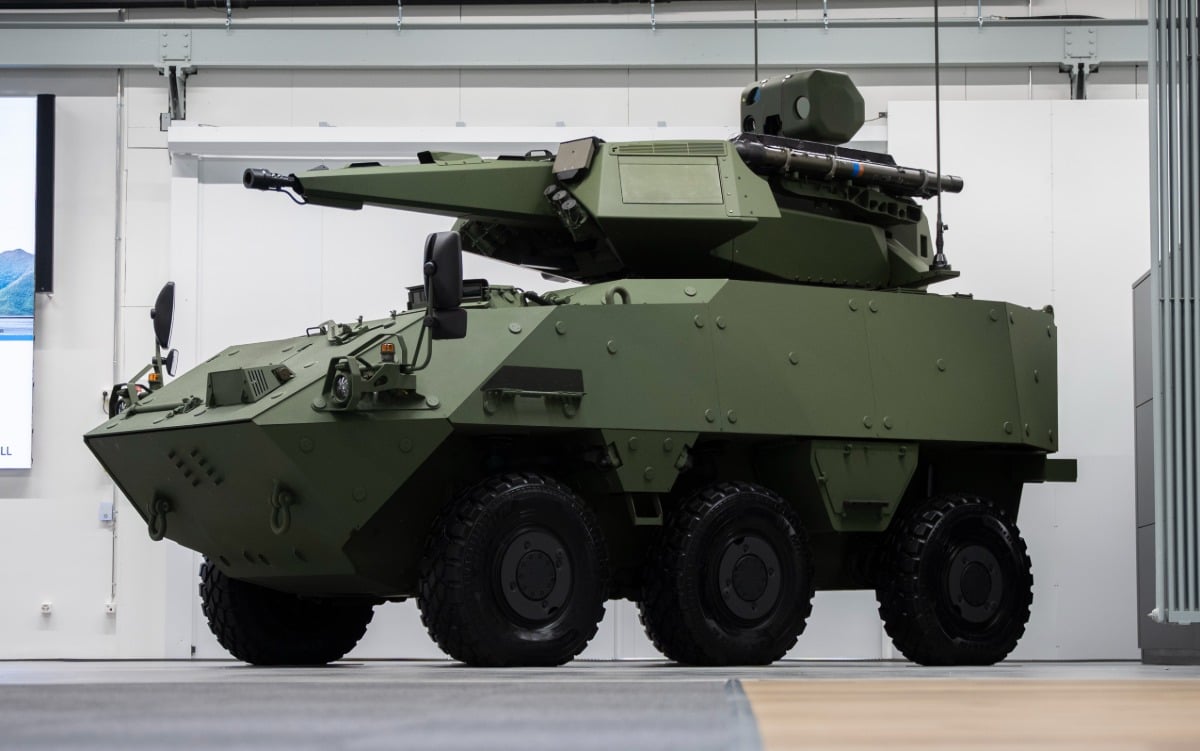
Switzerland is buying Rheinmetall drone-defense systems to protect its neutral airspace. The mainstream defense press is treating this like a masterstroke of modern procurement. They see a legacy neutral power adapting to the realities of Ukraine and the Red Sea. They see strategic foresight.
I see a massive waste of taxpayer money on a tactical band-aid. You might also find this similar article insightful: Why India and Bahrain are Quietly Redefining Gulf Diplomacy.
The media narrative surrounding this acquisition assumes that buying anti-drone hardware fixes the drone problem. It does not. For decades, European defense ministries have operated under the delusion that throwing capital at traditional defense primes can neutralize asymmetric threats. This Rheinmetall acquisition is the latest symptom of that sickness. Switzerland is spending millions to defend against a threat that will evolve past this specific hardware before the ink on the contract even dries.
The Flawed Premise of Legacy Air Defense
Mainstream military analysts ask the wrong question. They ask, "Which system can shoot down a drone?" The correct question is, "What is the cost-per-kill ratio, and how fast can the enemy scale past your capacity to reload?" As discussed in recent reports by The New York Times, the implications are notable.
The current defense consensus celebrates hard-kill systems—gatlungs, missiles, and automated autocannons like Rheinmetall’s Skyranger or Skynex platforms—as the gold standard for asset protection. They are remarkably engineered. They are also financially unsustainable in a prolonged attrition conflict.
Consider the raw mathematics of modern drone warfare. A commercially available, first-person view (FPV) loitering munition or a modified reconnaissance quadcopter costs anywhere from $500 to $5,000 to manufacture. The programmable airburst ammunition used by modern 35mm ground systems costs thousands of dollars per burst. If the system relies on short-range missiles, that cost jumps to hundreds of thousands of dollars per interceptor.
When you use a million-dollar network to defeat a swarm of $2,000 hobby drones, you are not winning. You are going bankrupt. The adversary does not need to penetrate your airspace to defeat you; they just need to make you spend your budget on ammunition.
The Myth of Fixed-Site Sovereignty
Switzerland’s defense posture relies on the concept of armed neutrality—the idea that its geography and military readiness make invasion too costly to attempt. Buying localized drone defense systems is designed to protect critical infrastructure, airfields, and urban centers.
But fixed-site defense is an outdated concept in the era of autonomous, decentralized swarms. I have watched defense contractors demonstrate these systems in controlled environments. The radar tracks a single target, the fire control computer calculates the intercept, and the gun fires. The target drops. The executives in the tent applaud.
Real conflict does not look like a Swiss testing range.
In a real deployment scenario, electronic warfare environments are cluttered. Drones do not fly in neat, linear paths at predictable altitudes. They fly low, utilizing terrain masking, hugging the contours of the Alps, dodging radar detection until they are within terminal striking distance. More importantly, they arrive simultaneously from multiple vectors. A single Rheinmetall unit can engage a finite number of targets before its tracking radar is saturated or its magazine is empty.
By anchoring its drone strategy to heavy, industrialized kinetic platforms, Switzerland is preparing for the last war. They are buying heavy machinery to fight a digital cloud.
Why Software Beats Iron
True drone defense is not a hardware problem. It is a software problem.
The true vulnerability of any autonomous threat lies in its guidance, its communication links, and its reliance on specific RF spectrums or optical recognition models. If you want to neutralize a drone swarm, you do not shoot it with a 35mm shell. You blind its sensors, spoof its GPS, or hijack its command loop.
Western procurement offices remain obsessed with physical platforms because hardware is tangible. It looks impressive in a parade. It supports domestic defense manufacturing jobs. Software updates and electronic warfare architectures do not offer the same political theater.
If Switzerland wanted to secure its airspace, it would pivot away from heavy iron and invest heavily in localized, high-power microwave (HPM) tech and cognitive electronic warfare. Systems that project a wide-area denial field cost fractions of a cent per engagement. They do not run out of physical ammunition. They can reset instantly to engage the next wave.
The downside to this contrarian approach is obvious: it requires a level of regulatory flexibility regarding spectrum interference that civilian aviation authorities despise. It also requires admitting that your multi-million dollar radar assets are largely blind to carbon-fiber quadcopters operating on consumer frequencies. But ignoring the reality of software-defined warfare to keep legacy contractors happy is strategic suicide.
The Procurement Trap
European defense procurement is structurally incapable of keeping pace with commercial tech cycles. A defense prime takes five to ten years to design, test, and field a new kinetic defense variant. In that same timeframe, commercial drone software goes through dozens of iterations.
By the time these systems are fully integrated into the Swiss Armed Forces, the threat vector will have shifted from human-piloted RF drones to fully autonomous, vision-navigation swarms that require zero external communications. When a drone does not emit a radio signal and does not rely on GPS, half of the sensors on your multi-million dollar defense grid become expensive paperweights.
Stop asking which contractor makes the best gun. Start asking how your defense architecture adapts when the enemy alters their source code overnight.
Switzerland is buying a prestige shield for a digital knife fight. Turn off the procurement pipeline, cancel the hardware bloat, and fund the engineers who can code a perimeter, not just forge one.