The key turning in the lock sounds different now.
It used to be a dull, heavy thud—the sound of someone coming home after a grueling day on the MTR, dropping a briefcase on the floor, and exhaling the accumulated exhaustion of a city built entirely on vertical velocity. Today, that sound is sharper. It is the zip of a newly bought suitcase being pulled open in a tiny, high-floor flat in Hung Hom. It is the frantic flipping of lease agreements signed via WeChat video calls from Shenzhen, Hangzhou, and Chengdu.
Hong Kong is breathing differently.
For years, the narrative of this city was written in terms of departure. We watched the moving vans. We whispered about the talent drain. We tracked the empty desks in primary schools and the quiet corners of coffee shops in Sai Ying Pun. We assumed the story of the Special Administrative Region was a slow, graceful fading of lights.
We were looking in the exact wrong direction.
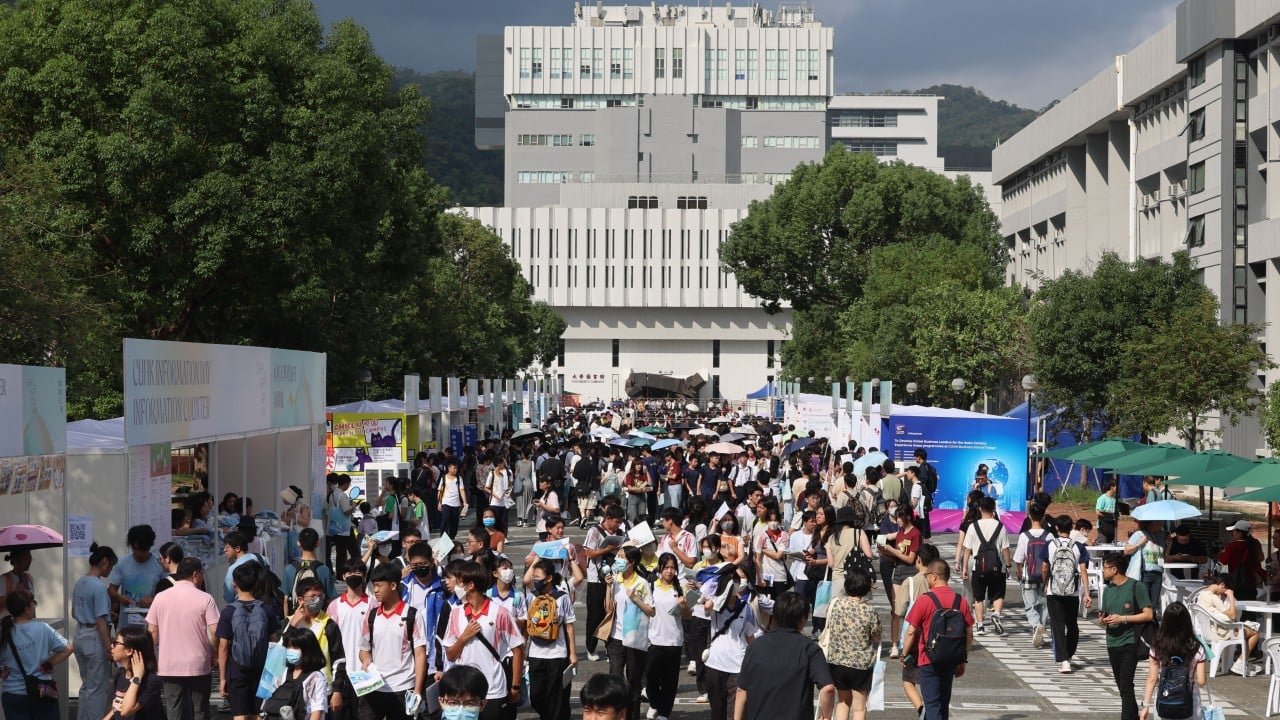
Down on the ground, past the headlines of economic hesitation, a new demographic is arriving with single-minded purpose. They are young. They are ambitious. And they carry acceptance letters from the University of Hong Kong, the Chinese University of Hong Kong, and the Hong Kong University of Science and Technology in their backpacks.
They are the mainland students. And they are reshaping the city's most fiercely contested battleground: real estate.
Consider a hypothetical student named Chen. Twenty-two years old. Born in a province three hours by high-speed rail from the border. Chen does not care about the historical nostalgia of British colonial architecture, nor is he weighed down by the generational anxieties of local families who have watched property prices defy gravity for three decades. Chen cares about one thing: GPA 3.8 and a foothold in the global financial machinery.
When Chen arrives in Hong Kong, reality hits him square in the chest. Space here is not measured in square feet; it is measured in oxygen. A three-hundred-square-foot apartment is a luxury. A subdivided flat is a compromise. A mattress on a loft bed is a rite of passage.
Yet, Chen and tens of thousands like him are willing to pay.
This is where the cold economics of the education sector collide with the human drama of urban housing. To understand what is happening to the property market, you have to stop looking at macroeconomic spreadsheets and start looking at a map of the East Rail Line. Follow the tracks north from Admiralty through Mong Kok East, Sha Tin, and right up to the border. That corridor is no longer just a transit route. It is a migration artery.
The numbers tell a stark story, even if numbers alone are bloodless. Enrollment quotas for non-local students at government-funded universities have shifted upward. Institutions have opened their arms wider to the north, seeking global rankings, financial diversification, and fresh intellectual blood. The influx is not a trickle anymore. It is a monsoon. We are talking about tens of thousands of young adults descending upon a city that simply does not have spare rooms lying around.
Landlords in districts like Tai Wai, Fortress Hill, and Shatin have felt the tremor.
Properties that used to sit vacant for weeks, awaiting a local family to negotiate over a few hundred dollars of rent, are now snapped up sight unseen. Parents in mainland tier-one cities wire hundreds of thousands of dollars to cover a year’s rent upfront, in cash, with zero hesitation. They treat housing as a tuition fee. A necessary cost of entry.
Imagine being a local young professional trying to find a place to live in this environment.
You walk into an apartment viewing in North Point with an estate agent who looks exhausted. Before you can even run your hand along the wall to check for dampness, the agent’s phone buzzes. A voice note plays at double speed from a prospective tenant currently sitting in a lecture hall in Guangzhou. The deal is done. The deposit is transferred. You are left standing in an empty hallway, listening to the hum of the air conditioner, realizing you have been outbid not by a multinational executive, but by a twenty-one-year-old undergraduate pooling resources with three classmates to secure a tiny two-bedroom fortress.
This is the hidden cost of academic ambition.
Hong Kong has always been a Darwinian arena. It is a city that rewards speed, adaptability, and the sheer grit required to survive its brutal cost of living. But the current wave of student-driven housing demand has accelerated the pressure cooker.
Landlords pivot overnight. Traditional family apartments are sliced, diced, and re-engineered to maximize bed-space rentals. Common rooms turn into makeshift dormitories with floor-to-ceiling privacy curtains. The lines between student accommodation and the private residential market have completely blurred. A flat in Sai Ying Pun that once housed a local family for ten years now turns over a new set of student tenants every twelve months, suitcases rolling across the parquet floors like thunder before an approaching storm.
Critics argue that this is unsustainable. They point to the strain on local infrastructure, the soaring rents for families who have lived in these neighborhoods for decades, and the cultural friction that inevitably arises when two populations sharing the same language code-switch through entirely different lived experiences.
They are not wrong. The friction is real. You can hear it in the elevators of residential towers where local residents grumble about rolling suitcases blocking the narrow corridors and unfamiliar dialects echoing past midnight.
But beneath the friction lies a deeper truth about survival.
Hong Kong has never survived by standing still. Its entire history is a series of violent reinventions. It was built by refugees, reshaped by traders, and sustained by waves of desperate, hopeful arrivals who understood that if you could make it here, you could make it anywhere. These students are cut from that exact same cloth. They are trading comfort for proximity. They are paying a massive premium for a ticket to the table.
Property demand driven by education is not a temporary blip. It is a structural shift. As long as Hong Kong’s universities remain beacons of international education and bridges to the wider world, the young and the ambitious will keep coming. They will keep paying. They will keep filling the small rooms and the crowded libraries.
The city is changing its skin once again.
Outside the window of that tiny flat in Hung Hom, the neon signs flicker against the heavy, humid night air. Down on the street, a taxi door slams. A young woman walks briskly toward the MTR entrance, her backpack heavy with textbooks, her eyes fixed entirely on the light at the end of the platform. She does not look back. She doesn't have time.
Neither does the city.