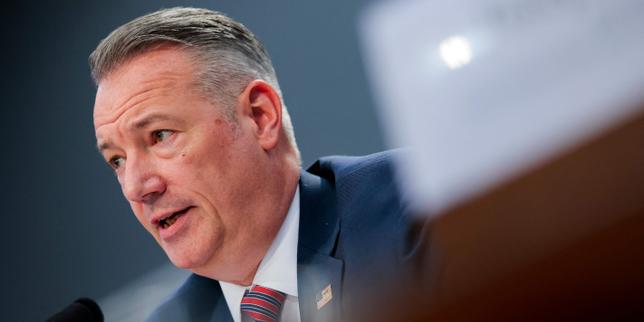
Todd Lyons is out. The man who spent years navigating the political minefield of U.S. Immigration and Customs Enforcement (ICE) has officially stepped down from his role as acting director. This isn't just another bureaucrat moving to the private sector. It's a signal. When the person holding the keys to the most scrutinized law enforcement agency in the country walks away, you have to look at the cracks in the foundation.
Lyons wasn't just a placeholder. He was a veteran. He rose through the ranks in Boston before landing in the hot seat in Washington. His departure leaves ICE without a permanent, Senate-confirmed director—a trend that's become a permanent fixture of American immigration policy. If you're wondering why enforcement feels inconsistent or why the border remains a flashpoint in every election, start right here. The leadership is a revolving door.
Why Todd Lyons Leaving Matters for Immigration Policy
The departure of Todd Lyons, directeur par intérim de l’ICE, matters because stability is a luxury this agency hasn't had in years. Lyons took over during a period of intense transition. He had to balance the White House's shifting priorities with the morale of thousands of agents on the ground. That’s a brutal job.
Most people don't realize that ICE hasn't had a Senate-confirmed director since the Obama administration. Think about that. We're talking about an agency with a multi-billion dollar budget and the power to deport millions, yet it's being run by "acting" officials for nearly a decade. Lyons was the latest in a long line of leaders who had all the responsibility but lacked the political shield of a permanent appointment.
When an acting director leaves, it creates a vacuum. Policy slows down. Field offices get mixed signals. Career officers start looking at the exit. Lyons held it together for a while, but his exit suggests the pressure of managing the current border crisis and the internal politics of the Department of Homeland Security (DHS) finally hit a breaking point.
The Brutal Reality of Leading ICE
Let's be real. Leading ICE is arguably the worst job in the federal government. You’re hated by the left for doing the job and slammed by the right for not doing it fast enough. Lyons lived in that friction. During his tenure, he saw the shift from Title 42 restrictions to the new, more complex enforcement landscape.
The agency handles more than just "the border." It manages a massive detention system, conducts workplace audits, and runs HSI (Homeland Security Investigations), which tracks everything from human trafficking to fentanyl. Lyons had to oversee all of it while being the public face of an agency that half the country wants to abolish.
Internal memos and reports from the field suggest that the "acting" status of leaders like Lyons makes it nearly impossible to implement long-term structural changes. You can’t build a five-year plan when you might be gone in five months. His exit is a symptom of a larger systemic failure to prioritize the agency's leadership.
The Boston Connection and the Rise of Lyons
Lyons didn't start in a plush D.C. office. He was the Field Office Director in Boston. That’s important. Boston is a sanctuary city environment. He learned early on how to navigate the tension between federal mandates and local resistance. He was known as a "cop's cop"—someone who understood the logistics of a raid as well as the optics of a press release.
His move to the national stage was supposed to bring that practical, boots-on-the-ground experience to the headquarters. It did, for a while. But D.C. eats practical people alive. The policy fights over who gets deported and who gets a court date are settled by lawyers in the West Wing, not by the guys in the field. Lyons likely grew tired of being the middleman in a fight that has no clear winner.
What This Change Means for the 2026 Enforcement Strategy
With Lyons gone, the focus shifts to who comes next. Usually, it's the next senior official in line, someone like Patrick Lechleitner, who has also been a steady hand in the department. But the "acting" tag won't go away.
Here is what happens on the ground when leadership flips:
- Enforcement Priorities Shift: Expect a temporary slowdown in new initiatives while the new lead gets settled.
- Morale Dips: Agents hate uncertainty. They want to know who has their back when a high-profile arrest goes sideways.
- Congressional Heat: Republican lawmakers will use this vacancy to hammer the administration on "failed leadership."
The data doesn't lie. ICE’s removal numbers have fluctuated wildly over the last three years. Some of that is due to policy, but a lot of it is due to administrative friction. When you change the person at the top, the gears of the machine grind.
The Myth of the Controlled Border
We keep hearing that the border is under control or that it’s a total disaster. The truth is somewhere in the messy middle, and Lyons was the guy tasked with managing that mess. His departure underscores the fact that no single person can "fix" ICE.
The agency is currently managing a "non-detained" docket that has swelled to over 6 million people. That’s 6 million people in the U.S. who are in the immigration system but not in custody. Monitoring that requires technology, manpower, and—most importantly—consistent leadership. Lyons was trying to modernize this process, but without a permanent mandate, these projects often wither on the vine.
Stop Expecting Stability in Immigration Oversight
If you're waiting for ICE to become a "normal" agency with a settled leadership team, don't hold your breath. The political climate makes a Senate confirmation nearly impossible. Any nominee would be shredded during the hearing. Democrats would grill them on detention conditions; Republicans would grill them on catch-and-release.
So, the "acting" era continues. Todd Lyons did his time. He navigated the most polarized environment in modern history and kept the lights on. But his exit is a warning. If the U.S. can't find a way to appoint and keep leaders in these roles, the enforcement gaps will only widen.
Watch the budget hearings next month. That’s where you’ll see the real impact of Lyons’ departure. Without a veteran leader to defend the agency’s spending, expect more cuts to detention beds and more reliance on overstretched electronic monitoring.
Keep an eye on the internal appointments within DHS over the next 48 hours. The person they pick to fill Lyons' shoes will tell you everything you need to know about whether the administration is doubling down on enforcement or shifting toward a softer oversight model. Don't look at what they say in press conferences; look at who they put in the office.