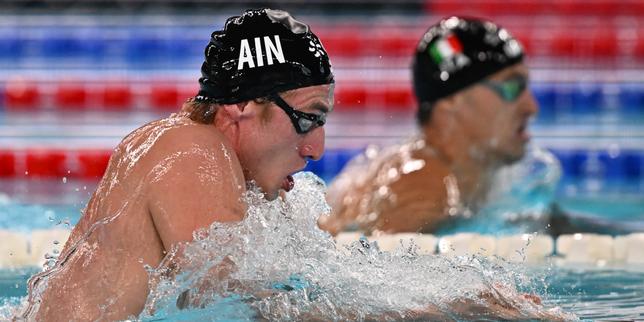
Geopolitical realignment within international sports administration follows predictable institutional trajectories. When the European Aquatics championships convened at the Centre Aquatique Olympique in Saint-Denis, the reentry of Russian and Belarusian competitors under neutral designations restructured the competitive baseline. This dynamic exposes a fundamental tension within modern sports governance: the collision between universalist athletic meritocracies and restrictive geopolitical sanctions frameworks.
The institutional architecture governing this transition relies on a calculated decoupling of individual athletes from state-sponsored apparatuses. Rather than addressing the systemic drivers of exclusion, international sports federations operate via procedural workarounds, utilizing neutral flags and neutral acronyms such as Neutral Athletes to bypass legislative and diplomatic deadlocks.
The Cost Function of Institutional Exclusion
Barring national delegations from continental competition introduces specific market distortions within athletic performance metrics. High-performance sports operate on closed-loop feedback systems where training intensity, tactical innovation, and podium validation depend on absolute field density.
When dominant talent pools are removed from competition, three systemic inefficiencies emerge:
- Valuation Decay of Medals: The market price of a continental title drops when the historical benchmark competitors are absent. Victory ceases to represent absolute supremacy and instead reflects relative dominance within a constrained subset of global talent.
- Tactical Stagnation: Elite training groups adapt to specific opponents over multi-year Olympic cycles. The sudden absence of primary pacing models forces national programs to optimize in a vacuum, degrading predictive analytics for international racing strategies.
- Revenue and Broadcast Optimization: Media rights holders price competitions based on marquee matchups. Fragmented fields reduce audience retention curves, dampening sponsorship realization rates across European broadcasting networks.
The reintegration at Saint-Denis demonstrates that sports federations ultimately prioritize competitive integrity over diplomatic alignment when financial and legacy pressures cross a critical threshold. The return of athletes such as Evgeniia Chikunova, Kliment Kolesnikov, and Egor Kornev instantly recalibrated the podium economics, validating the premise that athletic performance functions independently of administrative friction once the barriers are removed.
The Governance Trilemma in Multilateral Sports
Managing major events like the 2026 European Championships requires balancing three competing stakeholder vectors: state sovereignty, continental organizing autonomy, and athlete human rights. This forms a trilemma where an administration can optimize for only two variables at the expense of the third.
                  [State Sovereignty / Diplomatic Pressure]
                                    /\
                                   /  \
                                  /    \
                                 /      \
                                /        \
[Continental Organizing Autonomy] ---------- [Athlete Human Rights / Meritocracy]
When European Aquatics elected to facilitate the return of these athletes, it chose autonomy and athletic meritocracy over complete alignment with external geopolitical sanctions. This choice triggered immediate friction with host-nation political bodies and domestic sports ministries, illustrating how regional competitions serve as proxies for broader international disputes.
The mechanism of reintegration relies heavily on strict vetting protocols. Competitors must clear neutral status guidelines that prohibit active support for military actions or affiliation with military sports clubs. However, enforcing these criteria introduces administrative subjectivity, transforming sports governing bodies into quasi-judicial vetting agencies ill-equipped to handle geopolitical intelligence verification.
Competitive Re-Entry Dynamics in the Pool
The practical manifestation of this geopolitical shift is measurable directly through clock times and podium distributions. The inclusion of neutral athletes at the Saint-Denis venue altered the competitive distribution across multiple disciplines.
In events ranging from the 50-meter butterfly to the 200-meter breaststroke, returning athletes captured high-tier finishes, including championship records and gold medals. This immediate return to peak competitiveness confirms that elite training infrastructures inside these nations maintained operational continuity despite international isolation.
For host nations like France, the presence of a fully dense international field changes the strategic calculus of peak performance modeling. Athletes preparing for global showcases cannot rely on artificially depressed qualification standards. The friction generated in the media and administrative offices reflects the uncomfortable reality that sporting excellence obeys physical laws rather than diplomatic mandates.
Operational Forecast for Continental Federations
The precedent established at the Saint-Denis championships redefines how governing bodies will approach cross-border conflicts in future cycles. The trajectory points toward formalized decoupling strategies, where individual neutral participation becomes the standardized fallback mechanism for international sports federations seeking to insulate competitions from state-level hostilities.
Future event hosting agreements will increasingly incorporate mandatory neutrality clauses to preempt host-country visa denials or municipal security blockades. Sports federations are systematically building legal buffers to ensure that athletic calendars remain insulated from shifting foreign policies. The remous observed in Saint-Denis are not an anomaly, but rather the initial friction phase of a permanent structural adaptation within international sports administration.