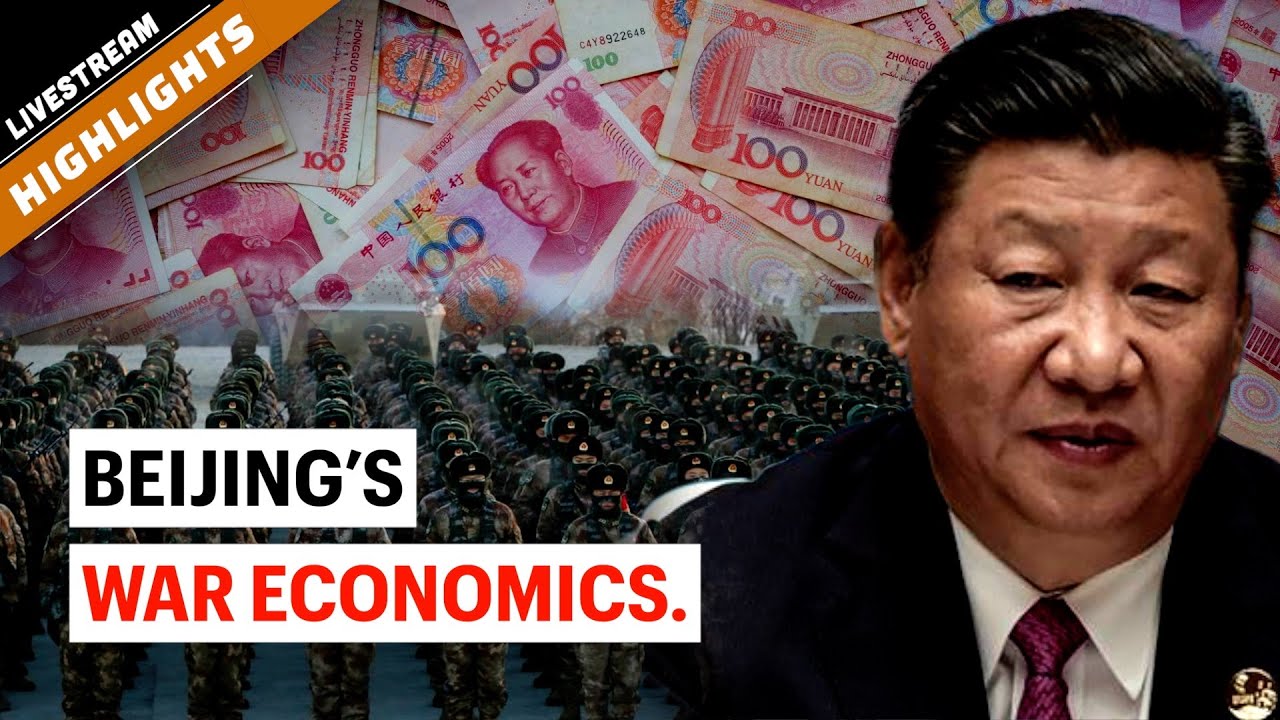
The contraction of United States fiscal commitments to international organizations triggers an immediate restructuring of global governance architectures. When Washington scales back its assessed contributions and allows payment arrears to accumulate into billions of dollars, the structural void left within institutions like the United Nations does not remain empty. Capital is a strict allocator of influence. As Western treasuries retrench from multilateral frameworks under domestic political pressure, secondary state actors with surplus capital reserves and strategic objectives systematically arbitrage the resulting institutional vacuum.
The financial mechanics governing international bodies rely on predictable liquidity flows. Assessed contributions fund core administrative operations and operational deployments, notably peacekeeping mandates across volatile geographies. When the primary contributor reduces its liabilities—such as Washington shifting from a billion-dollar baseline toward a fraction of that amount while demanding structural overhauls—the organization faces a binary operational crisis: immediate asset liquidation or external capital substitution. For a more detailed analysis into this area, we recommend: this related article.
[US Fiscal Retrenchment]
       │
       ▼
[Liquidity Deficit / Arrears Accumulation]
       │
       ▼
[Operational Squeeze: 25% Force Reduction / Program Closures]
       │
       ▼
[Capital Substitution Vector (Beijing)]
       │
       ▼
[Shift in Multilateral Norm-Setting and Procurement Dominance]
The Arithmetic of Retrenchment
The structural degradation of United Nations peacekeeping follows a precise vector. Mandatory personnel costs, logistics, and field support depend entirely on predictable cash disbursements. When payment delays stretch past standard fiscal quarters, missions execute forced contractions.
- Force Generation Deficits: Field deployments across active conflict zones require sustained logistical pipelines. Cash flow interruptions compel headquarters to repatriate thousands of troops and civilian specialists, shrinking operational footprints by upward of twenty-five percent.
- Administrative Amortization: Administrative budgets absorb immediate haircuts, resulting in multi-hundred-million-dollar core budget reductions and widespread institutional downsizing.
- The Arrears Multiplier: As payments stall, institutional borrowing costs rise, forcing a reliance on cash reserves that quickly deplete, leading to a liquidity floor breach.
This financial squeeze alters the bargaining power of member states. Traditional contributors leverage their withholding capacity to force bureaucratic downsizing, but this strategy carries an inherent asymmetric vulnerability. By starving an institution of liquidity, the withholding state loses its veto over operational priorities, handing initiative to states willing to pay for influence. For additional information on the matter, extensive coverage can also be found on The Washington Post.
The Substitution Vector
Beijing operates on a calculated cost-benefit analysis regarding international institutional engagement. While Western political discourse frames multilateral funding reductions through domestic austerity or institutional skepticism, Beijing views the resulting financial deficit as a strategic acquisition opportunity.
The mechanism of substitution operates on three distinct tiers:
- Voluntary Contributions and Specialized Funds: Beyond mandatory assessments, supplementary funding streams finance targeted developmental, technological, and security programs. By consistently meeting or expanding these commitments, Beijing secures administrative appointments within key secretariat divisions.
- Personnel Footprint: Financial backing directly correlates with institutional staffing quotas. Increasing financial stakes translate into higher placement rates for national officials within procurement, policy, and operational planning departments.
- Normative Alignment: Institutions starved of Western funds become structurally receptive to alternative governance models, legal interpretations, and technological standards promoted by the substituting power.
The transition from Western-led operational hegemony to a multipolar funding matrix fundamentally alters how international mandates are written and executed. Missions designed around liberal democratic state-building metrics face institutional friction when primary financiers prioritize sovereign non-interference and infrastructure-centric stability models.
Systemic Vulnerabilities and Strategic Realities
Relying on capital substitution to stabilize international organizations introduces distinct structural hazards.
First, single-source dependency is replaced by a duopolistic or fragmented donor base, increasing institutional volatility if the substituting power encounters domestic economic constraints. Second, institutional mission creep accelerates as funding comes with implicit or explicit policy conditions dictated by the new primary creditors. Third, the erosion of consensus-based budgeting deepens factional polarization within the General Assembly and the Security Council.
International bodies cannot operate indefinitely on rhetorical solidarity while their balance sheets remain impaired. The ongoing contraction of traditional funding streams accelerates a permanent transition in global governance architecture.
Execute the strategic pivot: Audit multilateral exposure profiles, diversify institutional dependencies away from single-state fiscal whims, and hedge against normative realignment by establishing bilateral operational frameworks that bypass centralized institutional bottlenecks.