Diplomatic relations between contiguous states are rarely governed by static ideological alignment; they are managed through continuous calibration of structural interdependence. When diplomatic representatives characterize complex state-to-state relations using qualitative metaphors such as organic ties, they are usually attempting to describe an unavoidable baseline of geographical and economic gravity. The underlying reality of bilateral engagement between New Delhi and Dhaka is not determined by rhetorical flourishes, but by an asymmetric yet mutually reinforcing matrix of security imperatives, trade balances, and transit dependencies.
To understand why diplomatic friction between these nations rarely results in structural decoupling, one must deconstruct the bilateral relationship into its core functional variables: geographical inevitability, economic complementarity, and security codependence.
The Mechanics of Geographical Inevitability
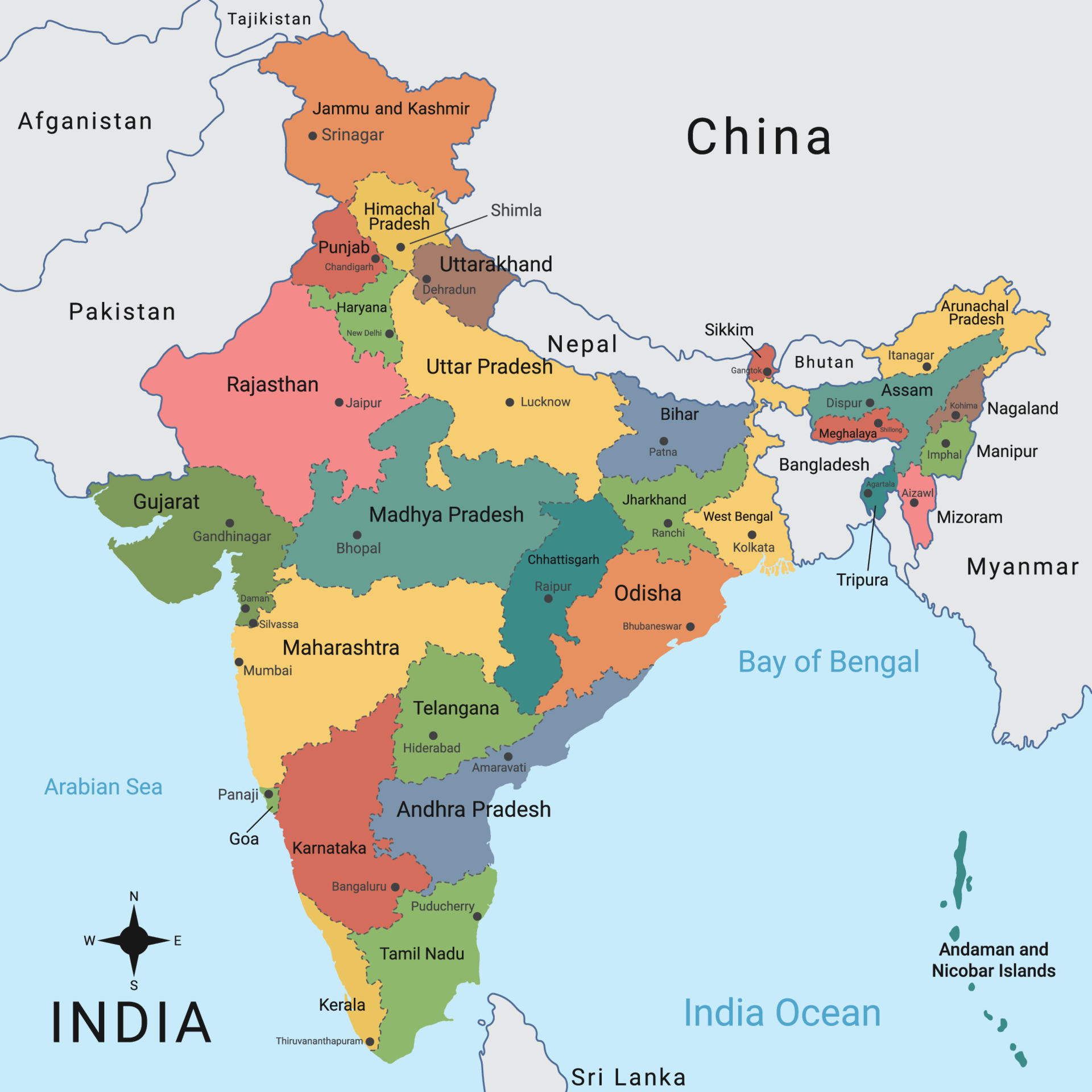
Geography imposes a permanent fixed cost on foreign policy. Bangladesh is surrounded on three sides by India, and shares a land boundary exceeding four thousand kilometers, punctuated by fifty-four transboundary rivers. This spatial reality creates an inescapable security and environmental matrix.
When diplomatic channels experience friction, neither state can alter its coordinates. Consequently, statecraft must operate within tight parameters of constraint.
The security architecture between the two nations relies on an unstated understanding of mutual vulnerability. For New Delhi, the stability of India's eastern frontier depends on Dhaka's active suppression of separatist insurgencies operating from borderlands. For Dhaka, maintaining unhindered access to regional and global transit corridors requires uncombative administrative cooperation with its larger neighbor.
This creates a functional imperative for dialogue that supersedes temporary political divergence. When disputes arise over water-sharing agreements, border management incidents, or domestic political transitions, the cost of terminating communication scales exponentially faster than the cost of negotiation. The structural penalty for isolation is high; therefore, diplomatic engagement functions as an administrative necessity rather than a matter of political choice.
The Asymmetric Economic Matrix
Economic interdependence between India and Bangladesh exhibits a distinct structural asymmetry. India maintains a substantial trade surplus with Bangladesh, exporting raw materials, intermediate goods, and essential commodities, while Bangladesh relies heavily on the Indian market for specific manufacturing inputs and regional value chains.
However, looking solely at trade balances obscures the broader logistics cost function.
Bangladesh requires efficient transit infrastructure to optimize its export-oriented manufacturing, particularly its dominant readymade garment sector. Land ports, transshipment protocols, and multimodal transit corridors through Indian territory reduce transit times to global markets and lower domestic logistics overhead.
Conversely, India utilizes Bangladeshi transit routes to connect its landlocked northeastern states to its mainland ports, cutting transportation distances and lowering logistical frictions across its own domestic market.
When political leaderships change or diplomatic rhetoric hardens, these physical supply chains continue to operate because the marginal cost of rerouting trade around geopolitical friction points is prohibitive. The economic architecture is built on efficiency gains that punish nationalist posturing.
The Cost Function of Diplomatic Breakdown
A rigorous analytical framework must evaluate what happens when dialogue halts. In international relations, communication channels serve as shock absorbers for operational friction.
Without active diplomatic channels, localized border disputes, maritime boundary interpretations, or illegal migration enforcement issues quickly escalate into security crises.
- Information Asymmetry: Halting dialogue increases uncertainty. When intelligence sharing and diplomatic consultations cease, misinterpretation of routine military exercises or border security measures rises, increasing the probability of accidental escalation.
- Transit Vulnerability: Unresolved customs or transport bottlenecks can paralyze perishable supply chains, imposing immediate economic costs on commercial enterprises in both countries.
- Multilateral Exposure: A breakdown in bilateral problem-solving mechanisms invites external powers to exploit regional friction, increasing the geopolitical vulnerability of both capitals.
Therefore, maintaining dialogue is not an expression of political warmth, but a risk-mitigation strategy designed to minimize transaction costs and prevent friction from compounding into structural failure.
Strategic Trajectory
The durability of the relationship between New Delhi and Dhaka does not rely on permanent political harmony or shared ideological perspectives. It persists because the structural costs of non-cooperation outweigh the domestic political benefits of confrontation. Future statecraft must focus on institutionalizing transboundary water management, expanding digital and energy connectivity grids, and formalizing supply chain integration to insulate bilateral stability from cyclical political volatility.