The selection of Hong Kong’s first payload specialist signals a transition for the city from a financial and logistical hub into a specialized node within China’s extraterrestrial research infrastructure. This evolution is not merely symbolic; it represents the operationalization of the Tiangong Space Station as a high-precision laboratory for orbital experiments developed by local academic and engineering institutions. The success of this integration depends on the technical alignment between Hong Kong’s miniature-scale engineering capabilities and the rigorous safety and interface standards of the China Manned Space Agency (CMSA).
The Tripartite Framework of Hong Kong Orbital Contributions
The participation of Hong Kong in the national space program functions through three distinct operational pillars. Each pillar addresses a specific bottleneck in orbital research and development.
1. Human Capital and Physiological Data Baseline
The selection of a local payload specialist serves a dual purpose. Beyond the obvious mission-specific duties, the specialist acts as a biological data point. By monitoring the physiological response of individuals from different regional demographics to microgravity, the CMSA expands the diversity of its longitudinal health database. This is critical for assessing the long-term viability of human habitation in low-Earth orbit (LEO) and beyond. The payload specialist is specifically trained to manage complex scientific apparatuses, reducing the cognitive load on the mission commanders and pilots who focus on station maintenance and vehicle operations.
2. Instrumentation and Miniaturization Engineering
Hong Kong’s primary technical advantage lies in the development of specialized hardware, such as the Surface Sampling and Packing System used in previous lunar missions. For the Tiangong missions, the focus shifts to internal station observatories and biological cultivation units. The constraint of space station logistics dictates a high "Value-to-Mass" ratio. Every gram of equipment launched must yield a quantifiable increase in data granularity. Local teams, particularly from the Hong Kong Polytechnic University, focus on high-precision motion control and sensor integration that function under the thermal fluctuations and radiation levels of LEO.
3. Data Processing and Distributed Analytics
While the physical experimentation occurs in orbit, the telemetry and raw data are processed through terrestrial labs. Hong Kong’s robust telecommunications infrastructure and its density of high-performance computing (HPC) clusters allow it to serve as a decentralized data node. This reduces the latency between experimental observation and theoretical refinement, creating a feedback loop where ground-based researchers can adjust parameters for subsequent mission cycles.
The Cost Function of Orbital Research Integration
Integrating a new regional entity into a mature space program introduces specific friction points. The "Cost Function" of this integration is defined by the resource expenditure required to harmonize local standards with national aerospace protocols.
- Interface Synchronization: Local observatories must comply with the Tiangong Power Supply and Data Handling (PSDH) standards. Discrepancies in voltage regulation or data packet structures can lead to hardware rejection during the pre-launch integration phase.
- Vibration and Acoustic Loads: Any instrument developed in Hong Kong must survive the "Max Q" (maximum dynamic pressure) phase of a Long March rocket launch. This requires extensive structural testing that mimics the acoustic environment of the fairing, a capability that local labs must continuously scale to match.
- Contamination Control: For biological experiments, the risk of "cross-contamination" within the station’s closed-loop Life Support System (LSS) is a primary concern. Local teams must implement ISO-grade cleanroom protocols that exceed standard industrial requirements.
Theoretical Mechanisms of the Local Observatory
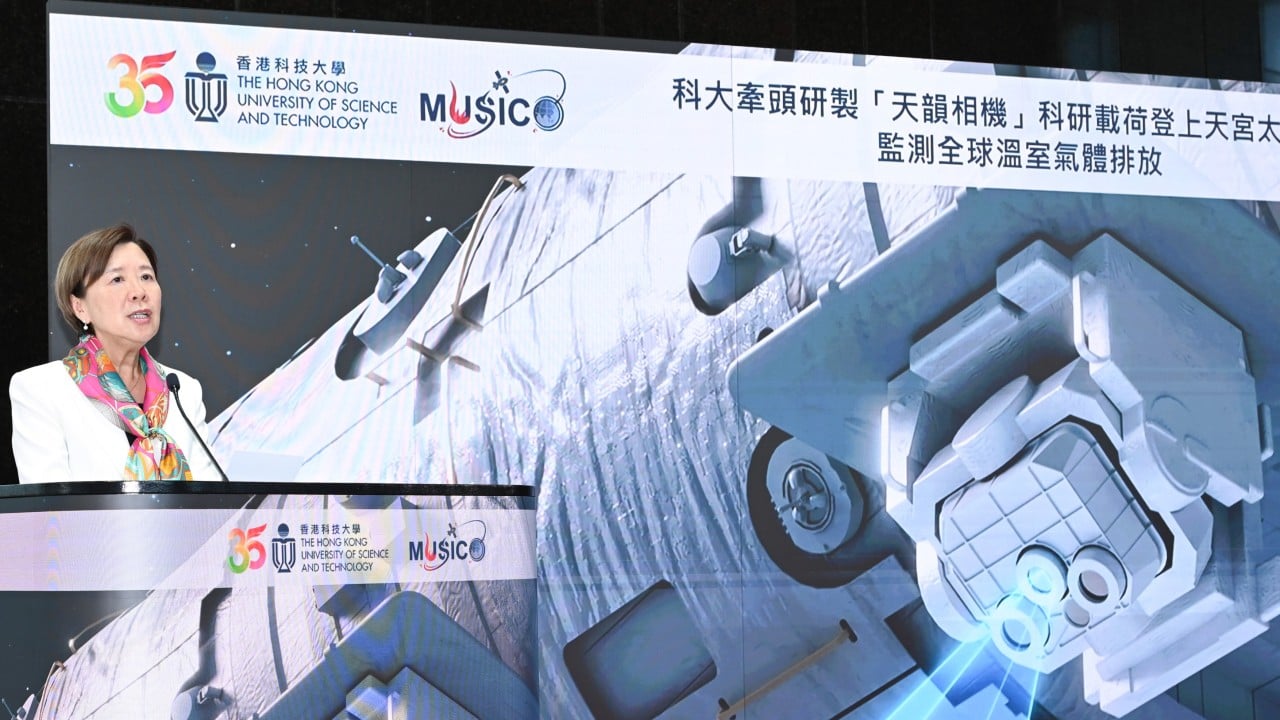
The observatory developed by local teams is designed to capitalize on the unique vantage point of the Tiangong station. Unlike the Hubble or James Webb telescopes which focus on deep space, station-based observatories often prioritize Earth observation (EO) or solar physics.
The mechanism of data gathering involves multi-spectral imaging. By capturing data across ultraviolet, visible, and infrared spectra simultaneously, the observatory can detect subtle changes in atmospheric chemistry or maritime patterns that are invisible to single-spectrum sensors. The "Signal-to-Noise Ratio" (SNR) in these experiments is optimized by using vibration-isolation platforms. These platforms decouple the sensitive optical instruments from the tremors caused by the station’s gyroscopes and the movement of the crew.
Structural Bottlenecks in Knowledge Transfer
The transition from terrestrial engineering to aerospace engineering involves a steep learning curve characterized by the "Reliability vs. Innovation" paradox. While commercial tech thrives on rapid iteration and "fast failure," aerospace demands a 0.99999 reliability coefficient.
- Material Fatigue in Vacuum: Standard polymers and lubricants used in Hong Kong’s electronics industry often suffer from "outgassing" in a vacuum, where volatile compounds evaporate and condense on sensitive optical surfaces. The transition to space-grade materials represents a significant capital investment for local researchers.
- Radiation Hardening: The lack of atmospheric protection in LEO exposes microprocessors to Single Event Upsets (SEUs) caused by cosmic rays. Designing redundant circuit architectures that can self-correct when a bit is flipped by a high-energy particle is a specialized field where local expertise is still maturing.
- Thermal Management: In the absence of convection, heat dissipation becomes a significant hurdle. Instruments must rely on conduction and radiation. The local observatory utilizes heat pipes and phase-change materials to maintain a stable operating temperature, ensuring that thermal expansion does not misalign the optical axis.
The Logic of Regional Aerospace Ecosystems
The inclusion of Hong Kong is a calculated move to create a "Cis-Lunar Economic Zone" precursor. By distributing the R&D load, the CMSA can accelerate its mission cadence. The "Multi-Node Innovation Model" suggests that breakthrough technologies are more likely to emerge when disparate engineering philosophies—such as Hong Kong’s commercially driven agility and the state’s long-term strategic stability—are forced to converge on a single mission objective.
This synergy is quantified by the "Research Throughput" metric: the amount of peer-reviewed science produced per kilogram of payload. Hong Kong’s contribution is expected to pivot toward high-density biological and material science experiments that require the precise, hands-on manipulation that only a trained payload specialist can provide.
The specialist’s role is to act as the "eyes and hands" of the terrestrial scientists. This reduces the need for fully autonomous robotics, which are often heavier and more prone to mechanical failure than a human operator using simplified manual interfaces. This human-in-the-loop (HITL) architecture is the most efficient way to handle "non-deterministic" experiments—those where the outcome is unpredictable and requires real-time adjustment.
Strategic Forecast for Local Industry
The long-term trajectory for Hong Kong involves the establishment of a dedicated aerospace manufacturing corridor. This would move the city beyond "design and data" and into the "component fabrication" stage.
The second-order effect of this space program involvement is the "Technological Spillover." Sensors developed for the vacuum of space often find immediate application in terrestrial high-precision industries, such as autonomous vehicle LiDAR or medical imaging. The stringent requirements for low-power, high-durability electronics in orbit will likely catalyze a new specialized manufacturing sector within the Greater Bay Area, focusing on "extreme environment" electronics.
The strategic priority now shifts to the standardization of the "Aerospace Quality Management System" (AQMS) across local universities. Establishing a unified testing protocol will reduce the failure rate of future payloads and ensure that Hong Kong remains a permanent fixture in the Tiangong manifest. The upcoming missions will serve as the stress test for this new institutional alignment. Failure to meet the integration deadlines or safety benchmarks would result in a significant retraction of regional autonomy in future missions, making the initial payload specialist’s performance a high-stakes validation of the city's technical readiness.