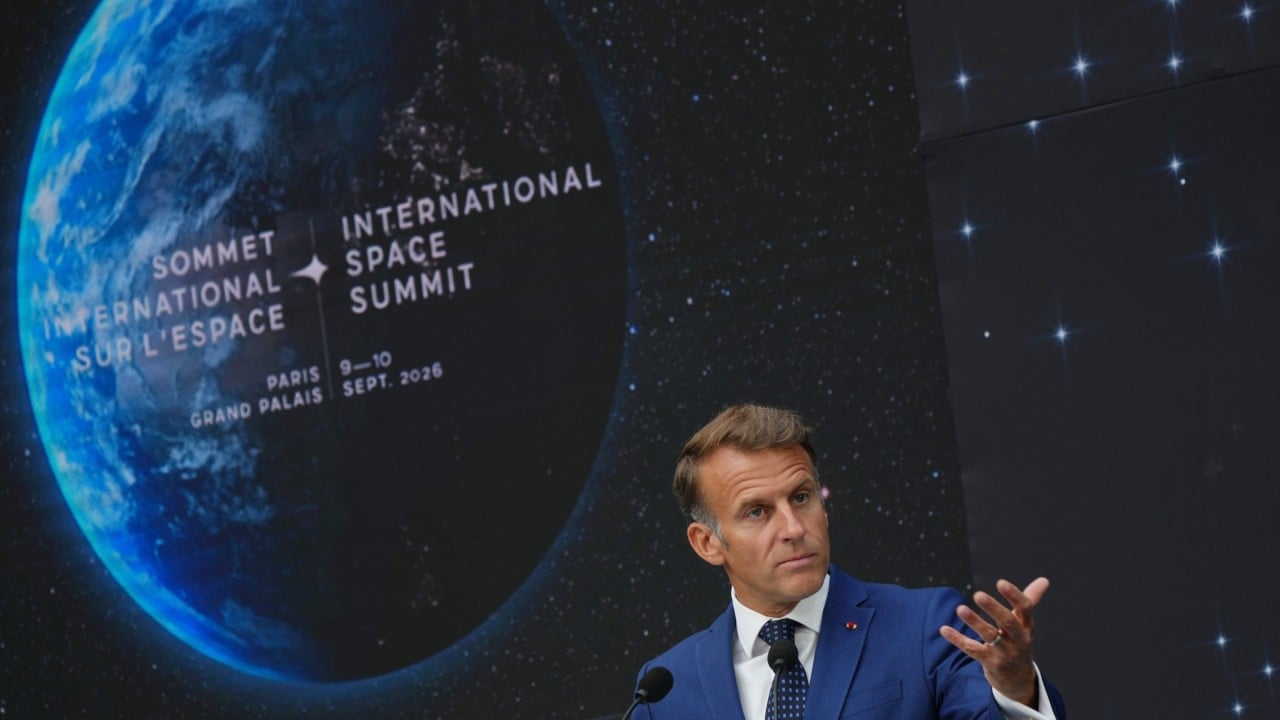
Strategic autonomy in orbital architecture requires more than industrial participation; it demands absolute control over the human launch vector. Europe currently faces a structural deficit in civil and defense space capabilities, defined by a reliance on foreign launch providers and a fragmentation of institutional demand. Recent policy declarations from Paris calling for an autonomous crewed spaceflight program within a decade highlight a fundamental economic and geopolitical tension: a continent with world-class scientific output remains structurally dependent on external actors for orbital presence.
Evaluating this ambition requires moving past political rhetoric and examining the underlying variables. The European space sector operates under distinct institutional friction points, capital allocation inefficiencies, and supply chain vulnerabilities. Resolving these bottlenecks requires a rigorous breakdown of the economic opportunity cost, the technological milestones, and the procurement models necessary to transition Europe from a paying passenger to an independent pilot. In similar updates, we also covered: Hong Kong Artificial Intelligence Literacy Strategic Architecture.
The Economic Cost Function of Strategic Dependency
Relying on foreign providers for human spaceflight introduces quantifiable financial drains and severe opportunity costs. Purchasing astronaut flight slots and cargo transport from external agencies or commercial providers drains capital out of the domestic industrial base. Estimates indicate that procuring foreign flight access over a ten-year horizon requires billions of euros that yield zero domestic technological spillovers, manufacturing jobs, or supply chain resilience.
Capital leakage represents only the primary cost variable. The secondary cost manifests as foregone economic multiplier effects. Space technology investment generates high-value engineering employment, advanced materials R&D, and dual-use capabilities spanning telecommunications and defense. When European institutional capital flows to external actors, the return on investment remains trapped abroad. The Next Web has also covered this important issue in extensive detail.
Closing this gap requires shifting from fragmented national programs to a consolidated procurement model. The European Space Agency operates on a principle of just return, where industrial contracts are distributed proportionally to member state contributions. While politically stabilizing, this mechanism frequently introduces operational inefficiencies, preventing the emergence of consolidated prime contractors capable of competing with vertically integrated global competitors. Restructuring institutional demand around guaranteed multi-year baseline contracts is the prerequisite for private capital mobilization.
Milestone Sequencing for Autonomous Human Access
Achieving an independent crewed capability within a ten-year window demands a strict, non-negotiable sequence of technological maturation. A timeline lacking intermediary validation stages guarantees programmatic failure.
The first phase prioritizes uncrewed cargo logistics. Establishing automated docking capabilities with orbital infrastructure validates guidance, navigation, and control systems under flight conditions. Projects targeting cargo capsule integration with orbital stations serve as the risk-reduction baseline. Without proven automated rendezvous and docking architecture, human-rated life support systems introduce unacceptable failure probabilities.
The second phase shifts from low Earth orbit to lunar proximity. Deploying heavy-class landers to the lunar surface tests deep-space communication, thermal control systems, and heavy-lift propulsion integration. This tier bridges the delta-v requirement gap between low Earth orbit operations and interplanetary transit architectures.
The final phase involves human rating of the launch vehicle and capsule architecture. Launching European astronauts from domestic spaceports—specifically the Guiana Space Centre—closes the sovereignty loop. However, this relies entirely on resolving the launcher deficit. Europe currently suffers from a heavy-lift launch vehicle gap, exacerbated by delays and retirement of legacy systems. Without reliable, reusable heavy-lift cadence, human-rated capsule development lacks a delivery mechanism.
Institutional Procurement and the European Preference Dilemma
The primary impediment to European space competitiveness is not engineering capability, but market fragmentation. Domestic aerospace firms operate within a constrained institutional market compared to their global counterparts. In other major spacefaring nations, guaranteed national security and civil institutional payloads provide a high baseline of demand, allowing firms to amortize R&D costs and scale manufacturing volume.
Europe must implement a strict institutional preference framework for domestic procurement. Relying on open global market competition in strategic sectors creates vulnerability when state-backed competitors heavily subsidize domestic industrial bases. Implementing a continental procurement preference ensures that public funds directly reinforce domestic technological sovereignty rather than subsidize external competitors.
This policy pivot requires political alignment among member states that historically prioritize domestic industrial return over collective capability. Without centralized budget authority and unified command structures, funding requests—such as multi-billion-dollar decadal expansions—will stall in bureaucratic negotiations.
Strategic Execution
Transitioning from ambition to execution requires immediate policy commitments ahead of upcoming ministerial deliberations. European institutional leadership must abandon fragmented national programs and consolidate around three binding directives.
First, institutional budgets must shift from pure scientific cost centers to strategic capital investments with mandatory domestic supply chain thresholds. Second, launch vehicle development must be decoupled from historical geo-return constraints to allow rapid prototyping and competitive commercial procurement. Third, human spaceflight architecture must be tied directly to commercial utility and orbital infrastructure maintenance rather than symbolic prestige.
The trajectory of the next decade will determine whether Europe maintains autonomous relevance in orbital dynamics or accepts permanent dependency. The variables are quantifiable, the engineering path is linear, and the remaining resource is time.
Macron Bets on Europe's Space Future — Own Rockets, Own Satellites, Own Astronauts
This video provides an in-depth visual breakdown of the recent policy summit in Paris and outlines the specific industrial and geopolitical arguments surrounding Europe's push for orbital autonomy.


