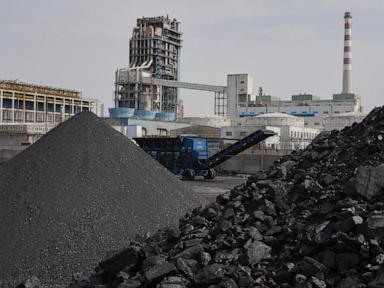
The restriction of sovereign capital flows into international fossil fuel infrastructure creates an immediate optical victory for climate diplomacy while simultaneously triggering structural arbitrage within global energy markets. When major state actors enact blanket prohibitions on direct public financing for overseas coal-fired power generation, they alter the cost of capital for specific balance sheets but fail to extinguish the underlying demand for baseload capacity in developing economies. Capital behaves like water, finding microscopic fractures in regulatory dams through corporate restructuring, non-concessional commercial debt substitution, and domestic credit reallocation. Understanding why overseas coal expansion persists despite high-profile political moratoriums requires mapping the financial mechanisms that bypass state-level prohibitions.
The Taxonomy of Capital Substitution
When direct state-backed policy instruments—such as export credit agency guarantees and bilateral development bank loans—are withdrawn from coal project pipelines, the vacuum is rarely filled by pure market-driven project finance. Instead, a substitution effect occurs across three distinct vectors: financial vehicle mutation, balance-sheet re-routing, and jurisdiction shifting. You might also find this connected coverage useful: Why the Decision to Drop the Adani Bribery Case Exposes the Real Mechanics of Power.
The primary vector involves the transition from sovereign-backed project debt to corporate-level balance sheet lending and private equity injections. Sovereign prohibitions typically target specific asset classes: the construction of new, unabated coal-fired power plants. They rarely restrict general corporate lines of credit or equity investments into diversified energy conglomerates based in emerging markets. A firm that previously utilized tied bilateral loans for a specific plant now utilizes untied corporate debt, retained earnings, or domestic commercial bank syndicates where foreign policy mandates do not apply.
The second vector centers on the reconfiguration of engineering, procurement, and construction contracts. Traditional turnkey projects funded by policy banks often carried stringent environmental and social governance conditions mandated by the lending nation. Removing these lenders eliminates the enforcement mechanism for these standards, allowing project sponsors to substitute higher-cost, high-efficiency components with lower-cost alternatives sourced from domestic manufacturers that operate outside the regulatory perimeter of the original prohibiting state. As highlighted in latest coverage by Investopedia, the results are worth noting.
The third vector is the leveraging of local currency and regional development finance institutions. Many developing nations facing acute electricity deficits possess domestic banking sectors with deep liquidity pools denominated in local currency. When foreign direct investment in coal stalls, local financial institutions step in, backed by sovereign guarantees from the host government. This shields the project from foreign exchange risk while completely bypassing Western-led or G20-aligned climate finance restrictions.
The Economics of Baseload Deficits and Transition Friction
The persistence of coal expansion cannot be analyzed purely through the lens of capital supply; it is fundamentally driven by the economic inelasticity of electricity demand in rapidly industrializing regions. Grid operators face a continuous optimization problem balancing cost, reliability, and decarbonization targets. In systems where grid stability is fragile and alternative storage or firm low-carbon capacity lacks sufficient scale, coal represents a localized least-cost solution for industrial baseload power.
The cost function of energy transition in developing economies involves prohibitive capital expenditure upfront for renewables coupled with the ongoing operational expenditure of grid reinforcement. When international climate finance fails to deliver concessional capital matching the scale of the transition gap, host governments face a binary choice: accept chronic load shedding that constrains GDP growth, or utilize domestic and alternative international capital to build dispatchable thermal capacity.
[Energy Demand Pressure]
       │
       ▼
[Grid Stability Deficit]
       │
       ▼
[Inelastic Baseload Requirement] ──(Sovereign Coal Ban Applied)──┐
                                                                 │
                                                                 ▼
                                                  [Structural Arbitrage Activated]
                                                  ├── Corporate Balance-Sheet Debt
                                                  ├── Domestic Commercial Syndicates
                                                  └── Alternative Bilateral Credit
This dynamic exposes the limitations of supply-side financial restrictions. Stopping the flow of public capital from a specific capital exporter does not alter the marginal cost of operating a coal plant versus an alternative energy system in the target country. It merely shifts the origin of the financing from transparent, multilateral-adjacent institutions to opaque commercial channels that operate with lower disclosure standards.
Institutional Loopholes and Regulatory Gaps
The architecture of modern international finance contains structural blind spots that facilitate the continuation of coal-related capital flows. These loopholes are not accidental oversights; they are the logical consequence of defining prohibitions around legal structures rather than economic outcomes.
The Captive Equipment and Supply Chain Loophole
Prohibitions on financing power plants often focus strictly on the physical generation facility—the boiler, turbine, and generator infrastructure. However, they frequently omit the upstream and downstream linkages required to sustain coal ecosystems. This includes port expansion, dedicated railway logistics, coal-washing facilities, and transmission interconnectors. By financing the logistical infrastructure that feeds existing or nascent coal fleets, foreign capital can indirectly secure the economic viability of coal expansion without ever directly funding a combustion chamber.
The Corporate Restructuring and Renaming Loophole
Energy conglomerates operating across borders frequently maintain diversified portfolios spanning renewable energy, mining, and thermal power. When international financial institutions restrict lending to entities with high carbon intensity, conglomerates execute structural unbundling. They isolate thermal coal assets into unlisted subsidiaries or newly formed special purpose vehicles with clean corporate branding. These subsidiaries retain access to commercial debt markets, private equity, and non-aligned regional banks, effectively laundering the capital stream through corporate obfuscation.
The Captive Captive Power Exception
Industrial parks, particularly in sectors such as metal smelting, chemical processing, and mining, often require captive off-grid power generation to guarantee uninterrupted operations. Because these facilities are classified as industrial installations rather than public utility power plants, they frequently evade the strictest classifications of energy sector lending bans. Foreign and domestic capital flows into these captive plants under the guise of industrial manufacturing development, bypassing power sector scrutiny entirely.
Strategic Realities of Global Energy Flows
The structural persistence of coal deployment highlights a fundamental principle of economic governance: prohibitions that target financing vectors without addressing the underlying economic incentives or providing viable substitutes will inevitably induce evasion.
Policy actors attempting to curb fossil fuel expansion face an optimization trilemma. Absolute restrictions on public capital reduce sovereign exposure to carbon-intensive assets but sacrifice leverage over project design, environmental standards, and technological efficiency. When Western or allied financial institutions exit the market, they cede influence to alternative lenders who impose fewer environmental safeguards, resulting in projects that may operate with lower thermal efficiencies and higher relative emissions intensities than those managed under strict multilateral oversight.
Resolving this tension requires shifting the strategic focus from financial prohibition to economic substitution. Capital does not flow toward coal because of a preference for the fuel itself, but because of the risk-adjusted return profile associated with reliable baseload generation in constrained fiscal environments. Until the risk premium of green baseload alternatives—comprising firm renewables, storage integration, and modern transmission grids—drops below that of conventional thermal assets, structural arbitrage will continue to bridge the gap between political commitments and industrial reality.
Operational Forecast
The trajectory of overseas fossil fuel deployment will not be determined by static declarations of intent, but by the velocity atakah of grid-scale energy storage commercialization and the depth of alternative concessional financing mechanisms. As long as the marginal cost of unmet electricity demand in developing economies exceeds the cost of navigating regulatory loopholes, capital will continue to find pathways to fund dispatchable thermal capacity. Future regulatory frameworks must evolve beyond simplistic asset bans toward comprehensive economic parity models if they are to successfully alter the physical reality of global energy infrastructure.