Turkish law enforcement agencies are deploying thermal and optical drones to monitor public alcohol consumption in open-air spaces, transforming municipal oversight into an airborne disciplinary regime. This tactical shift marks a departure from traditional street patrols, relying instead on autonomous eyes in the sky to enforce behavioral conformity under the guise of public order and safety.
For years, the policy landscape surrounding alcohol in Turkey has been shaped by heavy taxation, strict advertising bans, and a shrinking footprint for legal sales and consumption. The introduction of aerial surveillance over parks, coastal promenades, and secluded urban zones takes this administrative friction into a different domain entirely. It is one thing for a government to price a commodity out of reach or restrict where a bottle can be displayed on a shop shelf. It is quite another for a drone to hover thirty feet above a public bench at midnight, thermal camera locked onto the heat signature of a cold can, directing mobile patrol units to the exact coordinates of a civil infraction.
The Mechanical Logic of Aerial Enforcement
Technology rarely enters a regulatory vacuum without purpose. Police departments in major urban centers like Istanbul and Ankara face persistent structural limitations. Ground units are expensive to maintain, vulnerable to local friction, and physically constrained by traffic and geography. A patrol car turning down a dimly lit coastal path announces its presence long before it arrives, giving people ample time to stash containers or disperse.
Drones eliminate that warning window. Equipped with high-resolution optical zoom lenses and infrared sensors, these unmanned aerial vehicles operate in near-total silence. They do not care about narrow alleyways or steep hillsides. They scan open spaces for thermal anomalies and human clusters, relaying real-time telemetry back to central dispatch.
This creates an asymmetrical monitoring environment. The consumer sitting on a patch of grass in Moda or along the Bosphorus assumes a degree of anonymity simply by virtue of darkness and distance from a police station. The drone strips away that protective obscurity. By the time the blue lights flash through the trees, the infraction has already been digitally logged, recorded, and transmitted.
The Economic Squeeze and Cultural Friction
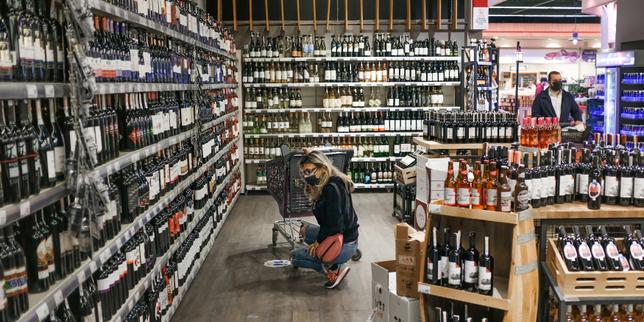
To understand why aerial enforcement is accelerating now, one must look at the broader economic and political pressures defining contemporary Turkey. Inflation has driven the cost of legally purchased alcohol to prohibitive levels, fueled by successive special consumption tax hikes designed to discourage drinking through fiscal attrition. When a standard bottle of rakı or beer absorbs multiple tax increases in a single year, consumer behavior naturally shifts. More citizens look for alternative ways to socialize, retreating to public parks, picnic areas, and municipal green spaces where they can bypass inflated venue prices.
This creates a direct collision between official moral priorities and urban reality. The state views public spaces as arenas for sanitized, family-oriented recreation. A subset of the population views those same parks as communal living rooms where the strictures of daily life can be temporarily lowered.
When citizens turn to public spaces to consume alcohol because private venues have become financially inaccessible, the state responds not by lowering barriers, but by scaling up enforcement. The drone becomes the mechanical arbiter of this spatial dispute. It enforces a vision of public order where parks belong exclusively to those whose behavior aligns with official prescriptions of decorum.
Legal Gray Zones and Privacy Realities
The deployment of police drones for monitoring lifestyle choices rather than violent crimes or major property theft raises profound questions regarding civil liberties and legal proportionality. Turkish privacy laws and constitutional protections theoretically guard against arbitrary state intrusion into private life, but public spaces occupy a notoriously ambiguous category.
When an individual sits in a public park, do they retain a reasonable expectation of privacy against high-altitude thermal imaging? Historically, privacy jurisprudence assumed that what is observable by the naked eye from a public thoroughfare enjoys no legal protection. But optical zoom lenses capable of reading the label on a bottle from a hundred meters up, combined with thermal sensors that map physiological signatures through the dark, stretch the boundaries of traditional visual observation.
This is not intelligence gathering rooted in probable cause. It is generalized, sweeping surveillance deployed as a preventative deterrent. The drone does not respond to a crime in progress; it hunts for the potential commission of a misdemeanor. Every citizen in a public park becomes a permanent suspect until proven otherwise by the absence of a prohibited beverage in their hand.
The Normalization of Preemptive Policing
When policing shifts from reactive enforcement to preemptive observation, the psychological contract between the citizen and the state begins to fracture. People adapt to the new overhead reality. They move under bridges, crowd into private apartments, or abandon public socialization altogether.
This behavioral contraction is precisely what gives the practice its functional power. The state does not need to arrest every person holding a drink in a park to achieve its policy goals. It only needs to create a pervasive sense of exposure. When the sky itself feels weaponized, self-censorship takes over.
What begins as an initiative targeting public alcohol consumption establishes a technological template for monitoring other behaviors deemed undesirable by authorities. Once the infrastructure of thermal drones and automated dispatch is established for one misdemeanor, it requires very little friction to pivot those same lenses toward political gatherings, unauthorized protests, or simply unconventional public assemblies.
The drone hovering over the park at midnight is not just watching a bottle. It is mapping the boundaries of permissible existence in modern urban spaces. The mechanical eye records every movement, indifferent to the history, the economic strain, or the social context of the people below, reducing complex human lives to glowing coordinates on a monitor screen.