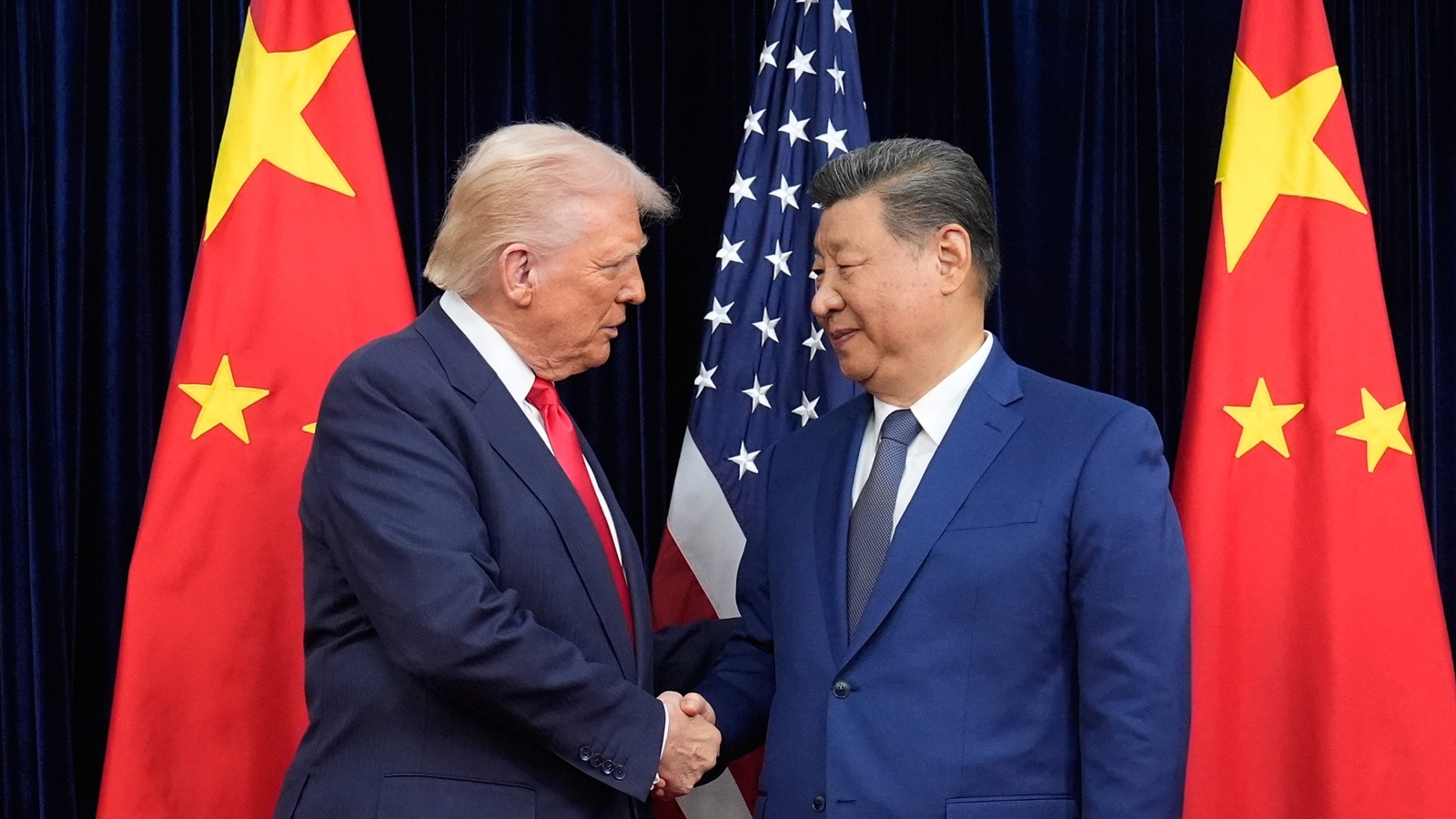
The efficacy of international sanctions regimes depends entirely on the elimination of "leakage"—the ability of a targeted state to find alternative buyers or financial intermediaries. When Donald Trump asserts that Xi Jinping will comply with U.S. demands regarding Iranian oil exports, he is not making a geopolitical prediction based on institutional data; he is betting on the Theory of Strategic Personalism. This framework posits that bilateral rapport between heads of state can override the structural incentives of the "Deep State" or national industrial interests. However, the data regarding Chinese energy imports and the "Dark Fleet" tanker network suggests a profound misalignment between personal diplomacy and the structural mechanics of Chinese energy security.
The Architecture of Defiance: Calculating the Sanctions Gap
To understand why a rejection of Chinese defiance is a high-risk gamble, one must first quantify the volume of trade occurring outside the SWIFT banking system. China remains the primary sink for Iranian crude, often re-labeled as "Malaysian" or "Omani" blend to circumvent secondary sanctions. This trade is facilitated by a sophisticated three-tier evasion system:
- The Ghost Fleet Mechanism: Iran utilizes a fleet of aging tankers with obscured ownership and disabled AIS (Automatic Identification System) transponders. These vessels conduct ship-to-ship (STS) transfers in international waters, complicating the chain of custody.
- The Teapot Refineries: Unlike state-owned giants like Sinopec, which are vulnerable to U.S. financial exposure, China’s independent "teapot" refineries operate with minimal international footprint. They process discounted Iranian crude, paid for in Renminbi (RMB) via small, localized banks such as the Bank of Kunlun.
- The RMB Liquidity Loop: By settling trade in RMB, China and Iran bypass the USD-clearing system entirely. This creates a closed-loop economy where Iran uses the accumulated RMB to purchase Chinese manufactured goods, technology, and infrastructure services.
The assumption that Xi Jinping will voluntarily dismantle this system ignores the Cost-Benefit Ratio of Energy Diversification. For Beijing, Iranian oil represents a hedge against instability in the Strait of Hormuz and a mechanism to reduce dependence on USD-denominated energy markets.
The Psychology of Hegemonic Deference vs. Realpolitik
The Trumpian perspective relies on the belief that China values the broader US-China trade relationship—valued at hundreds of billions—more than the marginal gains of Iranian energy. This is a classic Elasticity of Compliance model. If the perceived threat of comprehensive tariffs (e.g., 60% across all sectors) outweighs the utility of cheap Iranian oil, the rational actor should comply.
However, this model fails to account for the Security Dilemma of Domestic Legitimacy. Xi Jinping’s "China Dream" and the push for "Self-Reliance" (Zìlì Gèngshēng) frame compliance with U.S. sanctions as a surrender of sovereignty. In this context, continuing to import Iranian oil is not merely an economic choice; it is a signaling mechanism intended to demonstrate that Washington no longer dictates the terms of global trade.
The Three Pillars of Chinese Strategic Patience
- Pillar I: Resource Arbitrage: Iranian crude typically trades at a $5 to $10 discount per barrel relative to Brent. For a slowing Chinese economy, this discount acts as a massive indirect subsidy to the manufacturing sector.
- Pillar II: Geopolitical Leverage: By keeping the Iranian economy on life support, China maintains a "spoiler" asset that can be activated to distract U.S. naval and diplomatic resources from the Indo-Pacific.
- Pillar III: Institutional Insulation: Beijing has spent the last decade building the Cross-Border Interbank Payment System (CIPS). While it lacks the scale of SWIFT, it provides the technical infrastructure necessary to ignore U.S. Treasury designations for critical strategic imports.
The Information Asymmetry in Bilateral Summits
When a U.S. leader claims a foreign counterpart "wouldn't do that," they are operating on Inferred Intent rather than Observed Capacity. Beijing frequently utilizes "tactical compliance"—the temporary reduction of visible activity—to coincide with major summits. This creates an optical victory for the U.S. administration while the underlying infrastructure of the trade remains intact.
The structural failure of this "personalist" approach lies in its inability to monitor the Shadow Financial Architecture. Even if Xi Jinping issued a formal decree to halt Iranian imports, the decentralized nature of the teapot refineries and the small-scale banks involved makes enforcement nearly impossible without a massive deployment of internal security resources—resources Beijing is unlikely to expend for the benefit of a geopolitical rival.
The Volatility of the Oil-for-Security Swap
The current equilibrium is predicated on the Symmetry of Risk. Iran risks its only viable export market, while China risks secondary sanctions on its financial sector. The U.S. strategy attempts to break this symmetry by escalating the cost to China.
The "Maximum Pressure 2.0" framework, which Trump signals, intends to target the Chinese financial institutions that facilitate these payments. The bottleneck here is the Global Economic Contagion Risk. Sanctioning a "Big Four" Chinese bank would be the financial equivalent of a nuclear strike, potentially triggering a global liquidity crisis. Beijing knows this. This knowledge creates a "Sanctions Ceiling" where the U.S. is deterred from the most effective measures because the collateral damage to the U.S. economy would be politically untenable.
The Failure of "Rapport" as a Strategic Metric
Rapport is a qualitative variable being applied to a quantitative problem. The volume of Iranian oil reaching Chinese ports is dictated by the Domestic Consumption Function of the Shandong refining cluster and the Sovereign Risk Appetite of the CCP.
To analyze the situation accurately, one must look at the Marginal Utility of Defiance. For every barrel of oil China buys from Iran, it saves money and strengthens a partner that complicates U.S. hegemony. The only way to change this behavior is to make the Iranian alternative more expensive than the "Penalty Cost" of U.S. retaliation. If the U.S. does not have the political will to sanction the Chinese entities actually moving the money, the "rapport" is an empty vessel.
Structural Misalignments in the Beijing Summit
The upcoming summit will likely result in a joint statement regarding "stability" and "mutual respect." This is often misread as a commitment to policy change. In reality, China utilizes these summits to achieve Strategic Buffer Time. By engaging in dialogue, they delay the imposition of new tariffs while continuing the build-out of their alternative financial systems.
The pivot points to watch are not the public statements of the leaders, but the Vessel Tracking Data (VTD) in the months following the meeting. A genuine shift would require:
- The de-flagging of "dark fleet" tankers by Chinese-influenced maritime registries.
- A measurable spike in the price of "Malaysian" blends, indicating a supply contraction.
- The cessation of RMB-denominated oil credits by the Bank of Kunlun.
The Pivot to a Multilateral Containment Model
The reliance on bilateral personalism ignores the Network Effects of modern sanctions. When the U.S. acts alone, it creates a "Sanctions Arbitrage" opportunity for China. If Europe and Japan do not participate in the pressure campaign, China becomes the sole gatekeeper of Iranian trade, increasing its leverage over both Tehran and Washington.
The strategic play for the U.S. is not to rely on a "gentleman's agreement" with Xi Jinping, but to create a Hard Enforcement Border. This involves:
- Sanctioning the Insurance and Reinsurance of the Ghost Fleet: Most maritime insurance is still tied to Western-linked P&I clubs. Tightening these requirements makes the cost of shipping prohibitive, regardless of Beijing's political stance.
- Targeting the Physical Infrastructure: Placing sanctions on the specific port berths in China that specialize in STS transfers. This forces China to either openly defy the sanctions at a state level or shift the trade to more expensive, less efficient methods.
- RMB Liquidity Capping: Working with G7 partners to limit the ability of Chinese banks to swap RMB for other reserve currencies if they are found to be facilitating "black market" energy trades.
The assertion that "Xi wouldn't do that" is a fundamental misunderstanding of the Chinese Communist Party's hierarchy of needs. Energy security and the preservation of a multi-polar financial system are existential priorities for Beijing. They will not be traded away for the sake of a personal relationship unless that relationship offers a concrete, permanent reduction in U.S. strategic containment—a price no U.S. administration is truly willing to pay.
The strategy going forward must shift from expecting compliance to pricing in defiance. The U.S. must build its economic policy on the assumption that China will continue to support Iran, and then develop the technical and financial tools to make that support an unsustainable liability for the Chinese banking system.