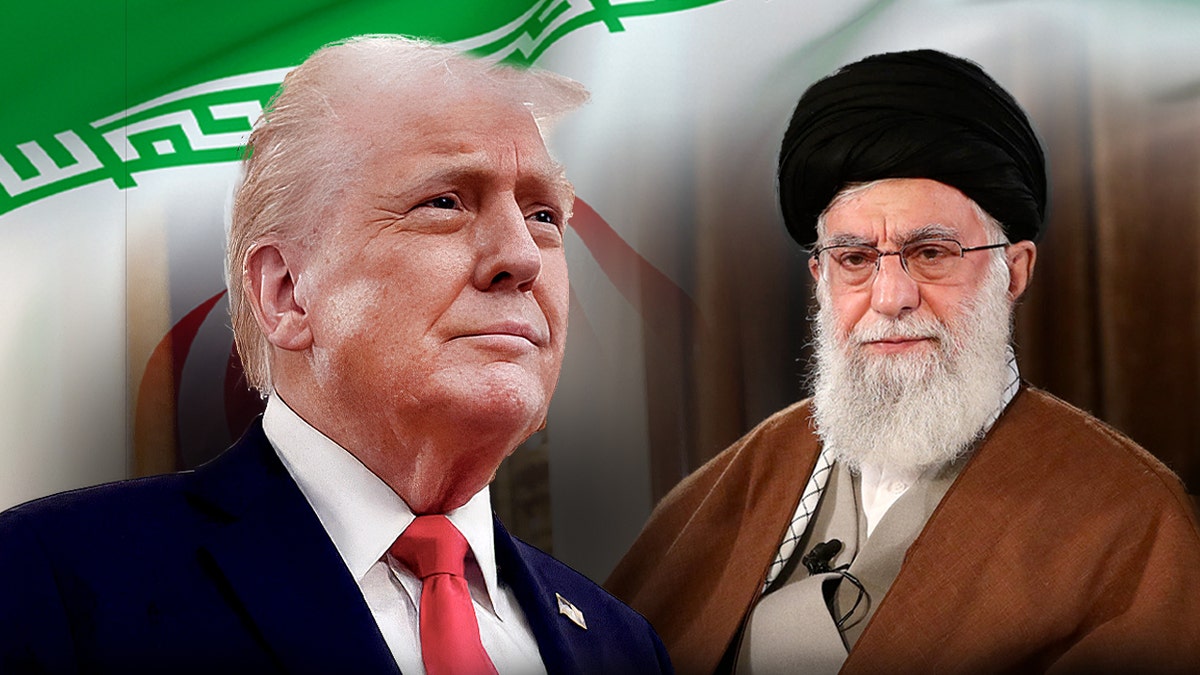
The tension between political rhetoric and intelligence assessments regarding Iran’s military posture stems from a fundamental disagreement on how to measure "degradation." While political messaging often equates kinetic strikes with the total neutralization of threat, the intelligence community evaluates military capacity through the lens of organizational resilience, industrial autonomy, and the doctrine of asymmetric survival. The discrepancy between the claims of the Trump-Hegseth faction and the Pentagon’s internal reports is not merely a matter of partisan disagreement; it is a conflict between the optics of tactical victory and the reality of strategic persistence.
The Triad of Iranian Military Resilience
To understand why the Pentagon asserts that Iran retains key capabilities despite repeated regional setbacks and economic sanctions, one must analyze the three structural pillars that support their defense architecture.
1. Domestic Production and the Sanction-Proof Supply Chain
Iran has transitioned from an importer of hardware to an indigenous manufacturer of precision-guided munitions (PGMs) and Unmanned Aerial Vehicles (UAVs). Unlike conventional militaries that rely on high-cost, high-tech global supply chains, Tehran’s defense industry operates on a low-cost, decentralized model.
The manufacturing of the Shahed-series drones utilizes off-the-shelf civilian components, which bypasses traditional arms export controls. This creates a high "attrition threshold." Because the cost of producing a single-way attack drone is orders of magnitude lower than the cost of the interceptors used to down them, the military capability is not measured by the survival of the unit, but by the capacity to replenish the inventory faster than the adversary can economically sustain a defense.
2. Strategic Depth through the Proxy Network
The Pentagon’s assessment of "key capabilities" includes the "Axis of Resistance"—a non-linear defense perimeter that extends Iranian influence into the Levant and the Arabian Peninsula. This network functions as a force multiplier that cannot be dismantled by targeting the Iranian mainland alone.
- Logic of Distributed Command: By delegating tactical execution to groups like Hezbollah or the Houthis, Tehran maintains "plausible deniability" while forcing adversaries to spread their defensive assets thin.
- Technological Proliferation: Iran does not just send weapons; it sends the blueprints and specialized tooling required for local assembly. This makes the military capability "geographically liquid," meaning it can be suppressed in one theater only to reappear in another.
3. Integrated Air Defense and Ballistic Sovereignty
The third pillar is the survival of Iran’s ballistic missile program, which remains the largest in the Middle East. Intelligence reports highlight that despite cyber-attacks and sabotage, the underground "missile cities" provide a secure second-strike capability. This creates a "deterrence equilibrium" where, regardless of the damage sustained in an initial wave of strikes, the cost of a total offensive remains prohibitively high for any regional actor.
Quantifying the Discrepancy in Degradation Claims
The political claim that Iran’s military is effectively neutralized or significantly weakened often relies on "Point-in-Time" metrics, such as the destruction of a specific warehouse or the assassination of a high-ranking official. Professional analysts, however, utilize "Flow-Based" metrics.
The "Degradation Decay" model suggests that kinetic impact on a decentralized military structure follows a logarithmic curve. Initial strikes cause high visible damage, but the remaining capability becomes increasingly difficult to target as the organization adapts. The Pentagon’s insistence on Iranian "persistence" reflects the observation that the internal logic of the Iranian military—its command structure and industrial base—remains functionally intact even when its external nodes are under pressure.
The Strategic Bottleneck of Precision and Intelligence
A significant portion of the debate centers on the technological sophistication of Iran’s precision strike capabilities. The shift from "dumb" rockets to satellite-guided missiles has changed the math of regional security.
The Pentagon’s concern lies in the "Circular Error Probable" (CEP) of Iranian systems. Ten years ago, Iranian missiles were psychological weapons with low accuracy. Today, the CEP has narrowed to the point where they can target specific hangars or critical infrastructure nodes. This precision creates a strategic bottleneck: even a weakened Iranian military with only 10% of its arsenal remaining can still inflict catastrophic damage on high-value economic targets, such as desalination plants or oil processing facilities.
Political narratives often ignore this "Tail Risk." They focus on the 90% of the arsenal that might be destroyed, while intelligence officials are forced to account for the 10% that can still achieve mission objectives.
Organizational Adaptation and Cyber Sovereignty
Beyond physical hardware, the Pentagon’s assessment factors in Iran’s evolution as a cyber power. This is a "latent capability" that does not require a large physical footprint or a stable economy to maintain.
The Iranian cyber doctrine is designed for "Asymmetric Parity." Recognizing that they cannot win a conventional blue-water naval engagement or an air-superiority battle against the United States, Tehran has invested heavily in offensive cyber operations targeting industrial control systems (ICS). This capability serves as a horizontal escalation tool. If pressured kinetically, Iran can respond digitally, disrupting the civilian infrastructure of its opponents. This creates a complex threat environment where traditional "victory" markers—like flags over a city or destroyed tank columns—are irrelevant.
The Fallacy of the Total Collapse Narrative
The Trump-Hegseth position often suggests that maximum economic and military pressure will lead to a "break point" in Iranian military capacity. This ignores the "Survival Economy" framework adopted by the Islamic Revolutionary Guard Corps (IRGC). The IRGC is not merely a military branch; it is a conglomerate that controls significant portions of the Iranian economy.
The IRGC’s involvement in construction, telecommunications, and energy provides it with an independent revenue stream that is shielded from standard diplomatic pressure. This economic integration means that the military capability is "hard-coded" into the state’s survival. For the Pentagon, the "key capabilities" are not just the missiles themselves, but the organizational ability to fund, hide, and deploy them under extreme duress.
Tactical Friction vs. Strategic Inertia
While it is true that Iranian proxies have faced tactical setbacks—such as the loss of leadership in Hezbollah or the disruption of maritime routes in the Red Sea—these are instances of "Tactical Friction." They slow down operations but do not halt the "Strategic Inertia" of the Iranian regional project.
The Pentagon’s reporting distinguishes between:
- Operational Readiness: The immediate ability to launch an attack (currently hampered in some sectors).
- Fundamental Capacity: The long-term ability to regenerate forces and maintain technological edges (currently stable).
The failure to distinguish between these two leads to the conflicting headlines seen in US media. A military can be "down" in terms of current operations while remaining "lethal" in its total capacity.
The Architecture of a Long-Term Stalemate
The current trajectory suggests that neither side can achieve its stated endgame through the current methods. The US and its allies can suppress Iranian activities, but they cannot eradicate the underlying industrial and organizational structures without a full-scale conflict that neither side desires.
The strategic play for the next defense cycle must shift from "attrition-based thinking" to "containment-based innovation." This involves:
- Accelerating the Cost-to-Interference Ratio: Developing non-kinetic or low-cost kinetic solutions (like high-energy lasers) to negate the economic advantage of Iran’s drone swarms.
- Mapping the Indigenization Nodes: Focusing intelligence assets on the specific "choke-point" technologies that cannot be replicated within Iran, such as high-end semiconductors or specialized composite materials, rather than broad economic sectors.
- Hardening Regional Infrastructure: Treating desalination and energy grids as front-line military assets to diminish the leverage of Iranian precision strikes.
The reality of the Pentagon’s data is that Iran has built a military designed for the specific purpose of surviving the very pressure currently being applied. To claim they are "weakened" to the point of irrelevance is to mistake a tactical pause for a strategic defeat.