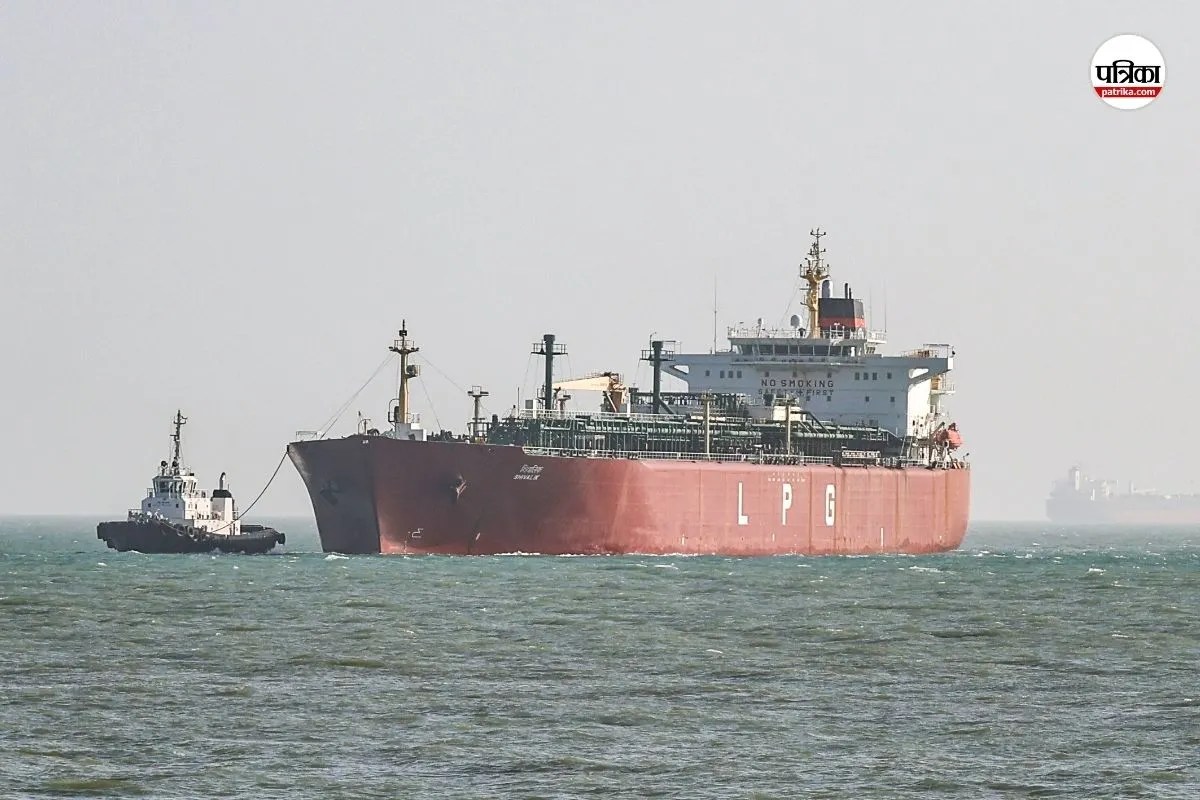
The resumption of maritime traffic through the Strait of Hormuz—evidenced by the passage of 16 vessels following a period of heightened friction—does not signal a diplomatic breakthrough. Instead, it reveals a calculated shift in Iranian tactical posturing after the breakdown of formal negotiations with the United States. While surface-level reporting interprets these transits as a "return to normalcy," a structural analysis suggests that Tehran is transitioning from active kinetic disruption to a strategy of "controlled volatility." This mechanism allows Iran to maintain its primary economic leverage over the global energy supply chain without triggering a definitive military response from the U.S. or its allies.
The Triad of Maritime Chokepoint Vulnerability
The Strait of Hormuz is not merely a geographic corridor; it is a sensitive economic pressure point governed by three distinct variables that dictate global energy security. To understand why 16 ships passing is a data point rather than a trend, one must evaluate the operational environment through these lenses:
- The Kinetic Risk Premium: This represents the actual cost of insurance and security for vessels navigating the 21-mile-wide passage at its narrowest point. When diplomacy fails, the risk premium fluctuates based on the visibility of the Islamic Revolutionary Guard Corps Navy (IRGCN).
- Sovereignty Assertions vs. UNCLOS: Iran frequently uses "technical violations" or "environmental concerns" as legal pretexts to seize vessels. This provides a veneer of legality to what are essentially geopolitical maneuvers.
- Volume Sensitivity: Approximately 20% of the world's petroleum liquids pass through this artery. Even a 5% reduction in transit capacity creates an exponential spike in Brent Crude futures due to the lack of immediate, high-volume bypass alternatives like the East-West Pipeline in Saudi Arabia, which has limited spare capacity.
The Failure of the JCPOA Framework and Its Strategic Aftermath
The collapse of recent attempts to revive the Joint Comprehensive Plan of Action (JCPOA) or establish a "less-for-less" interim deal has removed the diplomatic guardrails that previously dictated maritime behavior. When negotiations reached a stalemate, the U.S. opted for increased sanctions enforcement, specifically targeting the "Ghost Fleet" transporting Iranian oil. Iran’s counter-move is the "Tanker War 2.0" logic: if Tehran cannot export its oil freely, it will ensure the cost of doing so for others becomes prohibitively high.
The recent passage of 16 ships indicates that Iran has temporarily lowered the "threat ceiling." This is a deliberate cooling-off period intended to prevent the permanent stationing of more aggressive U.S. naval assets, such as an additional Carrier Strike Group, in the Fifth Fleet's area of operations. By allowing traffic to flow, Iran retains the ability to "throttle" the strait at a time of its choosing, rather than forcing a decisive naval confrontation it might lose.
The Mechanics of Shadow War at Sea
The 16-ship transit must be viewed through the lens of Iranian asymmetrical naval doctrine. Unlike traditional blue-water navies, the IRGCN utilizes a "Swarm and Seize" strategy. This involves:
- Fast Inshore Attack Craft (FIAC): Utilizing high-speed, maneuverable boats to harass larger tankers, forcing them to deviate from established shipping lanes.
- Limpet Mine Deployment: Sub-surface sabotage that creates deniable damage, complicating the attribution required for a formal military retaliation under Article 51 of the UN Charter.
- Electronic Warfare and GPS Spoofing: Inducing navigational errors that lead merchant vessels into Iranian territorial waters, providing a "legal" justification for boarding.
The fact that 16 vessels passed without incident suggests a tactical pause in these specific operations. This pause is often a precursor to a recalibration of demands in back-channel communications via third parties like Oman or Qatar.
Economic Elasticity of the Hormuz Chokepoint
Global markets often overreact to the threat of closure while underestimating the attrition of prolonged instability. The passage of these ships serves as a temporary sedative for the markets, but the underlying fundamentals remain fragile. The cost of shipping through the strait is influenced by the "War Risk Surcharge."
- Fixed Costs: Fuel, crew wages, and vessel depreciation.
- Variable Risk Costs: Insurance premiums that can jump from 0.05% to 0.5% of the ship's value within 24 hours of a reported incident.
For a Very Large Crude Carrier (VLCC) valued at $100 million, a 0.5% premium equates to a $500,000 cost increase per transit. This cost is inevitably passed to the consumer, acting as a "geopolitical tax" on global energy. The 16 ships that passed may have done so safely, but their insurers likely maintained high premiums, reflecting the reality that the "good news" is transient.
Deconstructing the "Good News" Narrative
The reporting of 16 ships passing as "good news" ignores the baseline. In normal operational cycles, the Strait of Hormuz sees an average of 14 tankers per day carrying crude oil, totaling nearly 5,000 transits annually. A cluster of 16 ships is a statistical reversion to the mean, not an expansion of maritime safety.
The breakdown of talks has created a vacuum where information operations (InfoOps) take precedence. Iran benefits from projecting an image of being a "responsible steward" of the strait when it suits their timeline, while the U.S. remains in a reactive posture. This cycle ensures that the U.S. cannot pivot its naval focus toward the Indo-Pacific without leaving a critical vulnerability in the Middle East.
The Strategic Bottleneck: Infrastructure vs. Intent
Energy security analysts point to the construction of pipelines as a way to bypass Hormuz. However, the physical reality is a bottleneck of infrastructure:
- The Gureh-Jask Pipeline: Iran’s own attempt to bypass the strait to export oil from the Gulf of Oman.
- Saudi East-West Pipeline: Currently capable of handling roughly 5 million barrels per day (bpd), far short of the 20 million bpd that transits the strait.
- Abqaiq-Yanbu Liquid Natural Gas (LNG) Pipeline: Limited to gas, leaving crude oil dependent on maritime routes.
Because these bypasses are insufficient, the "16 ships" metric is the only one that currently matters for global price stability. Iran knows that as long as the world lacks a 1:1 bypass for Hormuz, the strait remains the most effective tool for asymmetrical negotiation.
Tactical Recommendation for Maritime Operators
In the absence of a formal US-Iran diplomatic agreement, maritime stakeholders must shift from a "reactive" to a "structural" risk management model. Relying on sporadic reports of successful transits is insufficient for long-term operational planning.
The primary strategic move for shipping conglomerates is the implementation of Dynamic Routing and Insurance Hedging. Rather than purchasing standard war risk coverage, firms should engage in "Parametric Insurance" contracts that trigger payouts based on specific regional activity levels—such as the deployment of IRGCN assets—rather than waiting for an actual hull strike.
Furthermore, the "good news" of 16 ships should be used as a window to front-load transits of non-essential cargo while the "threat ceiling" is temporarily lowered. The failure of high-level diplomacy ensures that the next cycle of disruption is not a matter of if, but a matter of when. The current opening in the strait is a tactical trough in a long-term wave of volatility; operators must utilize this window to reposition assets before the inevitable return to kinetic friction.